
For 25 guests, you’ll want roughly 26–28 slices—a cushion that prevents running short mid-celebration. An 8-inch three-layer cake yields 25–45 servings depending on whether you cut wedding-style (1 x 2 inches) or party portions (1.5 x 2 inches).
Square cakes maximize efficiency through grid cuts, while sheet cakes offer flexibility. Round up generously, consider adding mini desserts for variety, and use a cake calculator to validate your choice before ordering—details that help you make a confident decision.
Do the Math: Calculate How Many Cake Servings You Need
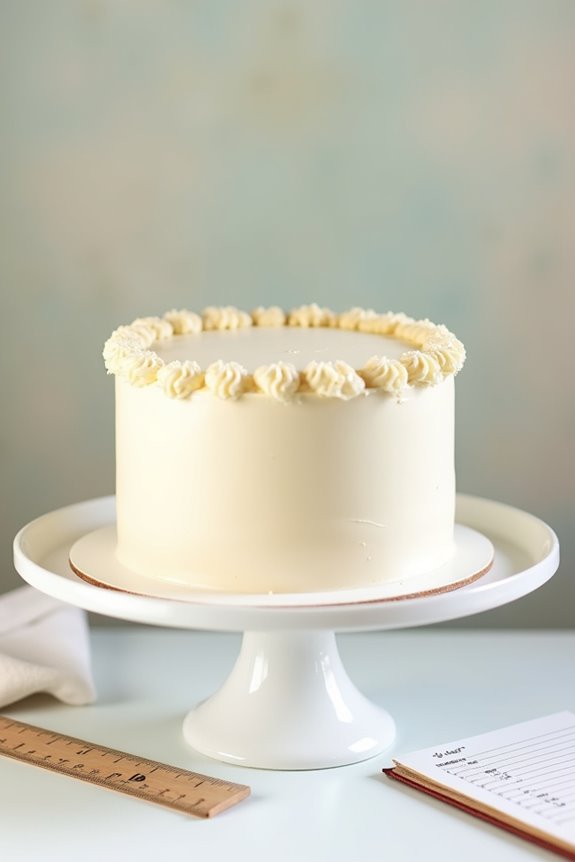
How do you guarantee everyone gets their slice without running short or having too many leftovers? Start by multiplying your 25 guests by your chosen portion size—0.75, 1, or 1.25 servings—then round up. This simple calculation determines exactly how many servings you’ll need, giving you a well-planned event rather than a logistical problem.
Consider your crowd’s appetite. If guests have mixed hunger levels, split them into categories—light eaters, moderate, hearty—calculate each group’s servings separately, then sum the total. A standard wedding-style slice measures 1 by 2 inches, yielding roughly 25 servings from one cake. Sheet cakes using 2 by 3 inch portions offer another reliable benchmark. By doing this math upfront, you’ll confidently order the right amount—no scrambling, just satisfied guests enjoying every bite.
Standard vs. Wedding Portions: How Cut Size Changes Servings
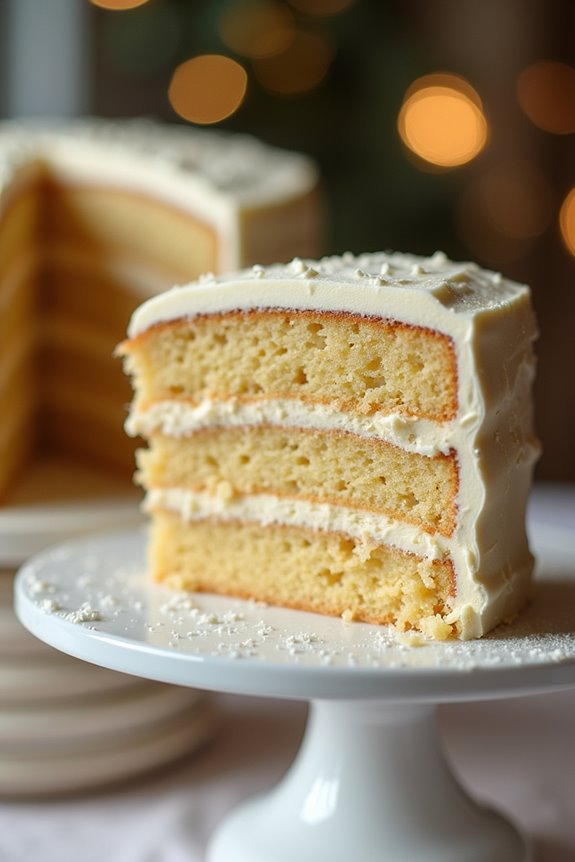
When you’re planning cake for 25 guests, you’ll discover that the difference between a standard 1.5 x 2-inch party slice and a delicate 1 x 2-inch wedding portion significantly reshapes your cake mathematics—the latter nearly doubles your servings from the same tier. You’re not just choosing a cut size; you’re determining whether a single 8-inch round (yielding roughly 24 party slices) suffices for your crowd or whether you’ll need to bump up to sheet cake formats that reliably deliver 24–96 uniform servings depending on dimensions and precision. Your choice here—wedding elegance with smaller, more refined portions versus hearty party-sized wedges—affects both your guest experience and your overall cake investment.
Party Slice Dimensions
The difference between a party slice and a wedding slice—roughly half an inch narrower and the same length—affects everything you’ve planned for your 25 guests. When you cut standard party portions at 1.5 x 2 inches, you’re making a clear statement about generosity and indulgence. But here’s where it gets interesting: that single serving size choice determines whether you’re celebrating intimately or stretching your cake across more plates.
Your 8-inch round wedding cake yields roughly 24 wedding-sized servings, yet becomes just 8–10 party slices. That’s the power of dimension. You’re not simply serving cake; you’re organizing an experience. Narrower wedding portions create abundance—more slices, more shareable moments, more belonging around your table. The serving size you choose reflects how you want your guests to feel.
Wedding Cut Portions
Why does a single inch of width transform your cake strategy so completely? Wedding cuts—those elegant 2-by-1-inch slices—maximize your servings, allowing you to stretch a single tier and welcome more guests to your celebration.
When you embrace wedding-cut portions, you’re choosing sophisticated elegance:
- Standard slices (1-2 inches wide, 4-5 inches tall) serve fewer guests per cake
- Wedding cuts yield nearly double the servings from identical cake sizes
- An 8-inch round produces 24 servings with wedding portions versus 12 standard slices
- Smaller cuts maintain refined presentation while extending your cake’s reach
- You’re joining hosts who prioritize both abundance and visual impact
This technique lets your decorative tiered cake serve as a centerpiece while sheet cakes work discreetly behind the scenes. You’re creating belonging—making certain everyone receives cake, everyone feels included, and your vision remains distinctly elegant.
Single-Tier Cakes for 25 People: Size Guide
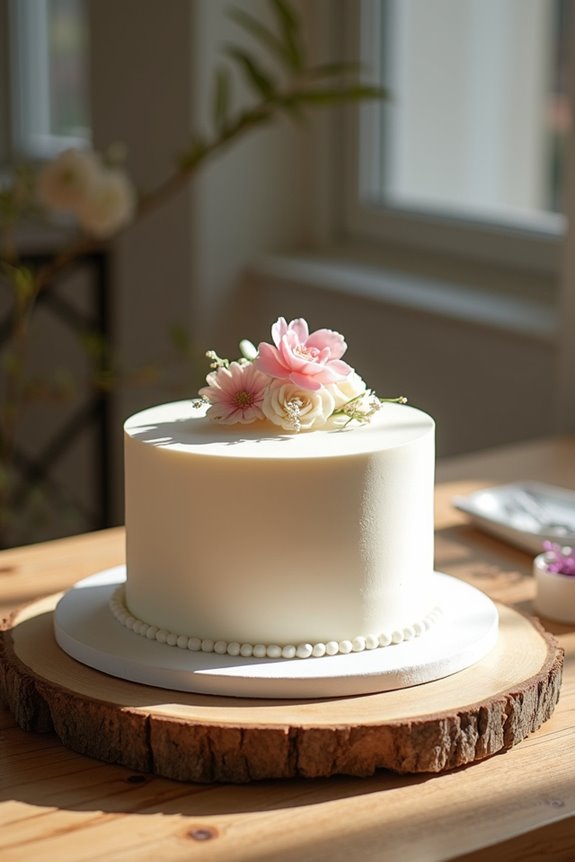
When you’re serving exactly 25 guests, you’ll want to consider whether a round or square cake better suits your space and presentation style—each offers distinct advantages in how you’ll portion and display your dessert. A 6-inch round cake standing 4 inches tall, or alternatively a 7-inch round at 3 inches, gives you the flexibility to cut standard wedges that’ll feed your crowd without wasteful leftovers or skimpy slices. Your portion size ultimately determines everything: tighter cuts yield more servings, while generous slices—think restaurant-quality thickness—mean you’re maximizing both satisfaction and the cake’s visual impact on the table.
Round Cake Dimensions
How do you choose the right cake size when 25 guests are counting on you? Round cakes offer an elegant solution, delivering polished presentations and evenly portioned slices for your crowd.
Here’s what you’re working with:
- 9-inch round cake yields approximately 28 servings—your safest bet for 25 people
- 8-inch round cake provides about 24 servings, so consider making it two layers for extra height and capacity
- 6-inch round cakes serve 12–14 people each, requiring two tiers to reach your guest count
- Slicing from center outward maintains consistent portions and keeps that polished finish
- Wedding-style servings (1 x 2 inches) maximize your cake’s reach while keeping portions generous
A 9-inch round delivers abundance without overthinking logistics—that’s the practical choice for your celebration.
Square Cake Options
Square cakes command a different kind of presence than their round counterparts—they’re architectural, modern, and they pack more servings into the same footprint. An 8-inch square delivers roughly 25 servings with standard cuts, while a 9-inch square yields 29–36 servings, giving you breathing room for generous portions. You’ll appreciate how square geometry translates into precise, elegant slices—each 1–1.25 inches wide, cleanly portioned without waste. This straightforward math means you’re confident about feeding your 25 guests without awkward calculations. Whether you’re hosting an intimate gathering or want a striking centerpiece, a square single-tier cake offers sophistication and practicality. The crisp edges photograph well, too, creating that polished look your guests will notice while you manage portion planning with ease.
Portion Size Considerations
What you’re really asking yourself isn’t just “how big should my cake be?” but “will my guests leave satisfied?”—and that distinction matters more than you’d think.
Your serving size choice fundamentally shapes the experience. Consider these approaches:
- Wedding-style portions (1 × 2 inches) yield roughly 12–20 servings from a 6-inch round
- Party-style cuts (1.5 × 2 inches) stretch that same cake to 20–24 servings
- Generous slices demand a 7–8 inch tier for adequate coverage
- Mixed strategies pair a showcase cake with hidden sheet cake backup
- Height matters—a 6-inch by 3-inch tall cake serves more than shallow alternatives
You’re not simply dividing cake into portions; you’re orchestrating moments of satisfaction. Smaller, refined slices suggest elegance and intention. Larger pieces communicate abundance and warmth. Your guest count of 25 thrives with a 7-inch single tier, offering flexibility between intimate and indulgent serving sizes while honoring everyone’s appetite.
Why an 8-Inch 3-Layer Cake Typically Works Best?
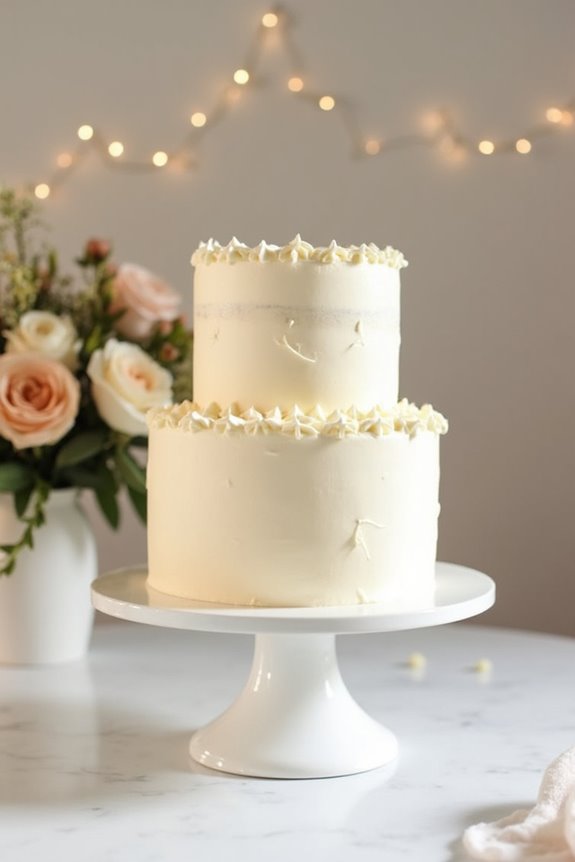
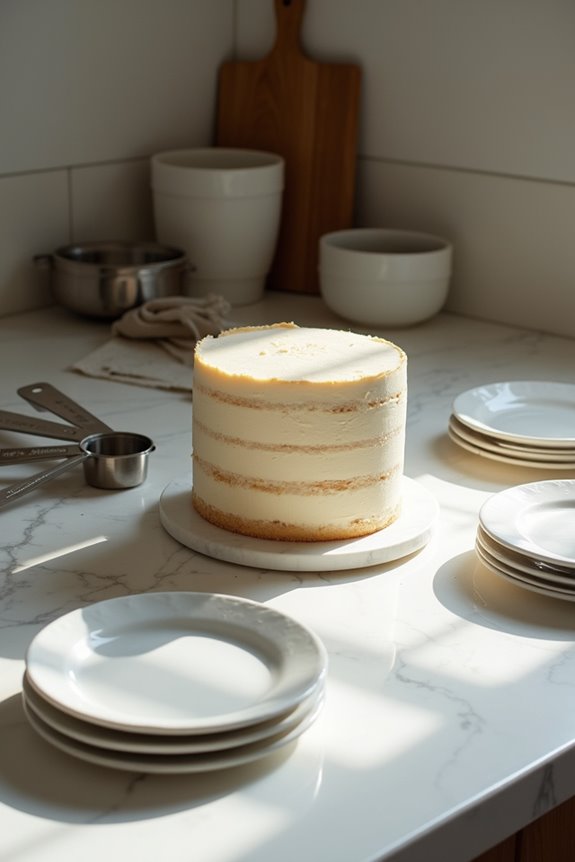
Why an 8-inch three-layer cake works well for 25 guests? You’ll find that this configuration delivers approximately 25–45 servings, depending on whether you’re cutting generous 3×2 inch portions or refined wedding-style 2×1 inch slices. The advantage lies in layering: three tiers stack enough cake to feed everyone without overwhelming your kitchen logistics. You’re not wrestling with unwieldy sheet cakes or scrambling to bake multiple smaller rounds. Instead, you’ve got a visually impressive centerpiece that feels intentional and gathered—the kind of cake that shows you’ve thought this through. The vertical architecture distributes portions evenly, accommodating varied appetites across your guest list. That tiered elegance? It’s simultaneously practical and attractive, making you feel like a confident host who understands the balance between abundance and restraint.
Round vs. Square: Which Shape Maximizes Portions?
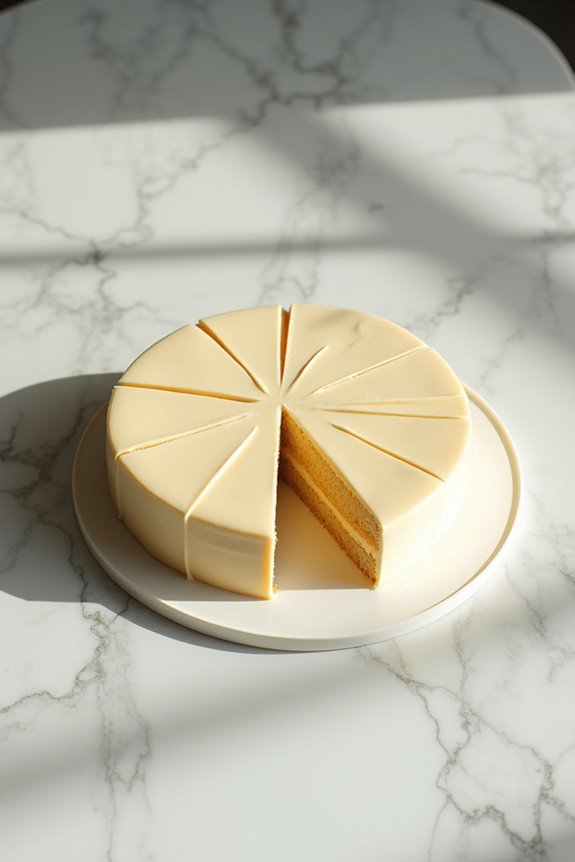
Have you considered how geometry itself shapes your cake-serving strategy? When you’re feeding 25 guests, shape matters more than you’d expect.
Here’s what you should know:
- Square cakes maximize surface area, letting you cut efficient grid patterns for consistent portions
- Round cakes require careful planning to yield comparable servings from the same footprint
- Straight edges on squares eliminate the awkward angle cuts that round cakes demand
- Multi-tier square configurations provide predictable, uniform slices across all layers
- Grid cuts on squares naturally increase total servings versus radial slicing
The square shape offers practical advantages when you’re aiming for maximum portions. You’ll achieve 25+ clean slices without waste, while round cakes might leave you scrambling for that extra piece. Choose square—it’s the geometry of abundance, offering you predictable results and practical efficiency in one sophisticated package.
Sheet Cakes: The High-Volume Alternative
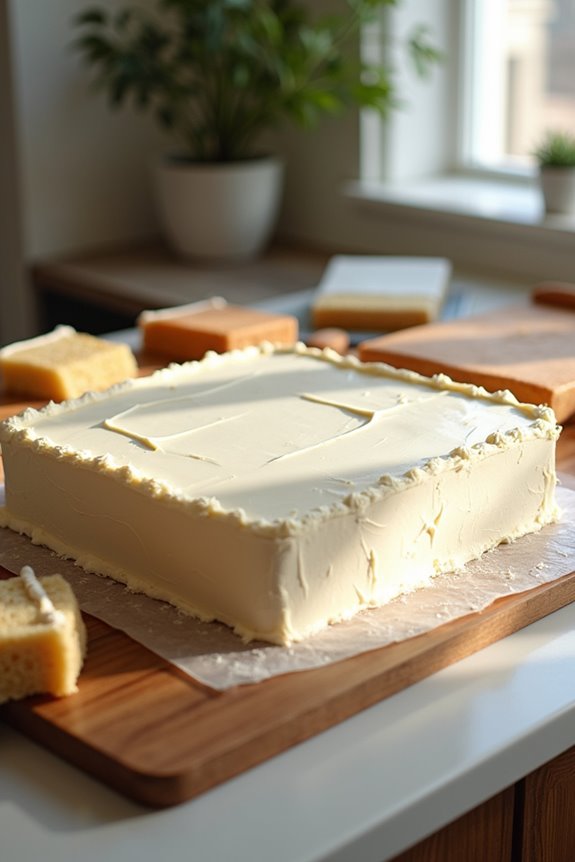
When you’re feeding 25 guests, sheet cakes—those practical 18 x 26 inch powerhouses—offer flexibility that round or square alternatives simply can’t match. A quarter sheet delivers roughly 24–30 servings with standard 2 x 3 inch cuts, while a full sheet bumps that capacity to 49–96 servings depending on how generously you slice, making it your practical solution for maximizing portions without sacrificing quality. Whether you’re displaying one sheet cake front-and-center or keeping backup servings tucked behind the scenes, you’re choosing efficiency combined with sophistication—the kind of strategic thinking that transforms logistics into effective hospitality.
Quarter Sheet Serving Guide
Looking to feed a crowd without fussing over intricate designs? A quarter sheet pan—that’s 9 by 13 inches—delivers genuine practicality for your gathering. You’ll get roughly 24 servings when you cut standard 2 by 3 inch pieces, which means you’re nearly there for 25 guests.
Here’s what makes quarter sheets so appealing:
- Straightforward cutting yields consistent, professional-looking portions
- Mass-produced appearance feels intentional, not rushed
- Manageable size for behind-the-scenes preparation
- Pairs beautifully with complementary mini desserts
- Practical economics without sacrificing generosity
For your exact headcount, consider pairing your quarter sheet with smaller cakes or additional treats—think mini cupcakes or petit fours—so everyone leaves satisfied. This approach delivers abundance while maintaining the thoughtful presentation your guests deserve.
Full Sheet Capacity Options
Why settle for modest when you can embrace abundance? A full sheet cake—measuring 18 by 26 inches—delivers 49 to 96 servings depending on your slice dimensions. You’re looking at genuine flexibility here. Standard sheet cake servings use a 2-by-3-inch cut, transforming one pan into a crowd-pleasing centerpiece. For your 25 guests, a full sheet provides substantial cushion; you’ll have leftovers or room to cut generous portions. Consider pairing it with a smaller tiered cake for visual interest while maintaining practical serving capacity. This hybrid approach—elegant height combined with reliable volume—lets you maximize both aesthetics and satisfaction. You’re not just feeding people; you’re orchestrating an experience where everyone feels welcomed and well cared for.
Tiered Cakes When You Need Visual Impact
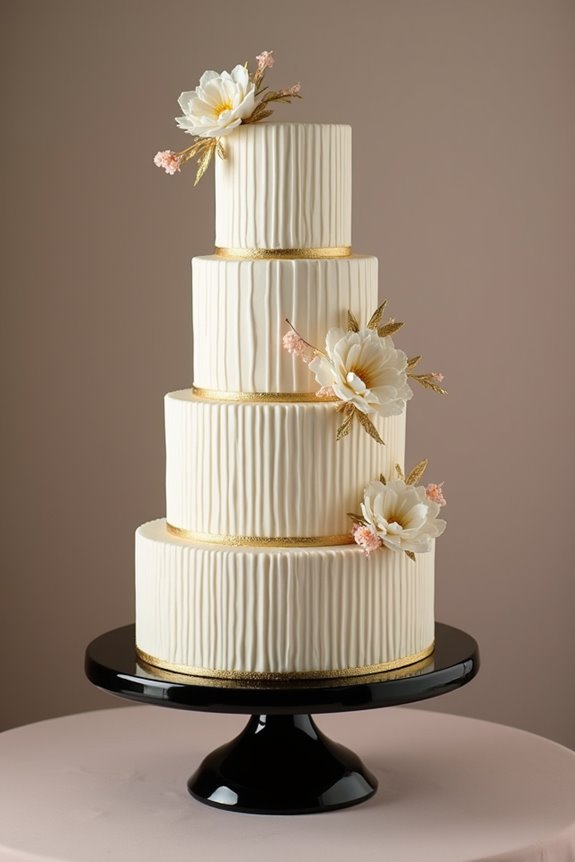
How do you transform a simple dessert into a focal point? Tiered cakes deliver exactly that—height and presence that command attention. For 25 guests, you’ll want architecture that works without waste.
Consider these strategic advantages:
- A 5″, 7″, 9″ combination yields 50–60 servings, giving you comfortable flexibility
- Smaller portions (2×1 inches) stretch each tier further, maximizing your guest count
- Stacked tiers use the same footprint as one large cake while appearing more sophisticated
- Three levels create visual momentum—building interest as eyes travel upward
- You’ll serve your crowd with elegant efficiency, every slice feeling considered and deliberate
This approach turns your dessert into an architectural statement. You’re not just feeding 25 people; you’re creating a moment they’ll photograph and discuss long after the last crumb disappears.
How Cake Height Changes Your Serving Count
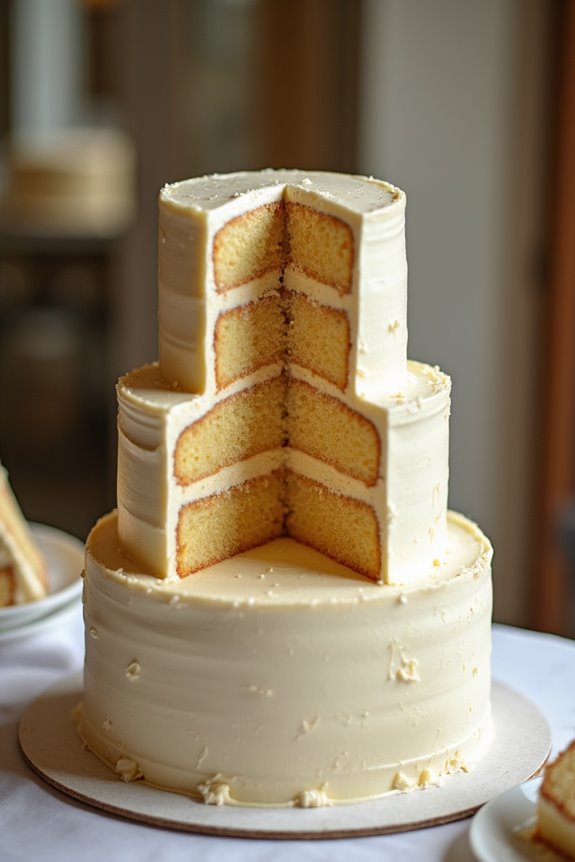
You might assume that baking a taller cake—say 6 inches instead of 3—automatically gives you more servings for your 25 guests, but here’s the reality: a cake’s height doesn’t determine portions; the pan’s diameter does. Whether you’re working with a standard 3-inch-high cake or one that towers at 6 inches, both yield identical servings from the same 9-inch or 10-inch round pan—the difference lies purely in slice thickness and visual impact. However, if you’re working with a shorter cake measuring less than 3 inches tall, you’ll need to account for roughly half the typical servings, meaning you’d want to size up your pan or bake multiple layers to reach your guest count without cutting awkwardly thin pieces.
Standard Height Cake Servings
When you’re sizing up a cake for your 25 guests, the height of your layers matters far less than you’d think—and that’s good news for your planning.
Standard cakes between 3 to 6 inches tall deliver consistent servings from the same pan size. You’ll find that:
- A 6-inch round cake yields identical servings whether it’s 3 or 6 inches tall
- Shorter cakes under 3 inches provide roughly half the expected servings
- 4-inch heights maintain serving counts tied to pan dimensions, not vertical measurement
- Torting and stacking taller layers produces the same total servings as single-layer options
- Cutting identical portions regardless of height preserves your guest count
This flexibility means you’re not locked into specific dimensions. Your focus shifts toward pan size and cutting strategy—the real drivers of reliable servings for your celebration.
Shorter Cake Portion Adjustments
Pan size dictates your serving count—height simply doesn’t. When you reduce your cake below 3 inches, you’ll notice servings drop roughly by half, even when using the same pan. This matters for your 25-person celebration.
| Pan Size | Standard Height (3″) | Reduced Height (<3") |
|---|---|---|
| 6″ Round | 8 servings | 4 servings |
| 8″ Round | 12 servings | 6 servings |
| 9″ Round | 15 servings | 8 servings |
| 10″ Round | 20 servings | 10 servings |
You’ll maintain your planned portions by keeping your cutting pattern consistent—whether that’s center-outward wedges or grid lines. Multi-layer torting lets you achieve your target height while preserving those serving amounts. Your pan’s standard serving chart becomes your reference guide, so everyone at your gathering receives their slice.
Cut Smarter: Techniques That Maximize Portions
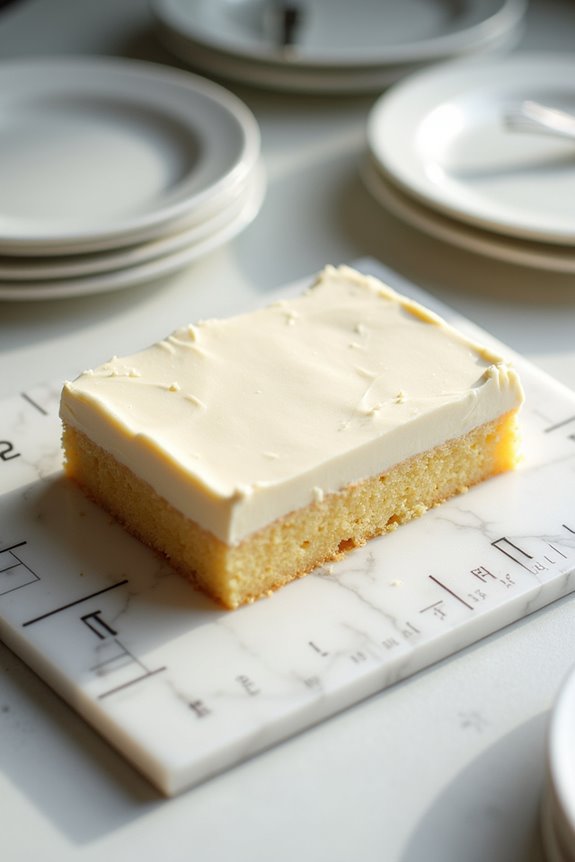
How much cake’s actually on your plate? You’d be surprised. By mastering strategic cutting techniques, you’ll get more cake servings from your 8-inch three-tier cake than you initially imagined.
Master strategic cutting techniques to maximize servings from your three-tier cake beyond what you’d initially expect.
Here’s how you maximize portions:
- Cut standard 1 x 2 inch slices for traditional wedding-style portions, yielding 24–28 servings
- Reduce slice dimensions to 2 x 1 inches for modest, elegant portions—boosting output to 40–50 servings
- Use a serrated knife dipped in hot water between cuts for clean, professional edges
- Mark your cake with toothpicks before cutting, establishing consistent spacing across all three layers
- Pair your tiered cake with mini desserts, creating variety while stretching servings comfortably for 25 guests
You’re applying practical intelligence to your slicing approach, not wasteful excess. Thoughtful slicing converts your centerpiece into a generous experience—one proportioned slice at a time.
When to Add Mini Desserts to Your Cake Order
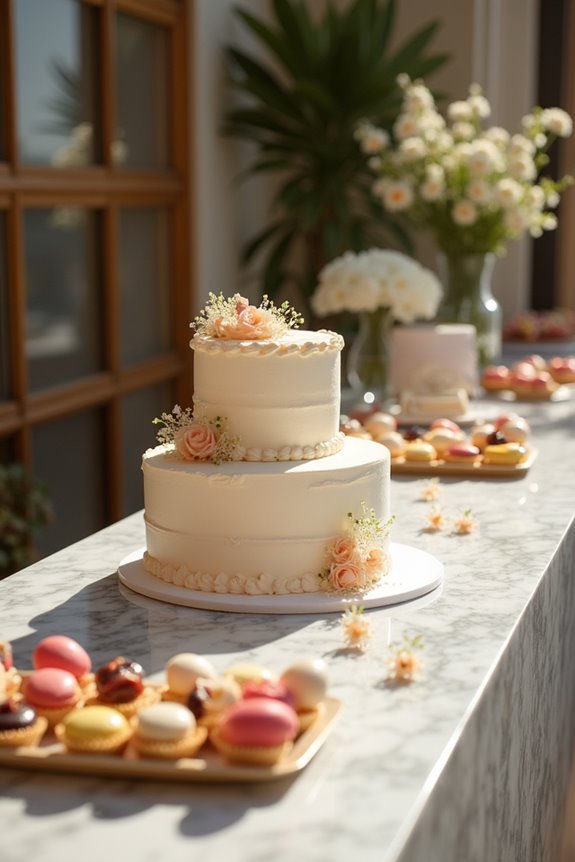
Why settle for a single dessert experience when you can offer a variety that appeals to different tastes? Adding mini desserts—cookies, bars, and cupcakes—provides multiple options alongside your cake. Plan for 3–4 mini items per guest to ensure adequate variety. Since each mini dessert delivers just 1–2 bites, guests can sample multiple flavors without over-committing to any single option. This approach works well when your cake serves as the centerpiece; you’re expanding the dessert offerings beyond standard cake servings. Round up your quantities generously—running short limits the range of options you can present. The result is a dessert table that feels abundant and well-considered for all attendees.
Building in a Buffer: Plan for Seconds and Dietary Needs
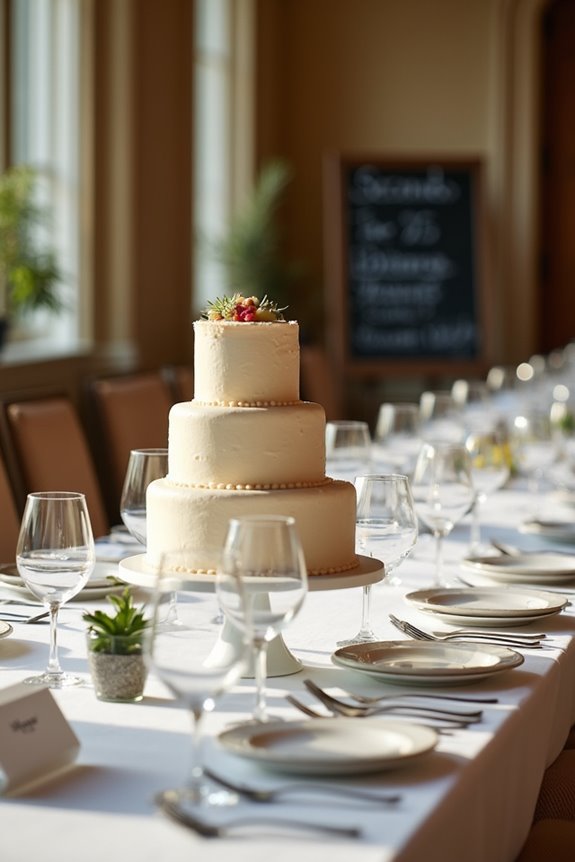
While mini desserts expand your table’s appeal, thoughtful planning for seconds and dietary accommodations shows respect for your guests.
Smart servings planning means adding 10–20% beyond minimum portions. Here’s how you build confidence into your cake order:
Smart servings planning adds 10–20% beyond minimum portions, building confidence into your cake order.
- Map your 25 guests to a serving chart, accounting for varying appetites
- Add 1–2 extra servings per tier to accommodate seconds without stress
- Include nut-free and egg-free options alongside your main cake
- Label dietary offerings—gluten-free, dairy-free—so everyone knows what’s available
- Choose tiered setups (6-inch + 8-inch) that maximize flexibility and presentation
This approach to cake service moves beyond logistics into considerate hospitality. You’re not just feeding guests; you’re inviting them to linger, enjoy, and feel welcomed at your celebration.
Using a Cake Calculator: Validate Your Size Choice
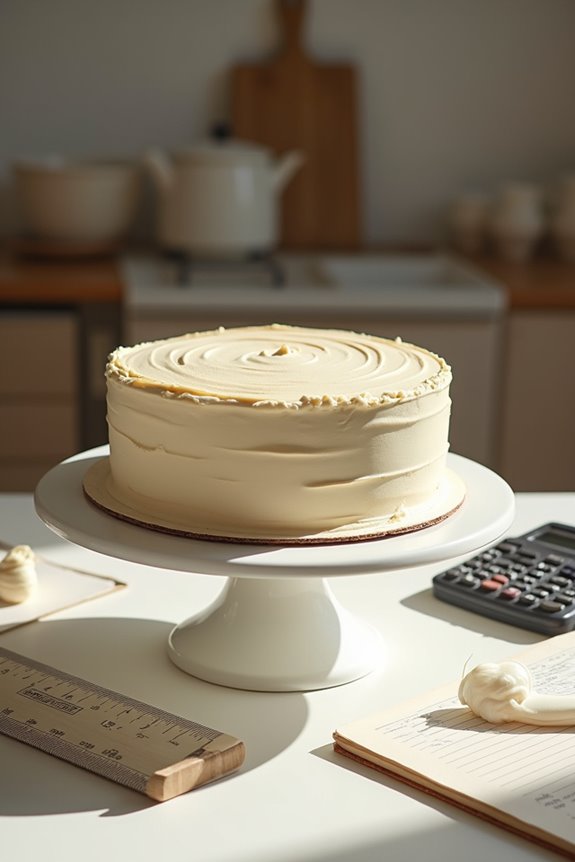
Once you’ve settled on your guest count and accounted for seconds, a cake calculator becomes your trusted ally—transforming guesswork into confidence through simple mathematics. You’ll input your pan shape, dimensions, and desired slice size (say, 2 x 3 inches for sheet cakes), and the tool instantly reveals how many servings you’ll actually achieve. This validation step prevents the awkward moment of running short mid-celebration. Round up your results generously; hunger levels vary dramatically among your 25 guests. A calculator doesn’t just confirm whether one tier suffices—it guides you toward smart combinations, like pairing a primary cake with complementary desserts. You’re not merely calculating numbers; you’re orchestrating an experience where everyone feels welcomed and satisfied, with confidence backing every decision.
Avoid These Common Cake-Sizing Mistakes
Even with a calculator validating your numbers, you’re not done yet—because the math alone won’t save you from the pitfalls that catch most hosts off guard.
You’ll want to sidestep these common missteps when determining cake servings for your celebration:
- Underestimating portions by relying on decorative finger servings instead of standard dessert slices
- Choosing one small cake for 25 guests, forgetting that a single 8-inch round yields roughly 12–16 servings
- Ignoring competing desserts on your table that’ll compete for attention alongside your cake
- Selecting the wrong pan shape—sheet cakes yield more portions than their round counterparts at identical sizes
- Skipping tiered heights when three layers dramatically increase cake servings without enlarging your cake’s diameter
These oversights complicate celebration planning. Instead, account for every variable—competing treats, actual portion expectations, and strategic layering—so your cake arrives as the generous centerpiece your guests deserve.
Round-Up Rule: Always Order Slightly More Than You Need
Why does the most carefully calculated cake order so often fall short when guests arrive? You’ve done the math—25 people, standard 1 x 2 inch slices—yet somehow you’re rationing dessert by evening’s end.
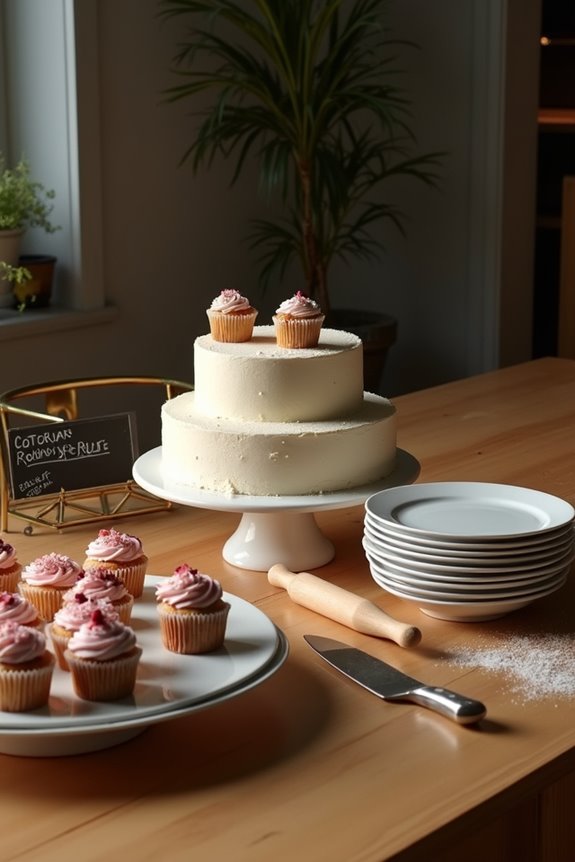
That’s where the Round-Up Rule helps. Instead of ordering exactly 25 servings, you’ll want a cake yielding 26–28 slices. This cushion accounts for reality: guests taking larger portions, unexpected arrivals, or children wanting double helpings. Think of it as insurance that protects your hosting confidence.
Consider upgrading one tier slightly or adding a small sheet cake. These strategic adjustments—costing just a few dollars more—eliminate the worry of running short. You’re not just ordering cake; you’re making certain everyone feels welcomed and satisfied, with perhaps even generous leftovers to enjoy afterward.
Ready to Order? Your Cake-Size Decision Checklist
With the Round-Up Rule tucked into your planning strategy, you’re ready for the practical work—actually selecting which cake dimensions’ll deliver those 26–28 slices you’re after. Before you commit, run through this quick checklist:
- Measure your space: Does your venue fit an 8-inch three-layer round, or do you need a half-sheet pan’s sprawling 13×18 footprint?
- Confirm portion preferences: Will guests want generous 1.25 servings or lighter 0.75 helpings?
- Cross-reference servings charts: Match your chosen pan size against professional yield estimates for accuracy.
- Account for dietary variety: Factor in whether you’re offering multiple flavors, reducing individual servings per guest.
- Finalize with your baker: Discuss exact dimensions and expected servings to eliminate last-minute surprises.