
You’ve got options—Advent’s fourth Sunday (November 30 in 2025), December 1st’s official kickoff, or even late October’s early-bird approach.
Real trees stay fresher through four weeks, so mid-November timing works best; artificial trees offer complete flexibility.
Start with your living room anchor, layer garlands and candles at varying heights, then coordinate outdoor wreaths and entryway displays by late November.
Each choice shapes your entire celebration’s rhythm and intentionality.
Advent Timing: The Fourth Sunday Before Christmas
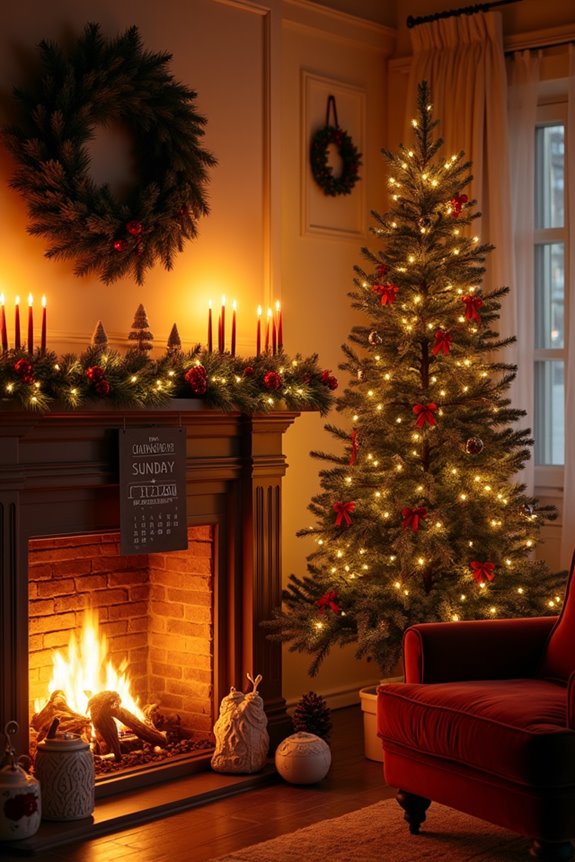
When does the Christmas season truly begin? For many households seeking meaningful tradition, Advent timing offers a purposeful answer. The Fourth Sunday before Christmas marks this sacred threshold—in 2025, that’s November 30th, when you’ll decorate Christmas trees and garland with intentional care.
You’re joining a centuries-old rhythm when you embrace Advent timing. Rather than succumbing to early-November retail pressure, you’ll align your home’s transformation with genuine spiritual preparation. Some families prefer waiting until that first December weekend instead, which creates flexibility without losing reverence.
This approach distinguishes your household from the post-Thanksgiving rush. You’re claiming decorating as a deliberate act—not rushed obligation but cherished ritual. Whether you choose Advent Sunday or early December, you’re honoring a tradition that deepens your season’s meaning while creating space for genuine anticipation.
Decorating After Halloween: The Early-Bird Approach

Why wait when October’s final day already whispers permission? You can embrace the early-bird approach, transforming your home into a festive haven before November even arrives. Many households skip the traditional waiting game entirely, stringing lights and hanging garland the moment Halloween decorations come down—creating that coveted continuous celebration feeling.
This method builds genuine anticipation throughout autumn, letting you savor the season’s character longer. You’ll avoid the December 1st crush when everyone simultaneously scrambles for supplies and installation spots. Your early-bird commitment means leisurely evenings arranging evergreen branches, selecting ornament placements, and creating atmospheric warmth without rushing.
December 1st remains a natural checkpoint for those preferring structure. Yet starting earlier grants you something valuable: unhurried joy, manageable pacing, and the satisfaction of watching your vision unfold gradually rather than frantically.
December 1st: Why Many Families Start Their Countdown
The concept: the calendar flips to December, and across countless households, the ritual begins—lights strung along gutters, ornaments emerging from storage boxes, the scent of evergreen filling living rooms. You’re joining millions who’ve chosen December 1st as their official countdown kickoff, marking this date as an anchor point for holiday celebration.
This timing works well because it honors practical realities. Real Christmas trees stay fresher when displayed for about four weeks, making early December the ideal window. You avoid the post-Thanksgiving chaos while staying ahead of the holiday rush. December 1st also creates a clear transition—a gentle bridge from autumn’s remnants into full festive mode.
It’s not about racing toward Christmas; it’s about savoring the season deliberately, thoughtfully, together.
Real Trees vs. Artificial: How Your Tree Choice Affects Timing
Your tree choice fundamentally shapes when you’ll decorate—real trees demand a strategic mid-to-late November timeline to keep them fresh through December 25th, while artificial trees offer you the flexibility of spreading your decorating across weeks without concern. If you’ve chosen a fresh evergreen, you’re working within a four-week window: needles will drop, branches will dry out, and that crisp pine scent will fade unless you water regularly and manage the cleanup. Conversely, an artificial tree—whether it’s a pre-lit model requiring simple assembly or a premium Douglas fir replica—removes these time constraints entirely, letting you decorate your home whenever you choose and enjoy the same display year after year.
Real Tree Longevity Considerations
When you select a real tree for your home, you’re fundamentally choosing a living plant with a predictable lifespan—typically four to five weeks of vibrant freshness once it’s standing in your living room.
| Timing Strategy | Best For | Real Tree Longevity |
|---|---|---|
| Early December placement | Maximum seasonal enjoyment | 4-5 weeks with daily watering |
| Mid-December placement | Fresh Christmas appearance | 3-4 weeks through New Year |
| Late December placement | Minimal maintenance | 2-3 weeks post-Christmas |
Your December timing decisions hinge on understanding real tree longevity requirements. Regular watering and needle cleanup are necessary tasks for preserving that fresh-cut appeal. You’ll notice needles dropping accelerate without consistent hydration. Strategic placement closer to Christmas protects your investment, keeping your tree maintains its lush, welcoming presence through celebrations without premature wilting compromising your holiday atmosphere.
Artificial Tree Setup Advantages
Artificial trees liberate you from the constraints that govern real tree timing—they don’t wilt, drop needles relentlessly, or demand daily watering to maintain their appearance. You’re free to decorate whenever inspiration strikes, transforming your space on your terms. Consider these advantages:
- Setup flexibility—begin decorating in early November without freshness concerns
- Fire safety—your tree remains non-flammable throughout extended display periods
- Zero maintenance—no needle cleanup, no watering, no seasonal stress
- Multi-season reuse—your artificial Christmas trees pay dividends year after year
This freedom fundamentally reshapes your holiday planning. Rather than racing against time, you’ll experience a leisurely, intentional approach to creating festive spaces. Your home becomes a canvas for extended celebration, reflecting your unique rhythm instead of nature’s constraints.
Transitioning Fall to Winter: Swapping Décor Seamlessly
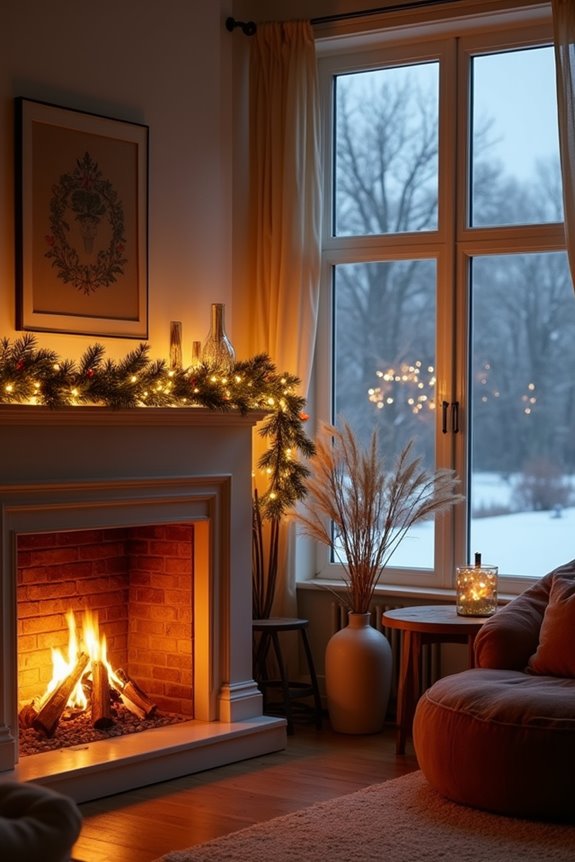
How smoothly can you pivot your home from autumn’s warm amber tones to winter’s crystalline whites and forest greens? You’re not alone in timing this transition strategically. Many households swap fall wreaths and garlands for winter greenery in late November, creating that shift before your Christmas decorating timeline accelerates. This thoughtful approach—replacing burnt orange accents with deep evergreen branches and silver-dusted pinecones—establishes visual cohesion throughout your home. Rather than abruptly abandoning autumn’s coziness, you’re honoring the season while building anticipation for what’s ahead. Think of it as a gentle handoff: remove pumpkin-themed centerpieces, refresh your mantel with garland and candles, swap plaid for metallics. This intentional choreography changes your space organically, letting your home breathe between seasons while keeping that festive momentum building toward December.
Room-by-Room Decorating: Where to Start and What to Prioritize
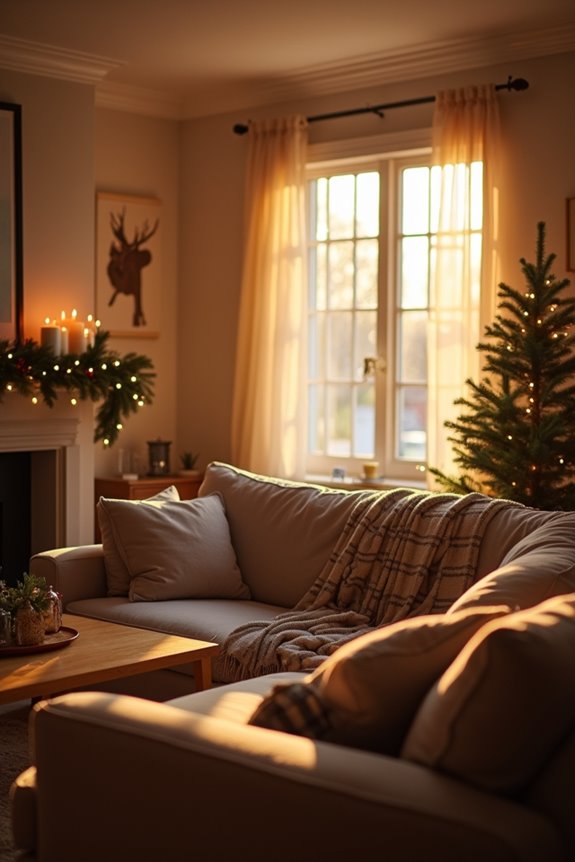
Once your home’s seasonal bones are in place—that thoughtful shift from autumn’s warmth to winter’s elegance—you’re ready to decorate: filling each room with purposeful, layered beauty that reflects your family’s style.
Start with these priority zones:
- Living room — anchor your space with a decorated Christmas tree, garlands, and twinkling lights creating warmth
- Mantel — layer garland with pinecones and ornaments, positioning unlit scented candles at varying heights
- Kitchen — hang holiday wreaths on cabinet doors and position a Christmas ScentPlug® diffuser near your table
- Bedrooms and dining — layer holiday bedding with seasonal prints, choosing cinnamon or sugared plum-scented candles for ambiance
Each room builds on the last, creating interconnected spaces where your family feels celebrated throughout the season.
Wreaths, Garlands, and Outdoor Displays: Timing by Location
When should you dress your front door and outdoor spaces with winter greenery? By timing your wreaths and outdoor displays strategically, you can develop a unified appearance—turning your home’s exterior into an inviting winter sanctuary that reflects your personal style.
| Location | Timing | Greenery Type |
|---|---|---|
| Front Door | Late November | Festive or neutral wreaths |
| Mantels | Early December | Mixed garlands with accents |
| Outdoor Spaces | Mid-November | Non-themed greenery first |
| Entryways | Late November | Coordinated wreaths |
Non-Christmas wreaths can go up before Thanksgiving, supporting your early festive transition. Once you’ve integrated greenery with other seasonal décor—think coordinated ribbons, lights, and natural elements—you’ll develop that unified winter display you’re planning. Align placement with your broader decorating plan, making sure your front door and outdoor displays work harmoniously with indoor spaces for a polished aesthetic.
Mantel and Living Room: Step-by-Step Setup Guide
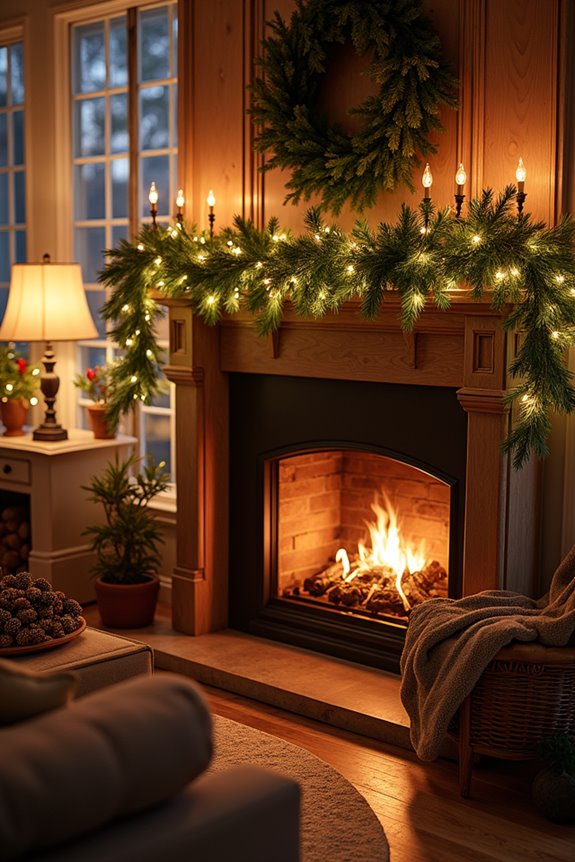
You’ll arrange your mantel by layering a garland base with pinecones and tinsel, then draping stockings and ribbons across the surface for added texture. Place Yankee Candle favorites—such as Christmas Eve Large Jar or Shimmering Christmas Tree 3-Wick—at varying heights alongside unlit scented candles to create ambient lighting that draws attention upward. This arrangement, repeated across your coffee table and side surfaces, provides a unified holiday look for your living room while filling the space with warmth and seasonal fragrance.
Layering Garland And Stockings
How do we transform a bare mantel into the heart of holiday elegance? By strategically layering textures and heights, you’ll create a display that draws everyone’s eye. This is the time to commit to decorating with intention.
- Start with garland as your foundation, draping it across the mantel’s length
- Add pinecones, tinsel, and ornaments for depth and sparkle throughout
- Arrange stockings using decorative holders in cohesive groupings
- Place unlit scented candles—Yankee Candle’s Christmas Eve, Christmas Cookie, Shimmering Christmas Tree—at varying heights
You’re building layers that frame your living room’s focal points. The garland’s varying textures become the canvas; stockings become the statement. Candles provide ambient warmth without competing with ornaments’ shimmer. This balanced approach creates a sophisticated yet inviting atmosphere—the space where your family naturally gathers.
Candle Placement And Heights
Those layered stockings and cascading garland have set the stage—now it’s time to illuminate your carefully composed mantel with candles that anchor the entire vignette. Starting the first week of December, strategically position unlit scented candles at varying heights across your mantel’s landscape. This deliberate candle placement creates visual rhythm and prevents a flat, monotonous appearance in your holiday display.
Stagger heights using three-wick Yankee Candles like Shimmering Christmas Tree alongside slimmer pillar candles—think 6, 9, and 12 inches. Position larger vessels toward the mantel’s edges, reserving center spots for delicate ornaments and pinecones. This arrangement provides ambient glow without exposing nearby garland and stockings to excessive heat. Your arranged mantel becomes an inviting focal point—a place where family naturally gathers, drawn by warmth and fragrance.
When to Buy: Shopping Strategy and Sales Timing
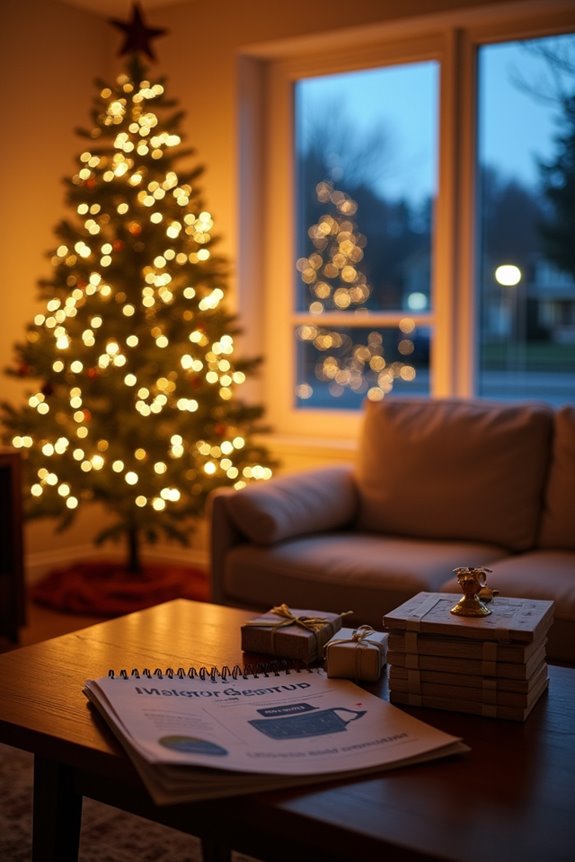
When’s the best moment to fill your cart with twinkling lights, garland, and ornaments? Mid-November through early December offers your optimal shopping window—that stretch where sales peak and you’re actually ahead of the curve.
Mid-November through early December is your optimal shopping window—when sales peak and you’re genuinely ahead of the holiday curve.
Consider these strategic moves:
- Cyber Monday deals unlock steep discounts on lights, trees, candles, and wreaths—your chance to score quality pieces without overspending
- Early shopping secures the best selections before December’s frantic crowds thin inventory
- Post-holiday clearance sales let you stock next year’s décor at slashed prices
- Blending holiday-specific elements—menorah candles or Kwanzaa kinara accents—extends your shopping window effectively
You’re not just buying decorations; you’re investing in traditions. Strategic timing means less stress, better choices, and genuine savings that let you create something worth your effort without compromise.
When to Take Down: Removing Decorations Without the Guilt
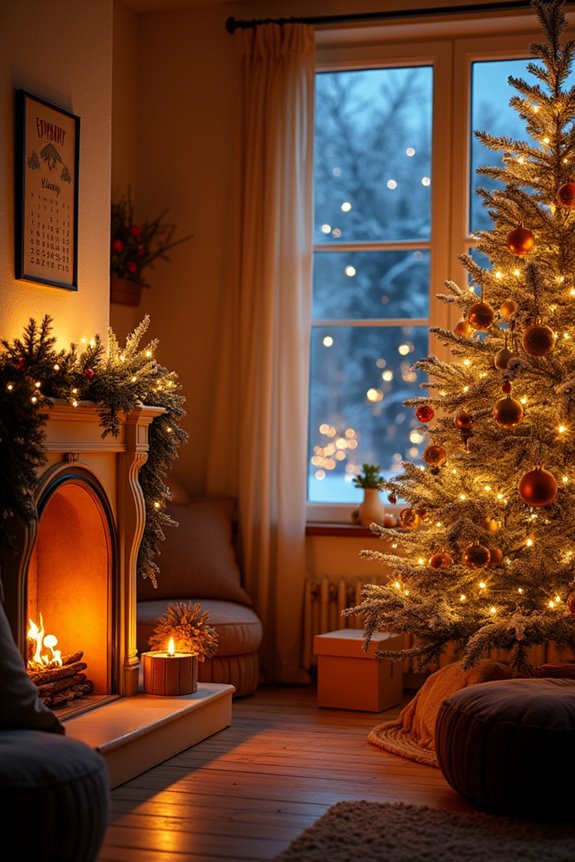
You don’t need to follow strict calendar rules—whether you take down your garland on January 6th or let those twinkling lights glow through mid-January, you’re making a choice that honors your household’s rhythm, not breaking some sacred holiday law. Consider the traditional 12-day window after Christmas, or simply remove decorations when the season genuinely feels finished to you—when the tree needles pile up faster than you can sweep, when the appeal fades, when you’re ready for January’s quieter aesthetic. Release yourself from the obligation to perform someone else’s timeline; your decorations came down exactly when they should’ve, because you’re the one who decides what “should” means in your home.
Traditional Takedown Timeline
How long should the festive glow actually linger in your home? You’re not alone in wondering when tradition meets flexibility during takedown season.
The traditional takedown timeline follows the 12 days of Christmas, suggesting you remove decorations by January 6—though many start around December 26. Here’s what works for different households:
- Early removal (late December) — preserves artificial trees and prevents moisture damage
- Epiphany timing (January 6) — honors religious traditions and extends festive warmth
- Flexible approach — keeps decorations up through mid-January based on personal preference
- Practical storage — considers space, organization, and preservation of cherished pieces
You’ll find no universal rule here—just options. Your family’s rhythms, cultural practices, and genuine desire to maintain that cozy atmosphere matter most. What resonates with you shapes when your home returns to its everyday character.
Guilt-Free Removal Strategies
Perhaps the guilt creeps in around January 10th—that nagging sense you’ve overstayed your welcome with tinsel and twinkling lights, or conversely, that you’re being rushed to strip away joy too soon. Release yourself from this pressure. You’re not alone in wrestling with December’s decorating timeline, and your removal pace belongs entirely to you.
Consider practical anchors instead of arbitrary deadlines: when greenery dulls, when storage space demands attention, or when you crave a cleaner aesthetic. These concrete markers eliminate the emotional weight. Some households thrive keeping decorations through January; others find January 2nd liberating.
Honor your household’s rhythm rather than external judgment. Permission granted—take them down next week, next month, or whenever feels right for you.