
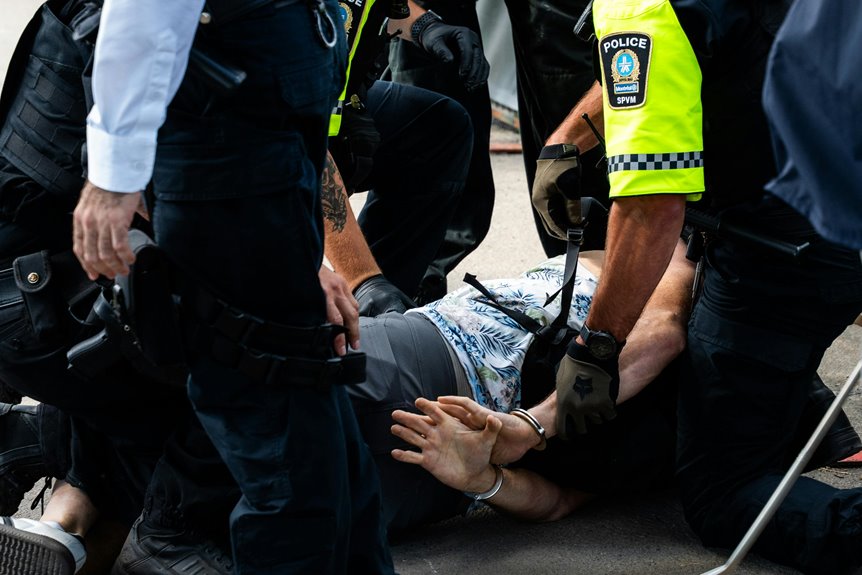
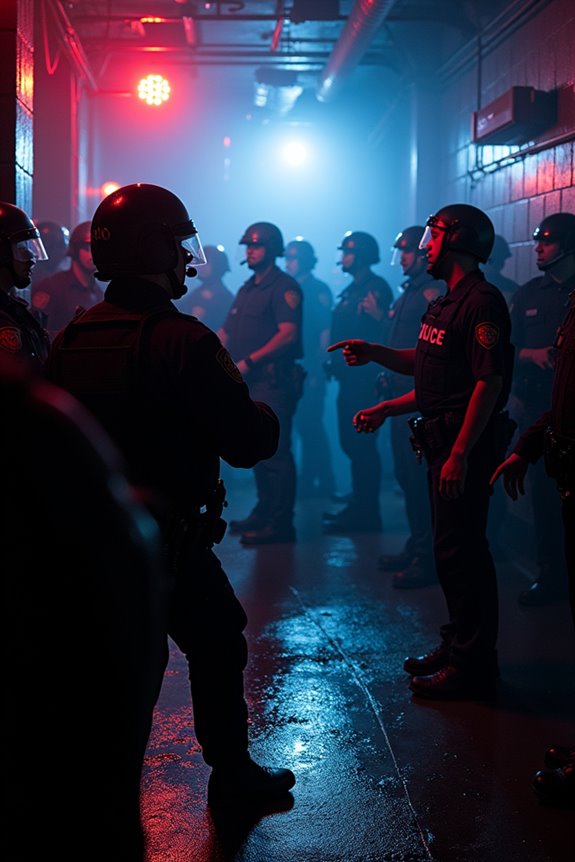
When police arrive at your party—typically responding to noise complaints or suspected underage drinking—they’ll knock, assess the scene from plain view for evidence like visible alcohol or drugs, and potentially enter without a warrant if they observe violations or exigent circumstances exist.
Officers document everything photographically, identify guests, verify ages, and can arrest you for underage drinking, drug possession, or paraphernalia charges ranging from misdemeanors to felonies carrying prison time.
Invoking your right to silence and requesting a lawyer immediately—before answering questions—fundamentally shapes your legal outcome, protecting you from self-incrimination during those critical first moments.
Why Do Police Show Up at Parties?
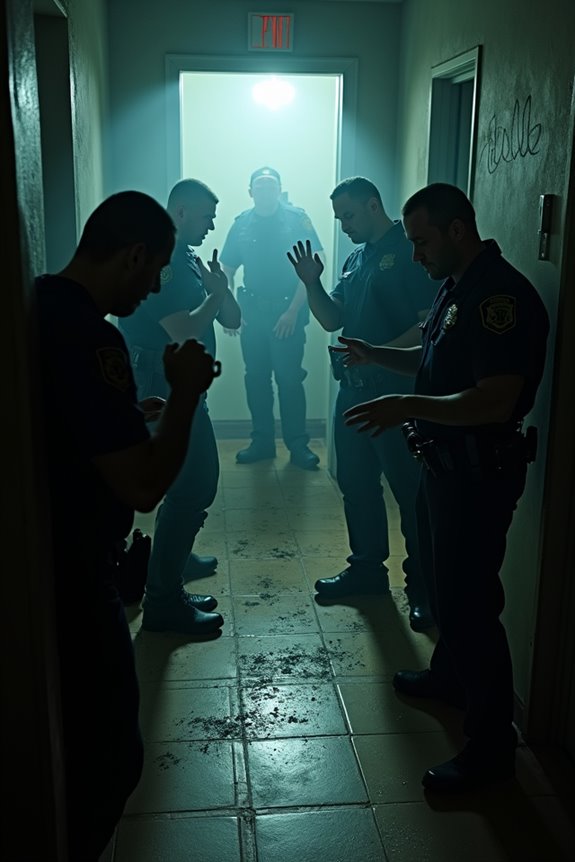
Why do blue lights sometimes pull up to that house down the street where everyone’s gathered? Police respond to parties for specific reasons—noise complaints top the list. When neighbors report excessive volume at 2 a.m., officers arrive to investigate. They’re also called when underage drinking is suspected, since serving alcohol to minors carries serious consequences. Officers don’t always need warrants and entry into homes; they knock, speak with owners about complaints, and assess situations from plain view. If they spot evidence of illegal activity through windows or doors, however, they can enter without warrants under exigent circumstances. Understanding these triggers helps you recognize why enforcement shows up—and what they’re actually looking for when they do.
What Happens When Police Arrive at Your Door?
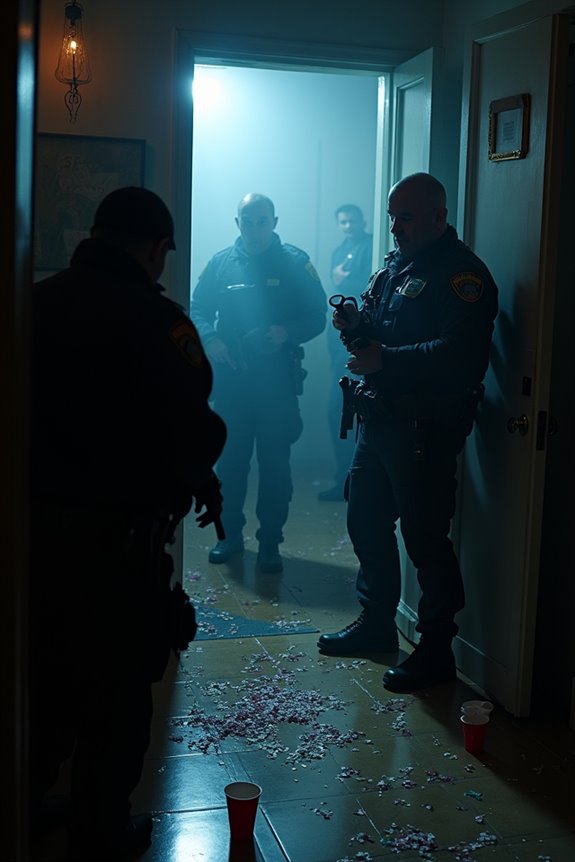
When those blue lights pull into your driveway, the actual encounter unfolds in moments that’ll shape everything that follows. Officers knock, speak calmly with the homeowner about noise complaints, and assess the situation quickly. Here’s what typically happens:
- Initial conversation: Police explain the complaint and request you lower the volume or ask guests to leave
- Warrantless entry: Officers can enter without permission if they spot underage drinking outside, suspect drug use inside, or see evidence in plain view
- Information gathering: You may be asked to identify guests and verify ages
- Respectful interaction: Remaining calm and composed significantly impacts how authorities handle the situation
Remember—you can request legal counsel before answering questions. This moment’s how you respond determines whether the night ends with warnings or consequences.
What Should You Say to Police?
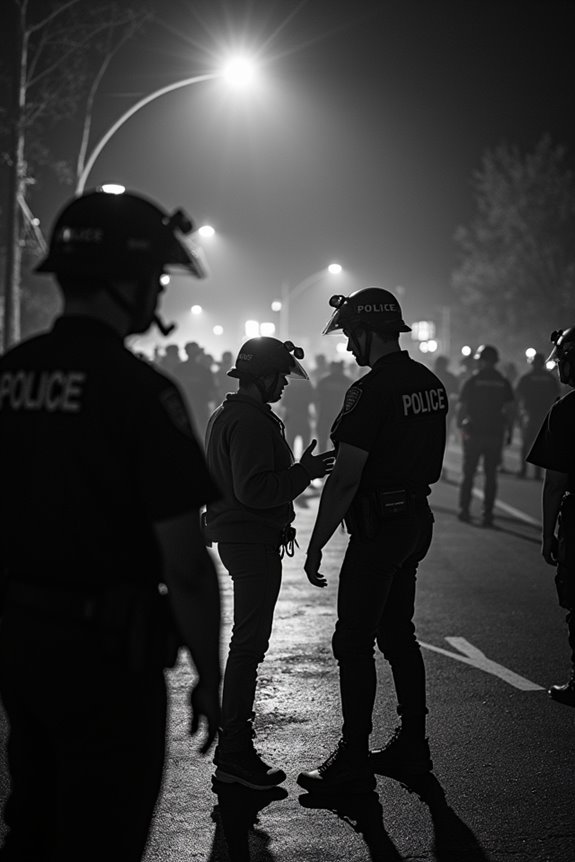
Your words in those critical first moments—when adrenaline’s pumping and officers are evaluating the scene—can fundamentally alter the trajectory of what happens next. Keep it simple: state your name and address if required, nothing more. Ask directly, “Am I being detained? Am I free to go?” This clarifies your police encounter status immediately. If officers push beyond basics, invoke your right to remain silent and request a lawyer. Don’t explain the party, justify the noise, or describe who brought what. When warrants and searches arise, verify the document’s address, date, and signatures before permitting entry—a valid warrant changes everything. Stay calm, respectful, non-confrontational. Your restraint protects you far better than your explanations ever could.
When Can Police Enter Without Permission?
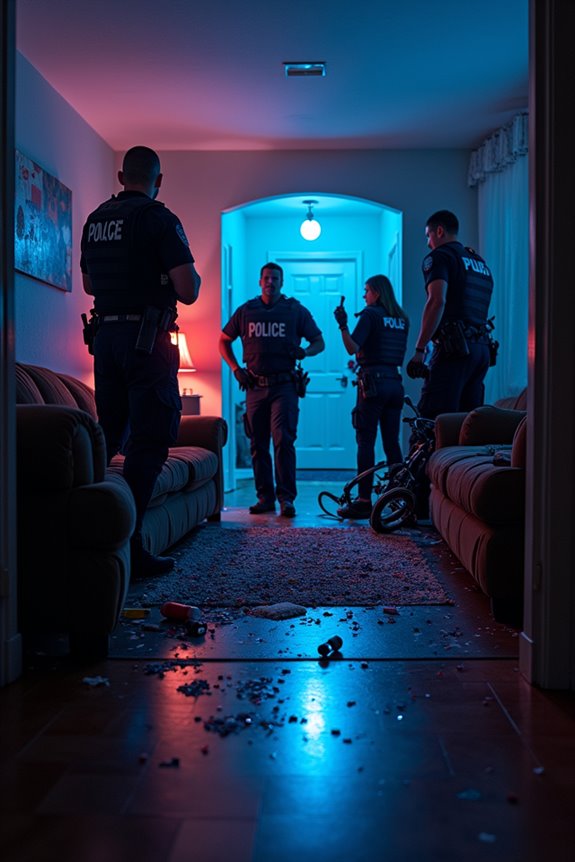
Understanding the legal boundaries around police entry hinges on recognizing that officers can’t simply walk through your door whenever they choose—but certain circumstances do grant them that power. You need to know when they’re actually allowed inside.
Officers can proceed without your permission in these situations:
- Plain view evidence: If they observe drugs or alcohol indicating underage drinking through a window or open door, they may enter
- Consent exceptions: You or any occupant can authorize warrantless search and entry, though this doesn’t permit unlimited searches
- Exigent circumstances: Emergency situations—like suspected violence or immediate danger—override the warrant requirement
- Reasonable suspicion: Information suggesting illegal activity inside may justify police entry to investigate
The threshold matters here. A noise complaint alone won’t cut it—they’ll typically request quieter conduct first. But evidence of underage drinking? That changes everything. You’re looking at potential police entry and conversations with partygoers inside.
What Happens If Police Find Evidence?
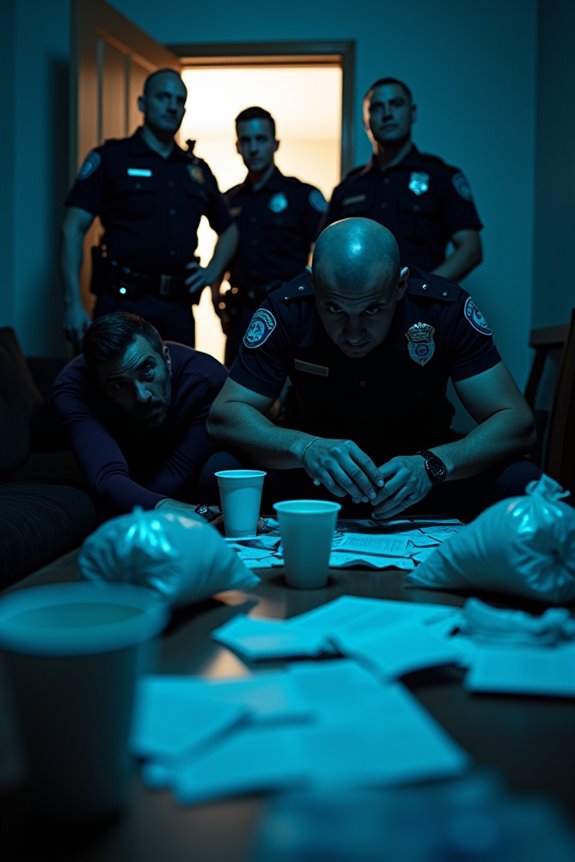
When officers spot red cups, solo beer bottles, or drug paraphernalia during a party bust, they’re building a case—and you’re now facing real consequences. They’ll document everything meticulously with photos and written reports, collecting evidence that turns a fun night into possession charges, underage drinking citations, or worse, depending on what they discover. If they find drugs, stolen property, or anything suspicious in plain view, you could be arrested on the spot, searched for additional evidence, and charged with crimes that’ll follow you far beyond the party’s end.
Evidence Collection and Documentation
Documentation transforms a chaotic party scene into a legal record—one that’ll either hold up in court or fall apart entirely. When officers establish probable cause through visible drug paraphernalia or other indicators, evidence collection becomes critical. During a warrantless search justified by exigent circumstances, investigators meticulously catalog everything seized.
You’ll want to understand what happens next:
- Officers photograph items exactly where they’re found—crushed beer cans on hardwood floors, baggies near couches
- They note precise times, temperatures, and lighting conditions at seizure
- Chain-of-custody documentation tracks every person handling evidence
- Written descriptions match physical evidence for courtroom credibility
Investigators preserve evidence under proper procedures, guaranteeing admissibility. They document locations, conditions, and identification details of those involved. This systematic approach transforms scattered party chaos into compelling legal testimony—the difference between convictions that stick and cases dismissed on technicalities.
Arrest and Criminal Charges
Once officers finish cataloging those crushed beer cans and baggies—transforming party chaos into documented evidence—the real legal consequences begin. You’re facing potential arrest if police discover underage drinking or drug use at your gathering. Officers will document everything thoroughly, building cases against partygoers and hosts alike. The charges you’ll encounter vary: underage drinking carries misdemeanor penalties, while drug possession escalates matters considerably. You might also face additional charges for property damage or trespassing violations. Here’s the critical part—homeowners bear liability even without knowledge of minors consuming alcohol on their property. The consequences ripple outward, affecting your future employment prospects and educational opportunities. Contacting a lawyer immediately becomes necessary; they’ll navigate the legal system protecting your rights while potentially reducing charges through skilled negotiation and courtroom advocacy.
What Criminal Charges Could You Face?
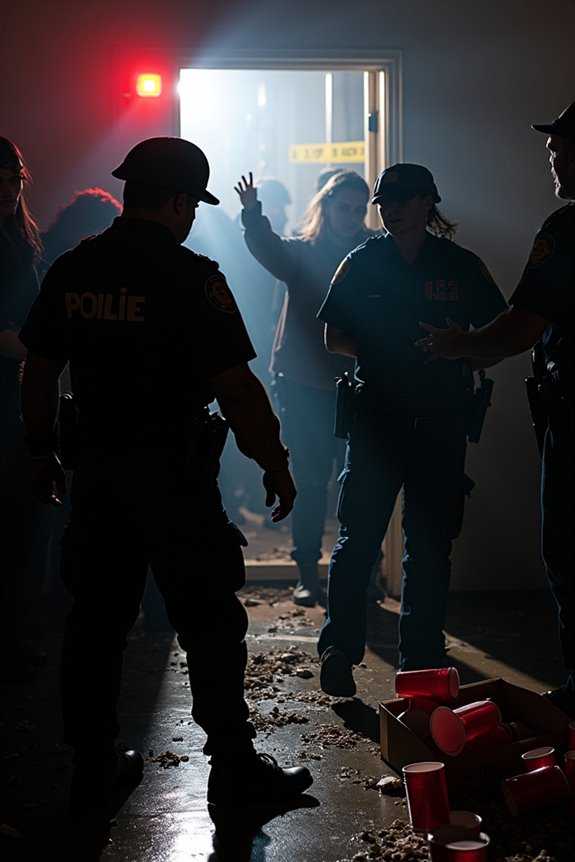
You’re looking at potential underage drinking citations that can escalate quickly—especially if you’re the one providing alcohol to minors, which transforms a party mishap into a serious criminal liability. If officers discover drug possession during the bust, you’ll face arrest and charges that vary dramatically depending on the substance’s type, quantity, and whether it’s classified as for personal use or distribution. Beyond the immediate charges, you’re vulnerable to additional liability as a homeowner or guest—property damage, trespassing claims, or harboring illegal activity can compound your legal troubles, making that attorney call necessary rather than optional.
Underage Drinking And Liability
What happens when police discover minors drinking at your party—whether you knew they’d arrived with a six-pack of Bud Light or snuck it in themselves—can reshape your entire future in ways that extend far beyond a single night of poor judgment.
You’re facing serious underage drinking liability. Officers don’t need breathalyzers or search warrants to file charges; visible intoxication or open containers suffice. As the host, you’ll encounter:
- Criminal charges for providing alcohol to minors, regardless of knowledge
- Financial penalties and restitution demands that drain savings quickly
- Civil liability extending to injuries guests sustain after leaving
- Potential felony charges if property damage or trespassing compounds the situation
Your homeowner’s insurance won’t cover these violations. One busted party alters your reputation and legal standing permanently.
Drug Possession And Arrests
Beyond the underage drinking fallout, a police bust often uncovers something far more damaging: drugs scattered across your living room table, a baggie wedged between couch cushions, rolling papers and a glass bong abandoned on the kitchen counter.
| Charge Type | Potential Penalty | Severity |
|---|---|---|
| Simple possession | Up to 1 year jail | Misdemeanor |
| Possession with intent | 2–5 years prison | Felony |
| Distribution charges | 5–20 years prison | Felony |
| Paraphernalia possession | $500–$1,000 fine | Misdemeanor |
| Combined offenses | Stacked sentences | Felony |
Officers seize drugs in plain view during warrantless searches, transforming your night into criminal liability. That underage drinking bust escalates dramatically when paraphernalia appears—suddenly you’re facing possession charges alongside your friends. Request legal counsel immediately; invoke silence and refuse questioning without representation.
Can You Refuse a Search?
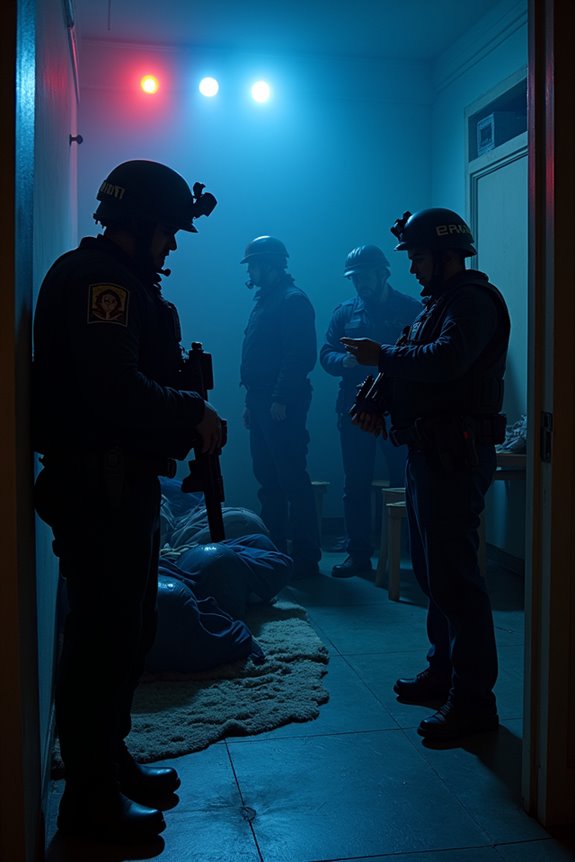
When police show up at your door during a party, knowing whether you can say no to a search is empowering—and yes, you absolutely can, at least without a valid warrant in hand.
Your search rights matter. You’ve got legitimate power here:
- Request the warrant first — politely but firmly ask officers to produce it before anything else happens
- State your non-consent clearly — say “I do not consent to this search” and mean it
- Verify warrant details — confirm the exact address and current date match what’s written
- Avoid volunteering information — stay calm, keep quiet, let them do the talking
Without probable cause, consent, or exigent circumstances, entry isn’t permitted. You’re not being difficult—you’re protecting yourself. Calmly refuse and wait for lawful justification. That’s your right, and exercising it defines who you are.
What If You Weren’t Drinking?
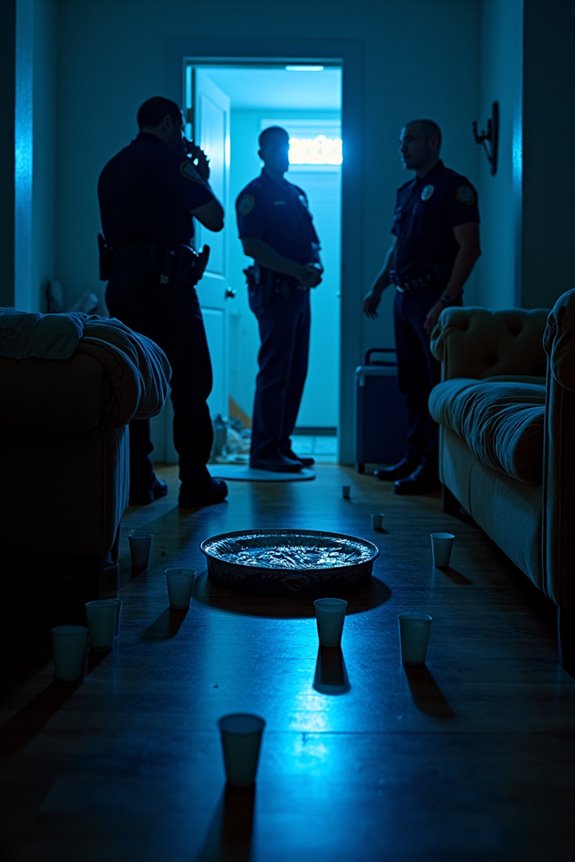
red Solo cups, the smell of alcohol, your proximity to others actively drinking—these details fuel their assumptions about you.
A warrantless search might reveal nothing incriminating in your possession, yet suspicion alone can trigger investigation. Your sobriety won’t guarantee protection if officers decide to pursue charges. That’s why securing legal assistance promptly becomes essential—protecting your rights and navigating through potential consequences requires someone in your corner who understands how these situations unfold.
When Should You Call a Lawyer?
Your sobriety doesn’t shield you from legal consequences at a busted party—and neither does your innocence. Call a lawyer immediately after police arrive; don’t wait until you’re charged. Here’s why timing matters:
Your sobriety and innocence won’t protect you legally—call a lawyer immediately when police arrive, not after charges are filed.
- Invoke your right to remain silent at the scene—you’ll only help prosecutors without counsel present
- Request an attorney before answering questions, especially if detained or arrested
- Clarify your legal status by asking, “Am I being detained? Am I free to go?”
- Discuss potential charges and defense strategy with your lawyer before court appearances
Your rights exist to protect you, but only if you exercise them promptly. Don’t volunteer statements thinking honesty helps your case—it rarely does. A criminal defense attorney navigates the legal maze while you maintain composure and cooperate respectfully. This isn’t paranoia; it’s smart protection during vulnerable moments when consequences feel distant but become decidedly real.