
You’re likely losing money on rentals you think are profitable—tracking utilization rates reveals which pieces sit idle versus generate steady income. Calculate gross margins by category: Chiavari chairs hit 60%, plastic tables barely reach 8%. Monitor fixed costs against revenue growth to spot scaling inefficiencies. Cancellations erode profits without eliminating overhead. Seasonal cash flow gaps demand advance deposits covering 40–50% of costs. Identify your profit-driving items through item-level ROI analysis, then layer high-margin ancillary services around them. The numbers tell a story your gut instinct misses entirely.
Track Your Utilization Rate and Rental Frequency

How much of your inventory’s potential are you actually capturing?
Your utilization rate reveals what proportion of time your equipment sits idle versus generating income. By tracking rental frequency alongside utilization metrics, you’ll identify your top performers—those chairs, tents, and AV systems that consistently book—alongside underperformers quietly draining resources.
This data converts asset efficiency from guesswork into strategy. When you integrate utilization analysis with profitability analysis, you’ll spot which items deserve shelf space and which deserve retirement. Strong utilization directly strengthens your cash flow, accelerating payback on investments while justifying strategic procurement decisions.
Monitor utilization by item type consistently. This granular inventory forecasting reveals demand patterns, letting you stock what your customers actually want. You’re not just renting equipment; you’re building a collection that works as hard as you do.
Calculate Gross Margin by Equipment Category
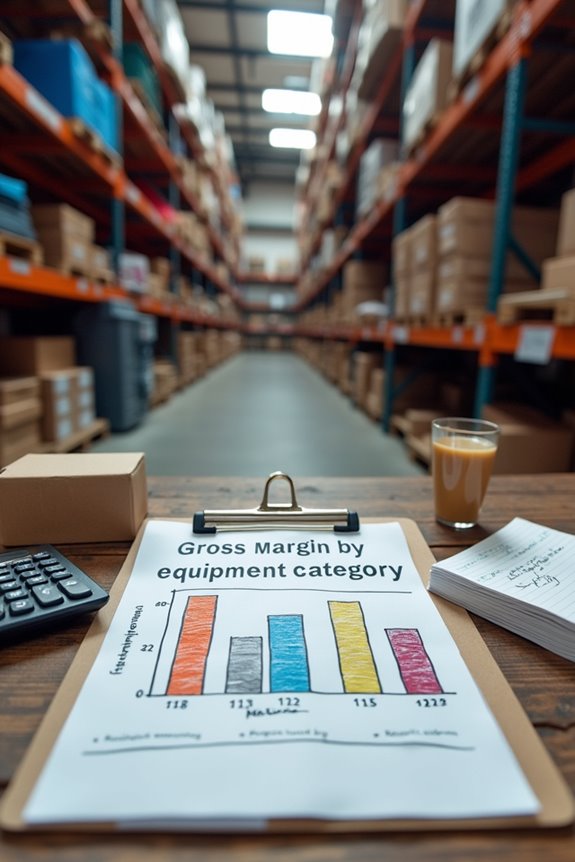
Why do some rental categories seem to print money while others barely cover their keep? The answer lives in your gross margin calculations—the heartbeat of profitability analysis for every equipment category you own.
Calculate gross margin by dividing rental revenue minus cost of goods sold by your rental revenue, expressed as a percentage. Premium categories like Chiavari chairs and designer tents consistently deliver higher margins through durable, reusable inventory commanding premium pricing. Meanwhile, plastic chairs and basic tables generate steady volume but dilute overall profitability.
You’ll discover which categories fund your overhead most effectively through disciplined inventory management. Seasonal wear, maintenance costs, and depreciation hit some items harder than others. Regular inspections and ROI assessments per category reveal where acquisition dollars truly belong—transforming raw numbers into strategic clarity.
Monitor Fixed Costs Against Revenue Growth

You’ll want to establish a fixed cost allocation strategy that maps your insurance premiums, staff salaries, and software subscriptions—those stubborn overhead expenses that don’t budge whether you’re renting five chairs or fifty—against your monthly revenue targets. By benchmarking your revenue growth against these anchored costs, you’ll spot exactly when your business crosses from covering overhead into genuine profitability, revealing whether you’re scaling efficiently or just spinning wheels. Your break-even point calculation becomes the reference point here, showing you the precise rental volume needed each month before contribution margins from individual events start padding your bottom line.
Fixed Cost Allocation Strategy
When your party rental business scales—adding another storage facility, hiring seasonal staff, or upgrading your booking software—your fixed costs don’t simply disappear; they demand attention. You’re allocating overhead strategically, determining how much rent, insurance, and salaries each event must carry. Break-even analysis becomes your reference point here, revealing the revenue threshold you’ll need to hit monthly. You’ll calculate annual fixed costs divided by average booking value, exposing exactly how many events justify that second warehouse or new hire. This overhead allocation keeps you pricing competitively while protecting your profit margins. When fixed costs climb faster than revenue grows, you’ve spotted a warning sign—time to audit expenses or adjust pricing. Strategic allocation makes scaling from risky into sustainable.
Revenue Growth Benchmarking Analysis
How do you know if that warehouse expansion or new hire actually strengthened your bottom line, or simply created a financial drag that’ll take years to recover from? You’ll benchmark your revenue growth directly against fixed cost increases—comparing year-over-year percentages to reveal whether scale’s truly driving margin improvements. Run a break-even analysis that ties your overhead (insurance, salaries, rent, software licenses) to projected revenue scenarios, clarifying exactly what sales you’ll need at each growth rate. Monitor these metrics monthly through KPI dashboards showing fixed cost growth, revenue expansion, and gross margins side-by-side. When overhead shrinks as a percentage of revenue, you’ve achieved profitable scaling. When it climbs, you’ve got a problem demanding immediate overhead management adjustments and strategic recalibration.
Break-Even Point Calculation
At what precise revenue threshold does your party rental business actually start turning profit—rather than simply covering the relentless monthly bills? You’ll discover this answer through break-even analysis, a calculation that reveals exactly when income eclipses expenses. Here’s how it works: divide your fixed costs—insurance, rent, staff salaries—by your contribution margin, which is simply the price per rental minus variable costs like delivery fuel and setup labor. This formula pinpoints your break-even point, the revenue milestone separating survival from genuine profitability. As your booking volume climbs and market conditions shift seasonally, regularly recalculate. Running best-case, expected, and worst-case scenarios illuminates how pricing adjustments or cost changes ripple through your bottom line, converting numbers into actionable business intelligence that guides your path forward.
How Cancellations Erode Your Profitability

Because cancellations eliminate booked revenue without eliminating your fixed costs—the staff you’ve already scheduled, the inventory you’ve prepped, the delivery routes you’ve planned—they’re among the most destructive forces to your bottom line. When a client cancels three days before their wedding reception, you’ve already absorbed those labor hours and vehicle expenses. Your 10% net margin disappears instantly. Each cancellation increases your fixed cost per remaining booking, tightening your break-even coverage dangerously. That’s why tracking cancellation patterns—by client type, seasonal trends, and specific items—reveals your true risk factors. Strategic deposits, flexible rescheduling policies, and incentives protect your utilization rates and revenue impact. Understanding how cancellations damage profitability changes how you structure agreements and build client relationships.
Which Rentals Actually Drive Your Profits?

You’ve likely noticed that your Chiavari chairs and tent rentals consistently outperform plastic folding tables in your profit margins—but you won’t know which items truly drive your bottom line until you track seasonal patterns and correlate them with maintenance costs, damage rates, and booking frequency using your rental software. The real insight emerges when you examine loss prevention directly: a single theft of premium linens or preventable damage to a high-demand item can erase weeks of steady plastic chair profits, making your inventory choices a calculated risk management strategy. By analyzing ROI at the item level—measuring not just rental income but delivery fees, setup labor, and actual damage costs against seasonal demand fluctuations—you’ll identify which pieces deserve priority stock and which ones drain resources better allocated elsewhere.
High-Margin Inventory Analysis
What if your warehouse is quietly holding your most profitable assets—items you haven’t yet recognized as revenue engines? Your Chiavari chairs and premium resin seating aren’t just functional—they’re ROI powerhouses delivering 45–70% returns when paired strategically with delivery fees and upsell bundles.
You’ll want to track item profitability meticulously, comparing each piece’s purchase cost against maintenance expenses and rental frequency. This granular analysis reveals which inventory truly drives your bottom line. Tents, for instance, command higher ancillary revenue through setup services and weather packages.
Calculate break-even timelines—typically 12–24 months for steady bookings—to assess growth potential confidently. By pairing base rental prices with high-margin ancillary offerings, you’re not just renting items; you’re building a profitability engine that compounds monthly.
Seasonal Demand Tracking Patterns
Monitor these patterns:
- Summer weddings spike your high-margin inventory utilization rates dramatically
- Winter holidays create steady demand for uplighting and lounge furniture
- Spring events favor outdoor setups requiring premium tent rentals
- Off-season months demand aggressive off-peak pricing strategies
Calculate item-level ROI across quarters to identify which rentals drive profits. Your high-margin inventory performs differently depending on season—what thrives in June might sit idle in February. Align promotions strategically: discount slow-moving pieces during peaks, bundle complementary items during valleys. This precision converts seasonal fluctuations from obstacles into profit multipliers.
Loss Prevention and Profitability Impact
How’d you feel discovering that your premium Chiavari chairs—those elegant, stackable darlings commanding $3–$5 per event—are generating 60% margins while your plastic folding tables sit at a paltry 8%, eating warehouse space and delivery costs?
That’s where loss prevention becomes your profit lever. Theft loss, damage write-offs, and mispricing directly reduce your per-item profitability. You’re not just losing inventory; you’re losing ROI on every damaged resin chair or missing linens.
Here’s your move: implement insurance coverage for high-value pieces and enhanced security protocols. Track each item’s performance meticulously—purchase cost, maintenance frequency, resale value, replacement expenses. Adjust your pricing strategy accordingly. When you eliminate preventable losses, your inventory mix improves. You’ll reinvest with confidence in proven performers, building a rental business that actually keeps what it earns.
Manage Seasonal Cash Flow Gaps

Picture your party rental business humming along in June—tents, tables, and chairs flying out the door, weddings and corporate events stacking up like dominoes—then August hits and suddenly you’re staring at empty calendar slots and mounting expenses with no corresponding revenue.
You need to address seasonal cash flow gaps before they drain your profitability. Here’s your playbook:
- Secure advance bookings and deposits covering 40–50% of project costs, anchoring revenue during slow months
- Implement off-peak pricing and bundled packages to maintain utilization when demand dips
- Build resilient revenue forecasting models accounting for purchase timing, maintenance, insurance, and delivery expenses
- Establish a 3–6 month cash reserve alongside a credit line protecting service quality during shortfalls
You’re not just surviving seasonal dips—you’re strategically smoothing cash inflows, converting unpredictable patterns into predictable, manageable rhythms that strengthen your bottom line.
Spot Your Best Upsell Opportunities

What if your most profitable rentals aren’t the ones you’re pushing hardest? You’re likely sitting on untapped revenue hiding in your inventory profitability data. Analyze which items—chiavari chairs, premium linens, uplighting—generate superior ROI when bundled together, then build strategic upsell opportunities around those power combinations. Rather than selling chairs alone, you’re offering complete tablescape packages that command higher margins. Layer delivery fees into bundle pricing, turning logistics from cost center to profit driver. Study your event mix across seasons, identifying when couples book outdoor ceremonies (tent + heater demand spikes) versus indoor receptions. This intelligence reveals your sweet spots—those seasonal moments when strategically timed bundles convert hesitant clients into high-value bookings, elevating your entire operation’s profitability.