
You’ll discover your sheet cake servings by matching size to guests: a full sheet (16×24 inches) covers 80–150+ people, a half sheet (12×18 inches) serves 30–70, and a quarter sheet (9×13 inches) handles 15–30. Slice dimensions matter—1×2 inch wedding-style cuts yield nearly double the servings of 2×2 inch pieces. Add a 10–20% buffer for seconds and larger requests, so you have enough cake available. The specifics of layering and professional cutting techniques reveal even smarter strategies.
Sheet Cake Servings: Dimensions and How They Yield
How do you know if you’ve ordered enough cake for your crowd? Understanding sheet cake dimensions and their servings helps you make an informed decision about quantities.
A full sheet cake—spanning 16×24 inches—yields approximately 192 servings when cut into wedding-standard 1×2 inch pieces. Half sheet cakes, measuring 12×18 inches, deliver roughly 108 servings with identical cuts. Quarter sheets, at 9×13 inches, provide around 54 servings or 24 larger 2×2 inch portions, depending on your preference.
These servings align with professional wedding standards: 4 inches tall, 1 inch wide, 2 inches long slices that provide satisfying portions. By matching cake dimensions to your guest count, you’ll serve everyone appropriately while demonstrating organized planning.
Quick Serving Guide: Sheet Cake Size vs. Guest Count
When you’re planning your celebration, you’ll discover that sheet cake dimensions—whether a sprawling 16×24 full sheet, a versatile 12×18 half sheet, or an intimate 9×13 quarter sheet—directly determine how many guests you can serve, each yielding roughly 192, 108, and 54 servings respectively with standard 1×2 inch cuts. Your slice size becomes your strategic asset; bumping up to 2×2 inch portions dramatically reduces your total count, so you’ll need to match your cake dimensions strategically against your actual guest list. By pairing sheet sizes thoughtfully—say, combining a half sheet with a quarter sheet for mid-sized gatherings—you’re solving a practical math problem and providing the right amount of cake without wasteful excess or disappointing shortages.
Sheet Cake Dimensions Matter
Why does your sheet cake’s size matter so much? Because the dimensions you choose directly determine how many servings you’ll actually get—and whether you have enough dessert for your event or need to order additional cakes.
A full sheet (16×24 inches) yields approximately 192 servings when cut into standard 1×2 inch pieces, while a half sheet (12×18 inches) provides about 108 servings. Quarter sheets (9×13 inches) offer flexibility: cut them into 1×2 inch pieces for 54 servings, or go larger with 2×2 inch cuts for 24 servings.
Your pan dimensions—alongside layer count and cutting style—directly affect your event’s logistics. Understanding these measurements transforms sheet cake planning from guesswork into informed decision-making that accounts for both your guest count and your preferences.
Slice Size Affects Servings
Perhaps the most underestimated variable in cake planning is this: the size of each slice you cut directly determines whether you’ll have enough dessert or run short. Your cutting style affects how a single sheet cake yields different serving counts—a half sheet yields 54 generous 2×2 inch pieces or 108 delicate wedding-style portions measuring 1×2 inches. Think strategically: smaller slices stretch your cake further, which works well when you’re serving a crowd of 100 guests on a modest budget. Conversely, larger serving sizes create an indulgent experience—ideal for intimate gatherings where quality trumps quantity. By understanding how these specific dimensions impact your final headcount, you’ll select the right cake size with confidence and avoid last-minute stress while satisfying every guest.
Guest Count Planning Chart
How do you match your cake size to your actual guest list without ordering too much or running short before dessert time?
Use this straightforward guide to align your servings with your guest count:
- 50 guests: One half sheet (12×18) delivers roughly 108 servings in standard 1×2 inch cuts
- 100 guests: Two half sheets provide ample portions with comfortable buffer room
- 150 guests: Three half sheets maintain adequate volume while keeping elegant presentation
- 200+ guests: Combine full sheets (16×24) with half sheets for flexible serving capacity
- Mixed sizes: Pair a half sheet with quarter sheets to customize exact servings needed
Your guest count directly determines cake volume. Layer counts matter too; two-layer configurations yield taller, more generous slices than single-layer alternatives. Plan strategically, and you’ll celebrate with confidence.
Full Sheet Cakes: Serving 80–150+ Guests
When you’re planning a celebration for 80 to 150 guests, a full sheet cake (16×24 inches) becomes your strategic foundation—yielding anywhere from 64 to 192 servings depending on whether you’re cutting generous 2×3 inch slices or delicate 1×2 inch wedding-style portions. You’ll discover that layering matters significantly: a two-layer full sheet gives you greater height and flexibility to create smaller, more elegant pieces, while single-layer options demand you pair them with additional half or quarter sheets to guarantee everyone leaves satisfied. The real advantage lies in thinking beyond one cake—combining a full sheet with complementary sizes creates that professional buffer, giving you confidence as your guests approach the dessert table.
Full Sheet Cake Dimensions
A full sheet cake—measuring 16 by 24 inches—serves as a practical solution for feeding crowds, yielding roughly 192 servings when you slice it into 1-by-2-inch pieces, the standard size caterers use. This dimension provides flexibility and abundance for substantial gatherings.
Understanding these proportions matters:
- A full sheet provides approximately 96 servings when cut into 2-by-2-inch slices
- The 16-by-24-inch footprint fits standard commercial ovens and display tables
- Wedding-cut servings (1-by-2 inches) accommodate your guest count efficiently
- Layer depth—single versus two-layer cakes—affects serving calculations
- This size accommodates 80–150+ guests when paired strategically with additional sheets
Your sheet cake’s dimensions directly determine how generously you’re serving your celebration, creating a balance between abundance and presentation your guests will appreciate.
Serving Counts By Slice Size
The alignment of slice dimensions with your guest count determines how a full sheet cake (16 by 24 inches) serves your event. Wedding-style 1×2 inch pieces yield about 192 servings, allowing nearly everyone seconds. Step up to 2×2 inch squares, and you’re looking at 96 servings—a more substantial offering. For heartier appetites, 2×3 inch slices reduce your count to 64 servings. When hosting 80–150+ guests, you’re choosing between abundance and elegance. Smaller slices create a luxurious feeling of plenty; larger pieces signal indulgence and satisfaction. Your slice size reflects your event’s tone while meeting your guests’ appetites. It’s about matching generosity with intention.
Planning For Large Events
How do you guarantee your celebration won’t run short on cake when you’re hosting 80–150+ guests? You’ll want to think strategically about sheet cake quantities and servings. A full sheet cake yields roughly 192 servings when cut into standard 1×2 inch wedding-cut pieces, but you’re smart to plan with backup. Consider this practical approach for larger crowds:
- Three half-sheets (12×18 inches each) provide comfortable coverage with buffer
- Combine full and half sheets for flexible serving options
- Communicate slice-size expectations with your venue staff beforehand
- Account for seconds—guests always want more cake
- Build in 10–15% extra servings beyond your headcount
Your venue’s cutting style dramatically affects actual servings. When staff handle portioning, slice sizes often vary, shifting yields up or down. You’ll feel confident knowing you’ve planned ahead, so everyone can have cake.
Half Sheet Cakes: Serving 30–70 Guests
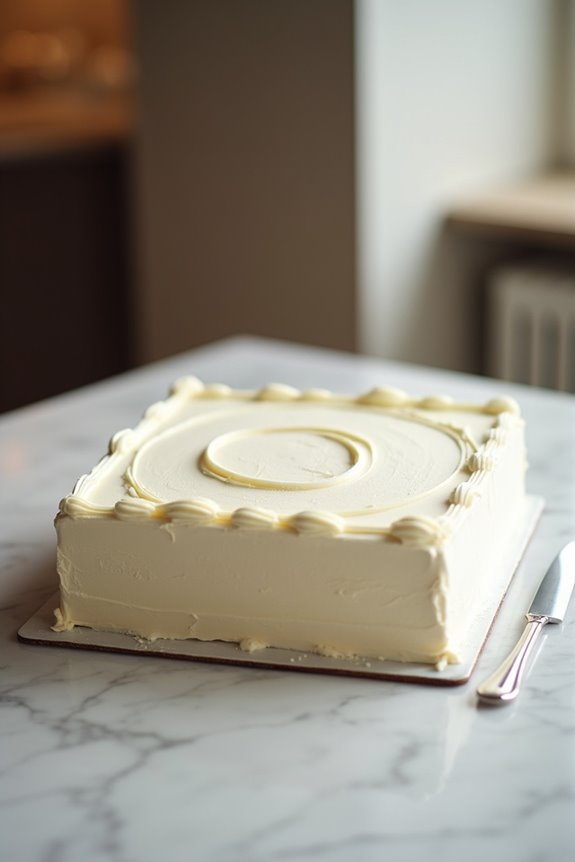
When you’re planning a celebration for 30 to 70 guests, a half sheet cake—that generous 12-by-18-inch rectangle—becomes your reliable option for hitting that balance between intimacy and abundance. Cut into wedding-style 1-by-2-inch slices, your half sheet delivers roughly 108 servings, comfortably covering the upper end of your guest range with room for seconds. Prefer heartier 2-by-2-inch portions? You’ll get about 54 servings—ideal for smaller gatherings or when paired with a quarter sheet for variety. The benefit lies in flexibility: cutting style shapes your yield, so expect slight variations depending on venue practices. You’re not just serving cake; you’re creating a moment where everyone feels included and celebrated.
Quarter Sheet Cakes: Serving 15–30 Guests
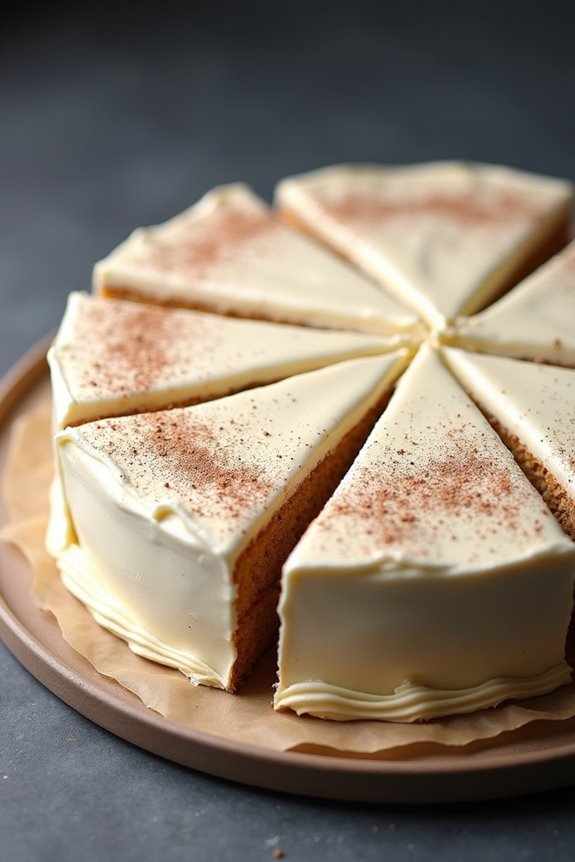
When you’re planning for 15–30 guests, a quarter sheet cake—that’s a standard 9×13 inch rectangle—becomes your centerpiece, and understanding how you’ll slice it matters. You’ve got two main approaches: cut it into traditional 2×2 inch squares for 24 hearty servings that’ll satisfy most mid-sized gatherings, or go the wedding-style route with 1×2 inch slivers that yield roughly 54 portions—ideal if you’re pairing cake with other desserts or prefer daintier bites. Your choice between these cutting styles and dimensions directly shapes whether one quarter sheet’ll stretch across your entire guest list or if you’ll need to add a second cake to the table.
Quarter Sheet Dimensions And Yield
Perhaps you’re picturing an intimate dinner party or a small office celebration—the kind of gathering where a quarter sheet cake, measuring a modest 9×13 inches, becomes your practical tool for feeding a crowd without overwhelming your kitchen or your budget.
This standard quarter sheet delivers impressive flexibility. You’ll discover that slice size dramatically shifts your servings:
- 2×2 inch pieces: approximately 24 servings
- 1×2 inch pieces: roughly 54 servings
- Standard cuts: 15–24 servings typically
- Height consideration: the 4-inch depth supports generous portions
- Guest accommodation: appropriate for 15–30 attendees
The advantage lies in your control. Smaller slices stretch resources further, while generous portions create satisfying moments. For your crowd’s upper range, pairing two quarter sheets ensures everyone is fed—transforming simple cake into the event’s centerpiece.
Cutting Styles For Optimal Portions
The importance of a quarter sheet cake becomes clear once you pick up your serrated knife—because how you slice it directly determines whether you’re feeding fifteen satisfied guests or stretching portions to accommodate thirty. Your cutting style becomes the pivot point between elegance and practicality.
Standard 2×2 inch cuts yield roughly eighteen to twenty-four servings, while narrower 2×3 inch pieces stretch your cake further. Wedding-style 2×1 inch slices? They’ll serve twenty-four to fifty-four guests, depending on whether you’re working with single or double layers.
The difference matters. Whether your venue’s staff handles the knife or you do in-house, standardizing your serving size—committing to one specific dimension—guarantees predictable portions. This deliberate approach converts uncertainty into confidence, letting you serve your guests with assurance that everyone’s portion feels generous and considered.
How Slice Size Changes Sheet Cake Servings?
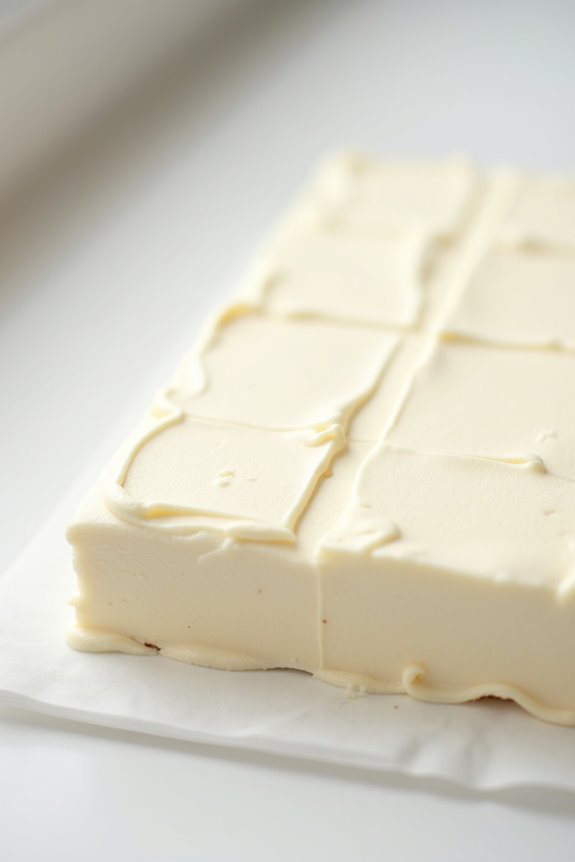
How much does a single inch matter when you’re carving up a 12×18 sheet cake for your guests? That modest measurement affects your entire serving strategy. Your slice size directly determines how many portions you’ll yield—smaller cuts mean more servings, larger cuts mean fewer.
Consider these slice dimensions and their impact:
- 2×2 inches: Yields 54 servings from a 12×18 cake
- 2×1 inches: Wedding-style portions producing 108 servings from half sheets
- 1×2 inches: Generates increased servings through reduced dimensions
- 3×3 inches: Significantly decreases total yield with substantial pieces
- Custom cuts: Allow flexibility matching your specific guest preferences
You’ll find that trimming just one inch shifts the ratio between abundance and scarcity. When you’re planning celebrations, understanding how slice size changes sheet cake servings helps you make confident decisions—allowing everyone at your gathering to enjoy a portion.
Wedding Cuts vs. Party Cuts: Which Serves More?
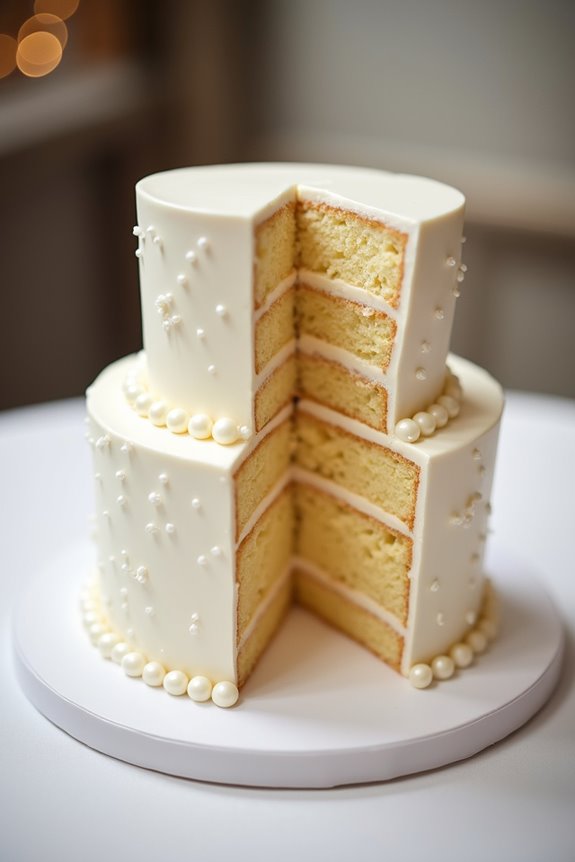
Once you’ve settled on your slice dimensions, you’re ready to make a choice that’ll reshape your entire serving strategy: wedding cuts versus party cuts. Wedding cuts—those elegant 2×1 inch rectangles—transform a full sheet cake into roughly 192 servings, while party cuts at 2×2 or 2×3 inches yield dramatically fewer: 96 or 64 servings respectively. You’re choosing between intimate elegance and generous abundance. A half sheet with wedding cuts delivers about 108 servings compared to 54 with party cuts. This isn’t merely mathematical; it’s philosophical. Wedding cuts signal refined celebration, allowing more guests to participate in your moment. Party cuts communicate abundance and indulgence—fewer pieces, but each one more substantial and satisfying.
Layers Matter: How Height Changes Portion Counts?
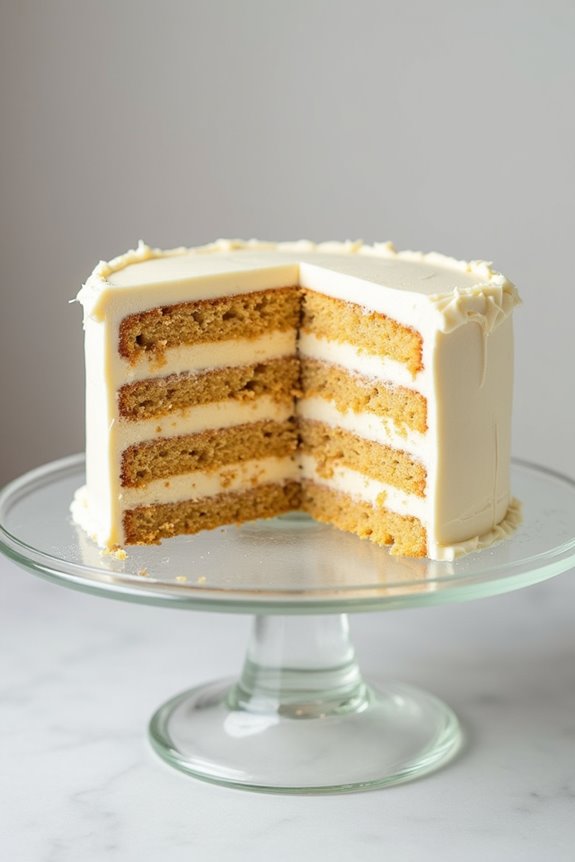
Why does stacking cake layers reveal important information about the serving equation? You’re discovering that height changes your sheet cake’s potential considerably. When you move from one 9×13-inch layer to two stacked layers, you’re not just doubling dessert—you’re multiplying servings intelligently.
The method hinges on how you cut. Taller cakes accommodate more slices per sheet while maintaining those coveted 4-inch-tall, 1-by-2-inch wedding-cut portions. Your servings increase significantly:
- Single layer yields approximately 12-15 pieces
- Two layers provide 20-24 consistent servings
- Height stability maintains uniform slice quality
- Additional volume distributes across identical pan dimensions
- Layered structure accommodates premium portion standards
You’re building abundance without expanding your footprint—a practical approach that balances both generosity and sophistication.
Your Venue Cuts Differently: What That Means for Portions?
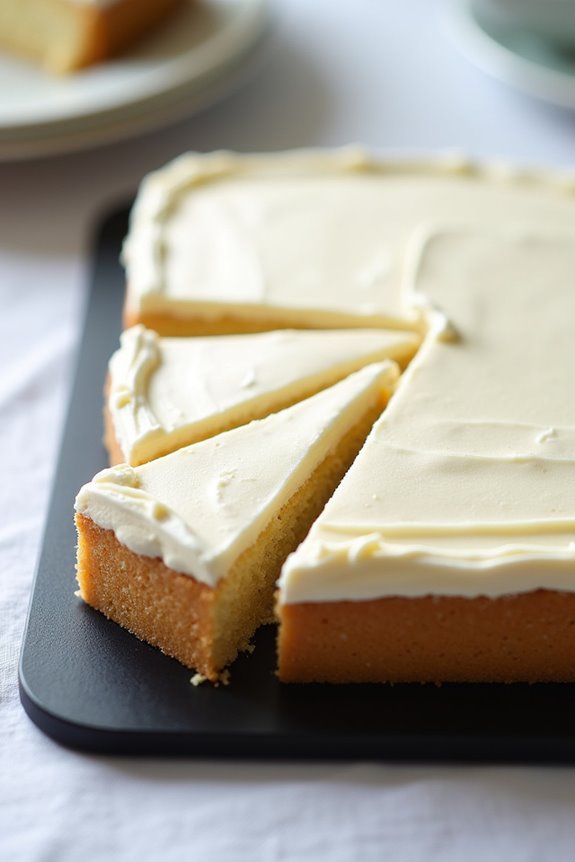
Your caterer’s knife tells a completely different story than your uncle’s enthusiastic slicing does—and that distinction matters more than you’d think. Professional bakers create uniform 2×1 inch wedding-style portions with surgical precision, while well-meaning guests cut generous, irregular slices that dramatically reduce your total count.
| Cutting Method | Sheet Size | Typical Servings | Piece Size |
|---|---|---|---|
| Professional Caterer | 12×18 | 54 | 2×1 inches |
| Professional Caterer | 16×24 | 192 | 2×1 inches |
| Guest Cutting | 12×18 | 30-35 | Irregular, larger |
| Guest Cutting | 16×24 | 90-110 | Irregular, larger |
| Two-Layer Sheet | 12×18 | 75+ | 2×1 inches |
Understanding who’s wielding the knife lets you plan with confidence. You’ll prevent undersized portions while honoring your guests’ generosity—that balance where hospitality meets practical planning.
Reducing Cake Order When a Dessert Table Is Present
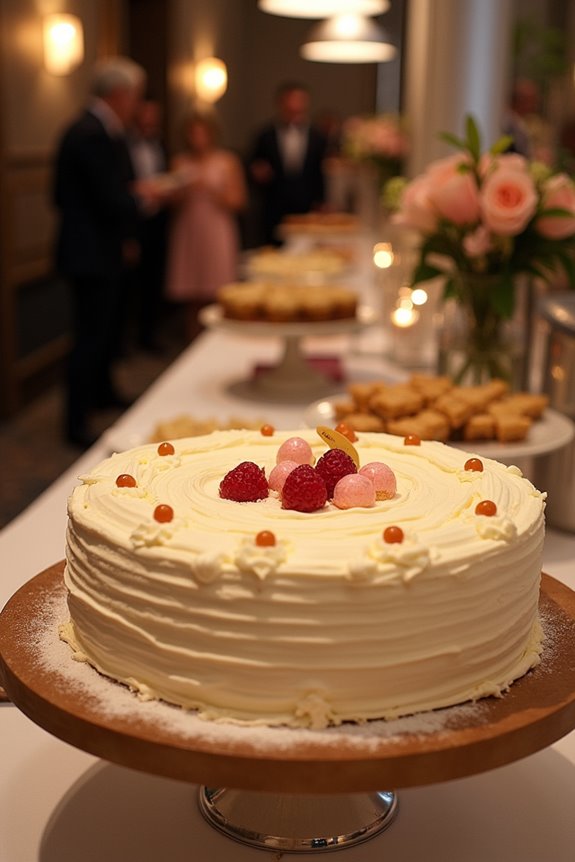
How much cake do you actually need when brownies, macarons, and a chocolate mousse tower are competing for attention on your dessert table?
When multiple desserts share the spotlight, aim for 60–80% of your guest count in sheet cake rather than the standard full amount.
You’ll reduce your sheet cake order markedly—aim for 60–80% of your guest count instead of the standard 100–120%. This approach prevents waste while maintaining elegance across your dessert offerings.
Consider these adjustments:
- One half-sheet (yielding ~108 servings) suffices for 150 guests sharing dessert options
- A quarter sheet adds variety without overcommitting to cake alone
- Guests naturally graze lighter portions when choices abound
- Leftover sheet cake becomes manageable rather than burdensome
- Your budget stretches further across premium dessert stations
With three half-sheets or equivalent servings distributed thoughtfully, you’re creating a dessert experience where your guests savor multiple tastes rather than consuming oversized single slices. You’ve achieved balance without sacrificing abundance.
The 10% Buffer: Why Ordering Extra Matters
Ever wondered what separates a successful celebration from one marred by disappointed guests hunting for the last crumb? That’s where your 10% buffer enters—your strategic advantage against undershooting portions. When you order a sheet cake, you’re not just feeding people; you’re providing adequate portions, opportunities for seconds without awkwardness, and the confidence that everyone leaves satisfied. This modest cushion—roughly 10–20% extra beyond your guest count—elevates good planning into thoughtful hospitality. It accommodates those who request larger slices, guests wanting an additional taste, and the inevitable waste that happens during service. You’re essentially purchasing peace of mind, knowing your sheet cake won’t run short before the final guest receives their portion, cementing your reputation as a considerate host.
Alternatives to Full Sheets: Round Cakes and Combinations
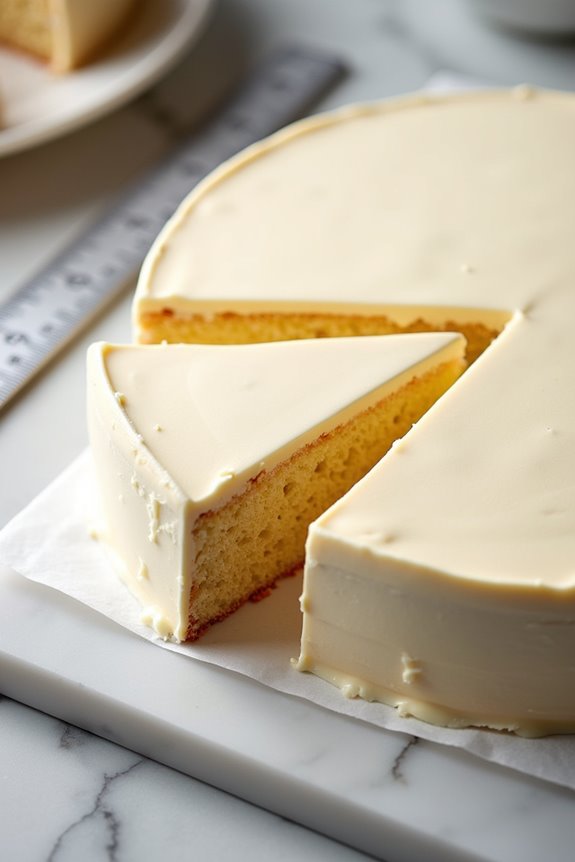
What if the visual appeal of tiered round cakes could coexist with the practical efficiency of sheet cakes—giving you the best of both worlds?
You’re not locked into choosing one format. Round cakes and sheet cakes work well together, creating visual interest while solving your servings puzzle. A 10-inch round yields 20–30 servings, while an 8-inch provides 12–20. Pairing two 10-inch rounds with a half sheet (108 servings) reaches 140–168 total—suitable for 100–120 guests with extra capacity.
This hybrid approach offers:
- Tiered display for your cake table
- Flexible serving sizes across both formats
- Cost-effective coverage without overshooting
- Easy logistics when venues mix cutting styles
- Strategic buffer built naturally into your order
You’re designing a cake strategy that balances aesthetics and practicality, making sure every guest is accommodated.
Before You Order: 5 Questions to Ask Your Baker
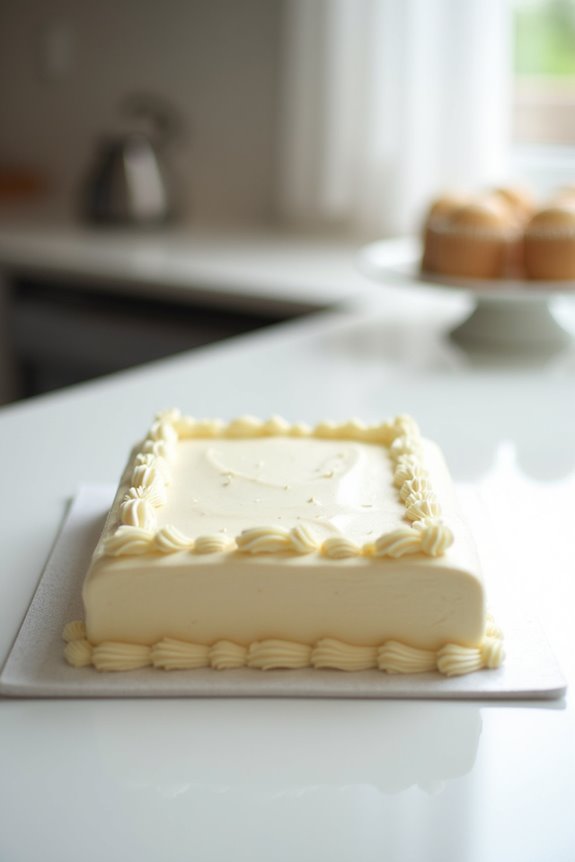
The difference between a cake order that works well and one that leaves you scrambling often comes down to the conversation you have—before you sign anything. Ask your baker for exact yields on each sheet size they offer: does a half sheet (12×18 inches) truly yield 108 servings, or does their specific recipe and frosting style change that number? Confirm whether you’re getting single or multi-layer cakes, since two-layer versions pack significantly more servings into identical pan dimensions. Clarify your preferred slice dimensions—2×1, 2×2, or 2×3 inches—because these choices dramatically shift your final count. Finally, ask about backup sheets or contingency planning. That straightforward conversation eliminates uncertainty and gives you confidence.