
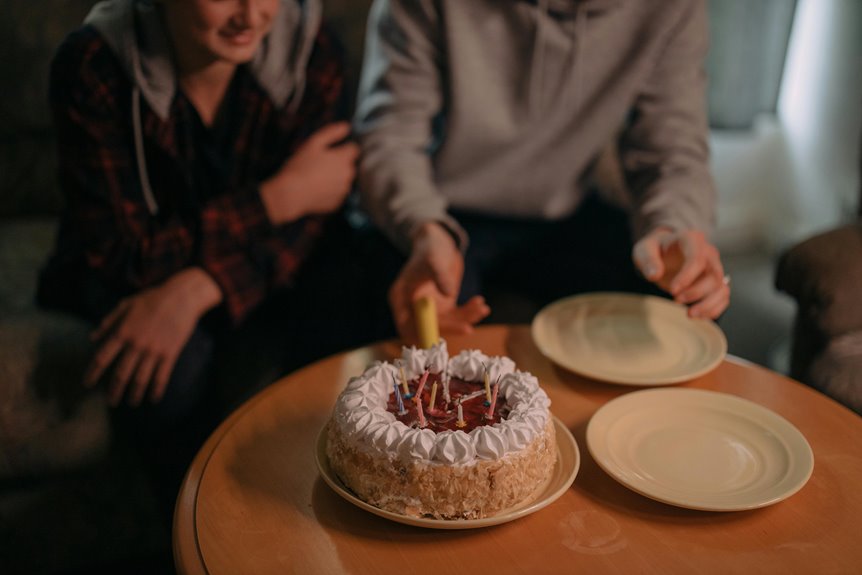
Your 10-inch round cake feeds 20 to 30 people, depending on how generously you slice. Party-style portions—those 1.5-inch-wide, 2-inch-deep wedges—yield roughly 20 servings, while wedding-style cuts (narrower 1-inch widths) stretch to 22–30. Frosting thickness, filling density, and whether guests want seconds all shift your final count. Regional preferences matter too; Texas favors hefty 2-inch wedges, while the Northeast prefers modest slices. Understanding how layering, sizing strategy, and cutting technique work together helps you match your crowd’s needs.
How Many People Does a 10-Inch Cake Actually Feed?
Ever wonder why a 10-inch round cake shows up at so many celebrations—from casual birthday parties to elegant rehearsal dinners? You’ll find the answer lies in its versatility. A standard 10-inch round cake typically feeds between 20 to 30 people, depending on how you slice it. Choose party-style portion sizes—those generous 1.5 x 2 inch wedges—and you’re looking at roughly 20 servings. Opt for smaller, more refined wedding-style slices measuring 1 x 2 inches, and you’ll stretch that same cake to serve 26 or more guests. The value of this round cake is its reliability; whether your gathering is intimate or expansive, adjusting your servings keeps everyone satisfied and your celebration properly proportioned.
Party vs. Wedding Slices: Why Serving Style Matters
You’ll find that your 10-inch cake’s actual serving count hinges entirely on how you cut it—party slices, running roughly 1.5 inches wide by 2 inches deep, yield substantially more portions than their wedding-style counterparts, which measure a modest 1 inch wide by the same 2-inch depth. When you’re planning dessert as the main event, those generous party cuts make sense; when you’re offering a graceful finale after a full meal, smaller wedding portions align better with your guests’ appetites and the occasion’s rhythm. Your slice choice, then, isn’t merely technical—it’s a reflection of your event’s personality, shifting the same cake into anywhere from 20 to 30 servings depending on whether you’re feeding a casual crowd or honoring formal tradition.
Party Slices Versus Wedding Slices
Why does the same 10-inch round cake yield wildly different serving counts depending on how you slice it?
The answer lies in your serving size philosophy. Party cuts—those generous 1.5-inch-wide, 2-inch-deep slices—transform your cake into 16–20 portions, suited for occasions when guests expect indulgence. Wedding slices, narrower at 1 inch wide yet equally deep, stretch that same cake to approximately 22 servings, maximizing reach across your guest list.
Here’s what separates these approaches:
- Party cuts deliver satisfying, cake-forward experiences ideal for celebrations where dessert takes prominence
- Wedding slices create refined portions suited for formal affairs where cake accompanies other treats
- Your choice hinges on event context—afternoon birthday bash versus evening reception
Understanding this distinction allows you to feed your crowd with confidence, whether you’re serving seconds or stretching resources thoughtfully.
Slice Size And Guest Count
How you slice a 10-inch round cake—whether you favor generous party portions or refined wedding cuts—directly affects your serving math and impacts the experience for your guests. When you choose party-style slices (1.5 x 2 inches), you’re opting for heartier, wider cuts that yield roughly 20 servings. Wedding slices (1 x 2 inches), by contrast, stretch that same cake to 25–30 servings through their narrower profile. Your slice method directly determines how many guests feel satisfied. If you’re hosting 50 people, a single 10-inch cake won’t suffice—you’ll need additional desserts or larger-diameter options. Understanding this relationship between serving size and guest count helps you plan appropriately, so everyone leaves satisfied and fed.
Portion Preferences By Event Type
Every dessert tells a story through its slice—and that story changes depending on what comes before it. You’re navigating two distinct philosophies when planning your 10-inch round cake servings.
Consider your event’s timing and tone:
- Party settings demand generous 1.5″ × 2″ portions—dessert-only affairs where you’ll serve roughly 26 slices from one cake
- Wedding receptions call for modest 1″ × 2″ slivers following a full meal, yielding approximately 22 servings per cake
- Casual gatherings often blur these lines, requiring you to assess your guest’s appetite and occasion atmosphere
The party vs wedding portions distinction directly impacts whether you’ll confidently feed 50 guests or fall short. Your serving size per event isn’t merely practical—it’s about how your guests experience celebration. Choose your slice thoughtfully, and you’ll create moments of satisfaction.
The Height Factor: Why Taller Cakes Yield More Servings
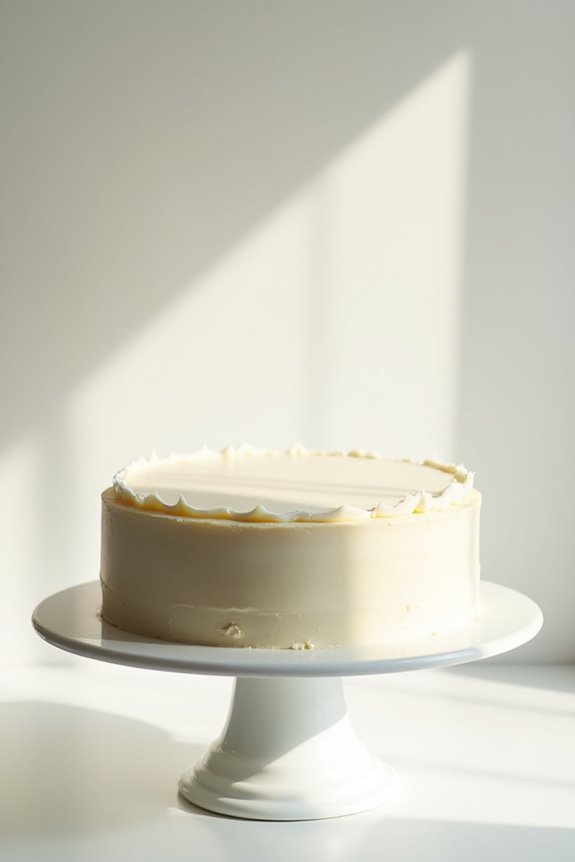
You might assume that stacking your 10-inch cake higher—moving from two layers to four—automatically multiplies your servings, but here’s the reality: the actual slice count remains constant unless you’re fundamentally changing how you cut. What does shift with height is how you strategically layer your cake, portion your slices, and present that dessert to your guests—factors that can psychologically influence perceived generosity without adding a single extra serving. By understanding how layers interact with slice geometry and cutting strategy, you’ll reveal the real advantage to maximizing your cake’s potential, converting height from mere presentation into purposeful architectural design.
Layers Increase Total Volume
Why does a four-layer 10-inch round cake feel more generous than its single-layer counterpart? You’re adding volume—and with it, flexibility in how you serve your guests.
When you stack layers, you’re expanding your cake’s total mass. Here’s what changes:
- Layer height compounds your volume, transforming a modest single layer into something substantially more abundant and visually impressive
- Your cutting method adapts accordingly—deeper slices from taller cakes yield richer portions without requiring you to increase the diameter
- Servings remain mathematically similar (roughly 20–30 from a 10-inch round), yet perceived generosity shifts dramatically through presentation
The advantage isn’t mathematical wizardry—it’s strategic architecture. Those additional layers don’t automatically multiply your guest count, but they do grant you control over portion perception and visual drama. You’re redefining abundance through thoughtful design.
Height Affects Portion Geometry
stacking your 10-inch round to 4 inches tall instead of 2 inches doesn’t actually expand your guest count—it simply reshapes how abundance appears on the plate. That extra vertical real estate affects perception, making each slice feel weightier and more luxurious, even though your total servings remain mathematically identical. When you’re cutting 12 to 16 portions from that cake, height merely affects the geometry of individual pieces. Taller cakes deliver taller slices, creating a sense of indulgence without requiring additional batter. You’re working with visual impact here—understanding that portions and servings stay constant while the experience improves. Height becomes your design tool, not your serving multiplier.
Stacking Strategy For More Servings
While the temptation to simply add another layer—transforming your 10-inch round from three tiers to four—feels like a straightforward path to feeding more guests, the math doesn’t cooperate quite so willingly. You’re stacking height without expanding your cake’s footprint, which means you’re not actually creating new slices.
Here’s what actually increases servings:
- Widen your diameter: upgrading to a 12-inch round cake meaningfully increases your total servings without architectural complexity
- Add a second tier: pairing a 10-inch base with an equally sized tier doubles your volume and guest capacity
- Redesign portion sizes: smaller slices stretch your round cake further, though this requires intentional planning
The takeaway? Your stacking strategy works when you expand horizontally or tier structurally—not vertically.
Single-Layer vs. Multi-Layer: Building More Portions
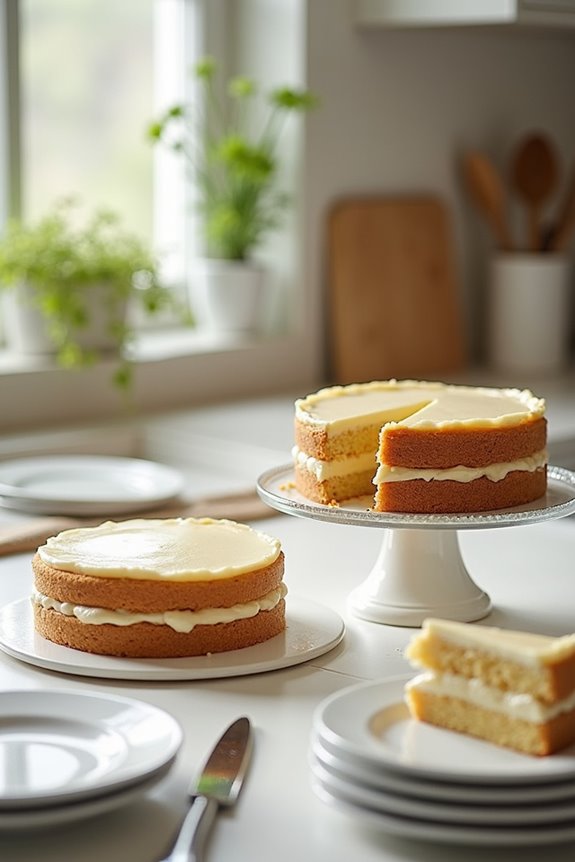
How does adding height affect your cake’s feeding potential? When you stack layers, you’re not simply increasing servings—you’re expanding the entire eating experience. A single-layer 10-inch cake yields roughly 20 to 30 portions using your standard round cake servings chart, yet adding a second or third layer changes the outcome entirely.
Here’s what matters: those extra layers provide additional volume, allowing you to cut smaller, more refined pieces without sacrificing generosity. You’ll stretch your round cake servings significantly when comparing single-layer vs multi-layer configurations. Three tiers increase 20 servings into 40 or beyond—not through chance, but through strategic stacking and thoughtful portioning.
Your serving chart becomes flexible; you control the approach by adjusting slice size based on occasion, guest expectations, and presentation goals.
Regional Slice Sizes: How Geography Changes Your Count
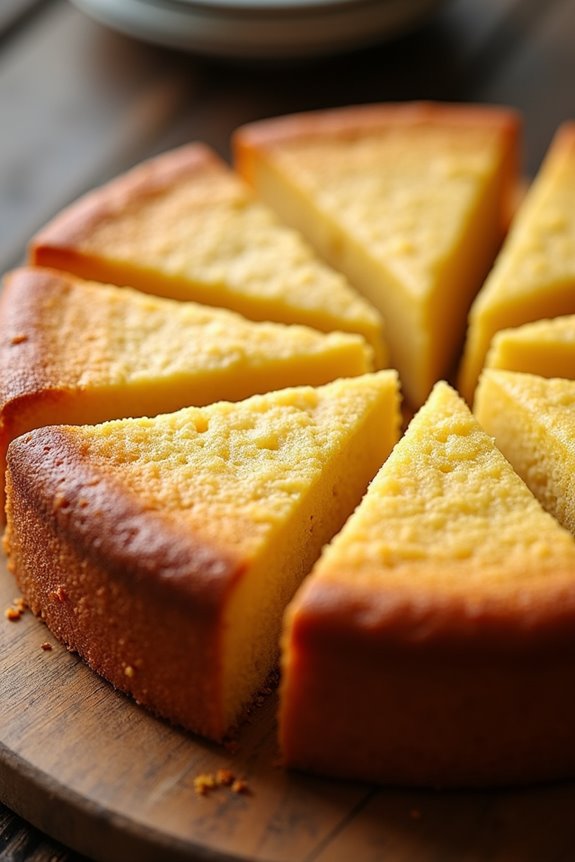
You’ve mastered the math—you know a 10-inch round yields roughly 20 to 30 servings depending on layering and technique. But here’s where geography reshapes your serving guide entirely.
Your regional slice sizes matter tremendously:
- Texas-style portions embrace generous cuts—think 2-inch wedges—meaning your round cake servings drop closer to 16-20 pieces
- Northeast preferences tend toward modest 1.5-inch slices, stretching that same cake to feed 28-30 guests comfortably
- West Coast entertaining splits the difference, favoring balanced 1.75-inch pieces that yield approximately 24 servings
Local culture, tradition, and appetite expectations shape how your cake actually feeds your community. When you’re planning regionally, abandon one-size-fits-all assumptions. Instead, consider your guests’ expectations and cutting styles. You’ll succeed with portion planning when you recognize what your neighborhood considers dessert-appropriate—translating simple math into genuine hospitality.
Grid Cutting for Maximum Yield: The Professional Method
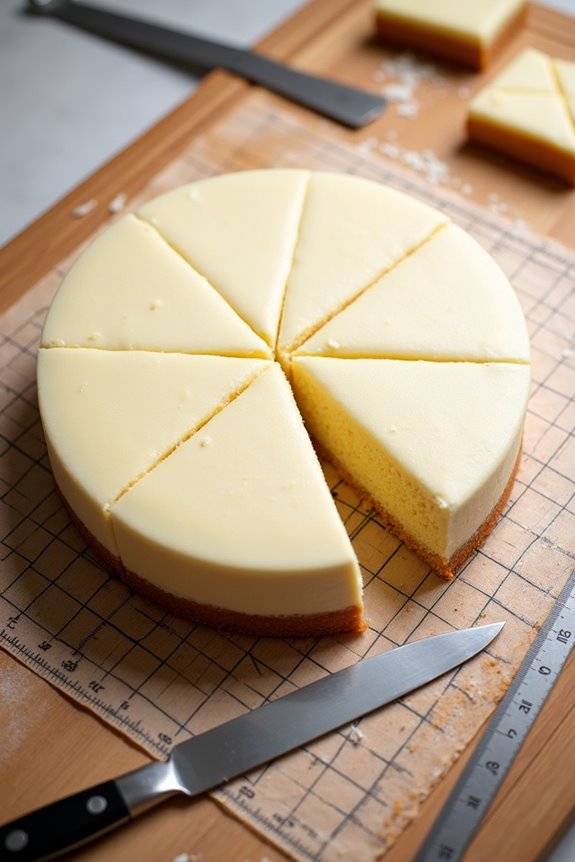
Ever wonder why bakery cakes seem to stretch further than yours? Professional bakers achieve superior serving yield through grid cutting—a methodical approach that transforms how you portion a 10-inch round cake. Rather than haphazard slicing, you’ll cut straight across about 1.5 inches from the edge, then work inward in vertical strips, creating uniform pieces that maximize equal portions. This technique—cutting the cake on its side in strips—maintains consistency and reduces variability between servers. You’ll reliably achieve roughly 22–30 party-style servings, depending on slice thickness. Pair grid cutting with the Bakers Buffer concept, which allows margin for second helpings or uneven cuts. Suddenly, you’re not just feeding guests; you’re joining the ranks of seasoned cake professionals who understand precision serving.
Planning for Waste: The 10% Baker’s Buffer
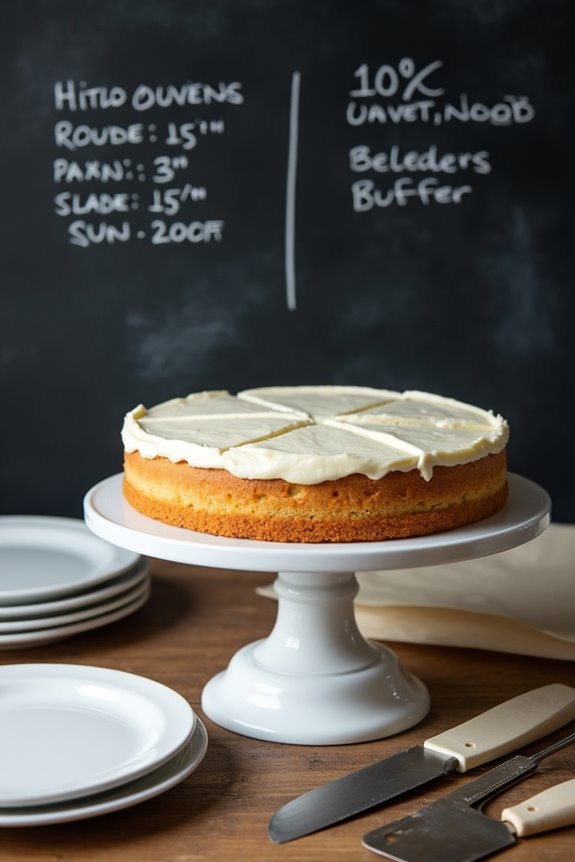
What separates confident cake planners from those caught short at the dessert table? The Baker’s Buffer—your strategy against underestimating crowd appetites.
You’re targeting roughly 26 party servings from your 10-inch round, but here’s where planning matters: add approximately 10% to your initial count. This buffer accounts for second helpings, generous slices, and those guests who’ll return for another bite.
Why this matters:
- Prevents embarrassment when demand exceeds your conservative estimates
- Accommodates varied appetites—some guests eat larger portions than others
- Allows flexibility in your cuts, whether you’re using grid methods or wedges
Feeding 50+ Guests: When to Upgrade to Sheet or Tiered Cakes
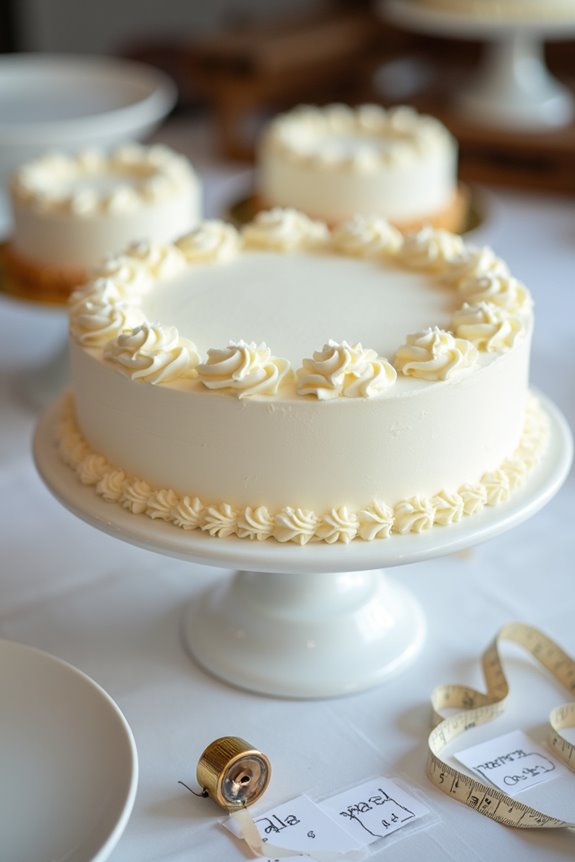
When you’re hosting 50+ guests, your trusty 10-inch round cake simply won’t cut it—you’ll need to explore sheet cakes, which yield 54–117 servings depending on slice size, or tiered arrangements like a four-layer 10-inch setup that delivers roughly 40–60 portions. Consider your venue’s aesthetic: a half-sheet cake (13×18 inches) offers practical abundance for casual celebrations, while a 12-inch or 14-inch tiered design provides visual appeal alongside generous servings. Ultimately, you’ll want to pair whichever option you choose—sheet, tiered, or a hybrid combining your main cake with supplementary cupcakes—with your event’s tone, guest count expectations, and that essential 10% buffer for seconds.
Sheet Cake Serving Capacity
a single 10-inch round cake—those beautifully tiered showstoppers you’ve admired at bakeries—simply won’t stretch far enough when you’re feeding 50 or more guests.
That’s where sheet cakes enter the picture. A half-sheet cake (13×18 inches, two layers tall) increases your serving capacity significantly. Consider these advantages:
- Party servings jump to roughly 54 portions—compared to your 10-inch cake’s measly 20–30 slices
- Wedding-style servings reach around 117—ideal if you’re serving smaller, more elegant pieces
- The rectangular format maximizes portion flexibility, letting you cut larger or smaller slices based on your crowd’s appetite
You’ll notice the difference immediately. That additional surface area means you’re not rationing dessert or disappointing guests. Sheet cakes deliver the abundance your celebration deserves, creating satisfaction around your table.
Tiered Cake Advantages
How do you transform a modest dessert into an elegant centerpiece that feeds your entire crowd? Tiered cakes offer the answer. When you’re planning for 50+ guests, upgrading to tiered configurations—like 6+8+10 inches yielding around 52 party servings—creates both visual impact and practical abundance. A two-tier setup (8+10 inches) comfortably serves 40–60 guests, depending on your slice preferences. For truly ambitious events, four-tier arrangements (6+8+10+12) deliver approximately 128 party servings, providing your dessert with substantial presence that accommodates second helpings and those uneven cuts we all anticipate. These cake sizes work harder than single rounds, delivering proportional servings while establishing that sophisticated aesthetic your celebration deserves. Your tiered cake becomes the gathering’s anchor—substantial, beautiful, and sufficiently abundant for your needs.
Upgrade Decision Factors
Your tiered cake’s elegance comes with a practical limit—that 6+8+10 configuration yields roughly 52 servings, which means you’re cutting it close for groups pushing toward 75 or 100 guests. When your headcount climbs, round cake servings alone won’t stretch far enough, so consider these upgrade options:
- Sheet vs tiered cakes: A half-sheet delivers approximately 54 party servings with less edge waste than enlarging a single round, offering budget-friendly reliability without compromising presentation.
- Tiered scaling: Stack 8-inch and 10-inch rounds (36–50 servings combined) for visual drama, or add a 12-inch base tier reaching up to 50 servings independently.
- Portion consistency: Switching formats guarantees every guest receives equal slices, preventing the awkward reality of running short mid-celebration.
Tiered Cake Combinations: Sizing Options for Any Party
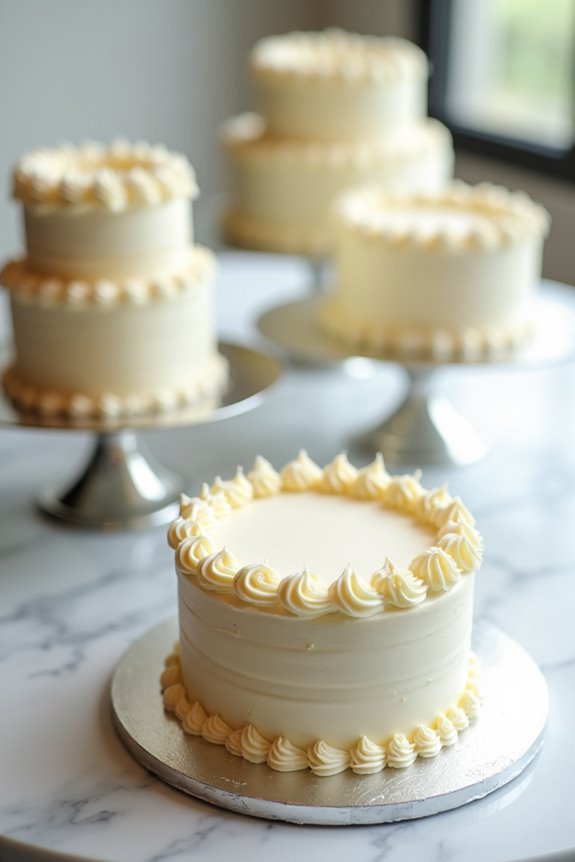
When you’re envisioning that centerpiece for your celebration—the kind that captures attention as it graces the table—tiered cakes offer architectural elegance with practical flexibility. You can customize servings by stacking rounds strategically: an 8-inch plus 10-inch combination yields approximately 42–60 party servings, perfectly suited for intimate gatherings. Craving something grander? A three-tier arrangement—6, 8, and 10-inch rounds—delivers around 52 servings for mid-size events. For substantial celebrations hosting 100–150 guests, you’ll want the four-tier setup: 6, 8, 10, and 12-inch rounds reaching roughly 128 servings. The benefit of tiered cake sizing lies in its simplicity—each tier’s servings stack additively, height notwithstanding. You’re orchestrating both visual impact and practical portion control simultaneously.
How Event Timing and Appetite Affect Portion Planning
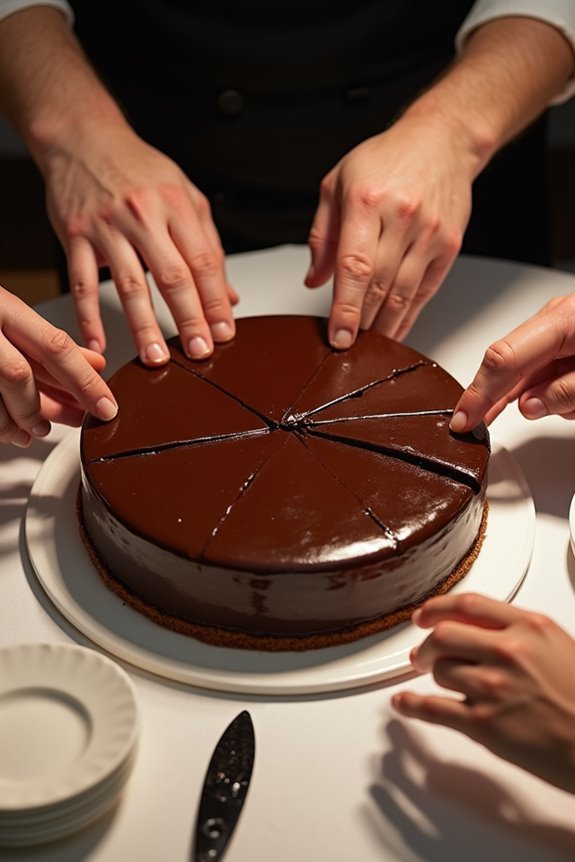
Beyond the elegant architecture of tiered cakes lies a subtler reality: the moment your guests arrive at the table shapes exactly how many slices that 10-inch round cake’ll actually serve.
Your event timing dramatically influences serving size and portion planning. Consider these variables:
- Dessert course positioning — When cake follows a heavy meal, guests expect modest slices; served as a standalone treat, they’ll want generous portions
- Appetite context — Morning celebrations yield smaller cuts, while evening events demand heartier servings
- Competing desserts — Additional sweets reduce individual cake portions, stretching that 10-inch round toward 30 servings rather than 20
Regional preferences and event type—whether intimate dinner or casual party—further shape your portion planning decisions. Understanding these dynamics lets you confidently serve your gathering, transforming a simple cake into thoughtfully planned hospitality.
The Role of Frosting and Filling in Slice Size
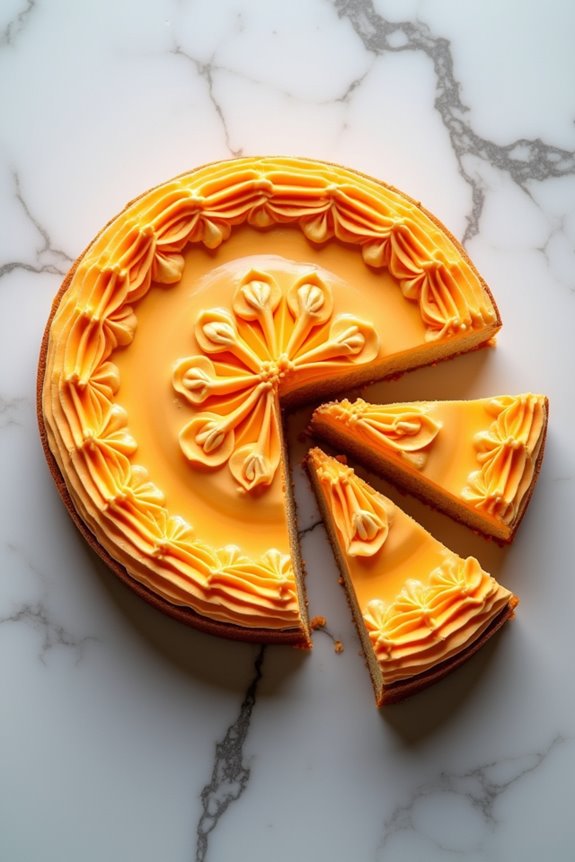
How much does what’s between the layers actually matter? You’d be noticing this more than expected. When you generously frost your 10-inch cake, you’re not just adding flavor—you’re strategically increasing frosting size and slice thickness in ways that reshape your guest count. A buttercream coating adds several millimeters per slice, potentially yielding extra servings from the same pan.
Filling impact runs deeper though. Dense ganache or luxe mousse actually shortens slices visually, making portions feel modest despite their richness. Lighter fillings, conversely, create airier, more voluminous bites. Your filling choice between layers directly influences how thick each piece becomes—and how satisfying it feels.
For wedding versus party settings, this distinction matters significantly. Multi-layer fillings with generous frosting borders push standard slices into larger-portion territory, fundamentally altering your expected guest count per cake.
Practical Cutting Tips for Even, Consistent Slices
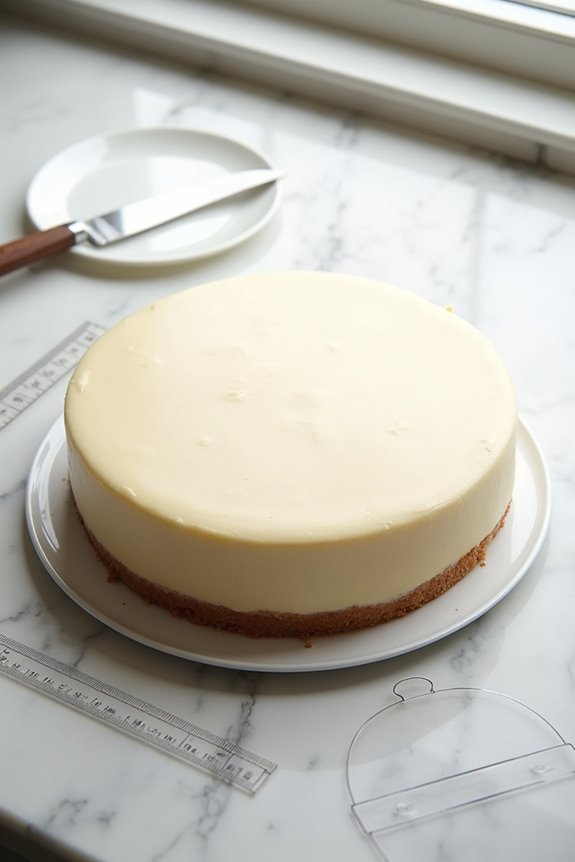
Getting those 26 party servings or 22 wedding-style slices from your 10-inch round requires more than a sharp knife and optimism—you’ll want a deliberate strategy that makes cake-cutting straightforward and reliable.
Master your cutting technique by using these proven approaches:
Master your cutting technique with proven approaches: grid method, wedge pattern, and ring slicing for perfectly portioned servings.
- Grid method: Draw imaginary lines across the cake’s surface, creating uniform squares or rectangles that eliminate the guesswork from portion sizing
- Wedge pattern: Radiate slices from center outward, maintaining consistent thickness and visual appeal for round cake servings
- Ring slicing: Cut vertical slices from a single outer ring, keeping each slice uniform and consistent
A hot, damp knife—refreshed between cuts—glides through frosting without dragging. This simple adjustment makes your work smoother and easier, delivering those perfectly portioned slices your guests deserve.
Cake Sizing Chart: Match Your Guest Count to the Right Cake
When you’re staring down a guest list—whether it’s 15 intimate friends or 50 hungry relatives—the math shouldn’t feel complicated. A 10-inch round cake delivers roughly 20 to 30 servings, depending on whether you’re cutting generous wedding-style portions or smaller party slices. Pair that 10-inch round with an 8-inch or 12-inch cake to hit your exact headcount. For 50 guests, you’d combine a 12-inch round—yielding approximately 36 servings—with cupcakes or additional cake. Square versions of identical diameters actually yield more servings than round counterparts, since curves create less-usable edge space. Layer your strategy thoughtfully, and you’ll serve everyone adequately without waste or shortage.