
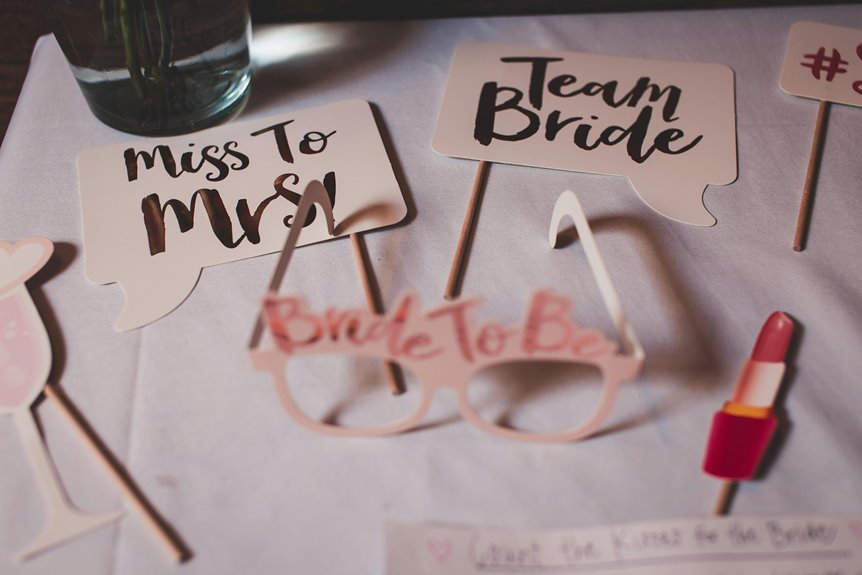
Schedule your bridal shower two to three months before your wedding—that sweet spot where you’re far enough out to breathe, yet close enough to build momentum toward the wedding. This timing gives out-of-town guests breathing room for travel arrangements, lets your registry gain real traction without last-minute scrambling, and spares you the wedding-week chaos of final dress fittings and vendor confirmations. Avoid that cramped four-week window altogether.
The deeper logistics of spacing, seasonality, and vendor booking reveal why this window makes your celebration feel like a genuine part of your wedding planning rather than just another obligation.
The Answer: 7 Months to Plan, 2–3 Months to Celebrate
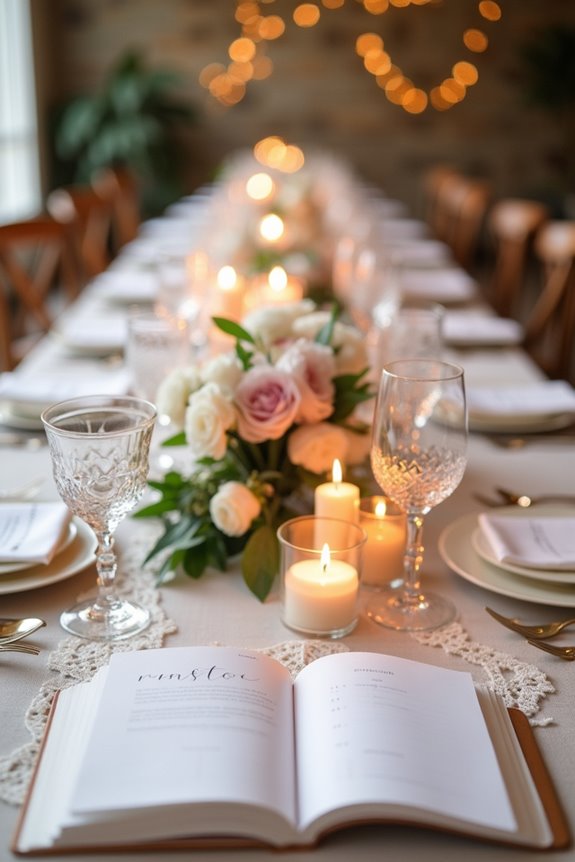
This strategic window positions you well. You’re far enough from the wedding to avoid competing with final dress fittings, invitation addressing, and rehearsal dinner planning. Yet you’re close enough that guests remain engaged and interested. By securing your date six months out, you’ve locked in good availability—especially important if your crowd travels from different cities. Send invitations four to six weeks ahead, allowing RSVPs and travel arrangements to move forward smoothly. This timing makes your shower a well-organized celebration rather than a rushed afterthought.
Why 2–3 Months Before the Wedding Works Best
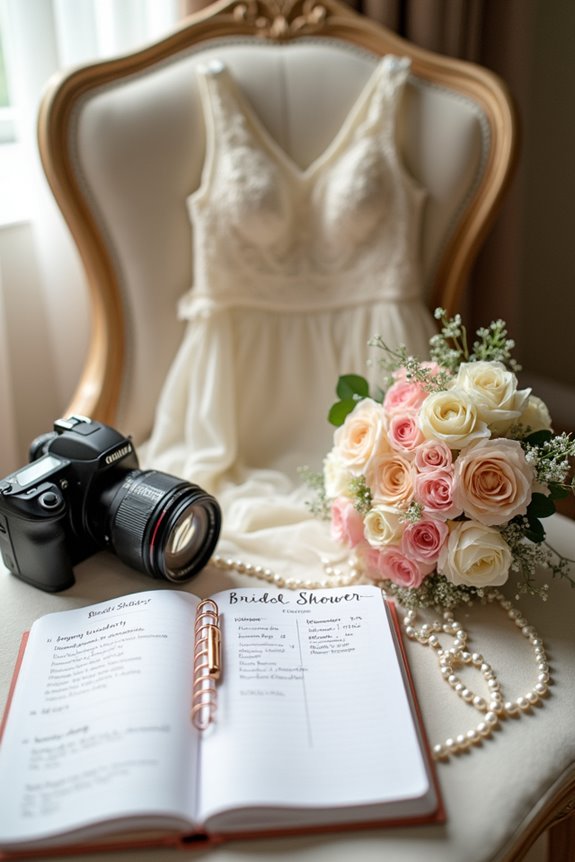
When you schedule your shower 2–3 months before the wedding, you’re giving yourself a practical advantage—your guests can actually secure travel plans, your registry hits its stride, and you’re not drowning in last-minute details. This timing lets you celebrate surrounded by people who matter most without the chaos of final fittings, vendor confirmations, and seating charts closing in on you. You’ll find that momentum carries you forward from shower season into the home stretch, where your energy belongs on the marriage itself rather than on coordinating logistics.
Registry Setup and Gifting
Why does timing matter so much when you’re thinking about gifts and registries? Scheduling your bridal shower 2–3 months before the wedding gives you the breathing room to establish your registry thoughtfully—and gives guests clarity about what you actually need.
When you plan ahead, you’ll enjoy several gifting advantages:
- Registry finalization happens without last-minute scrambling
- Guest coordination becomes smooth; they know exactly what to purchase
- Delivery timelines align with your wedding date
- Duplicate prevention decreases when everyone accesses the same curated list
- Meaningful exchanges replace assumptions about your preferences
This window shifts gifting from stressful guesswork into genuine connection. Your guests appreciate knowing your preferences—it’s their love language expressed through thoughtful selections. You’re not just receiving presents; you’re inviting loved ones into your vision for life together.
Guest Travel and Availability
Your guests’ calendars matter just as much as yours do. Scheduling your shower 2–3 months before the wedding gives out-of-town guests adequate time to arrange travel without scrambling or paying premium prices. This generous window respects RSVP lead times, allowing invitees to commit confidently rather than tentatively. You’re not just asking people to show up; you’re inviting them into a celebration they can prepare for. Meanwhile, guests gain sufficient time to purchase meaningful registry gifts—selecting that stand mixer or luxe bedding set thoughtfully rather than rushing. By positioning your shower in this timeframe, you create space for everyone to feel welcomed and unhurried, transforming attendance from obligation into genuine participation.
Bride’s Prep Timeline Balance
Have you considered how much breathing room you’ll actually need between now and your wedding? Scheduling your bridal shower two to three months ahead creates necessary space for your timeline to unfold naturally—without competing priorities overwhelming your experience.
This window protects your prep schedule by protecting you:
- Final dress fittings proceed without shower-week scrambling
- MOH coordination happens at a sustainable pace
- Engagement celebrations don’t overlap with peak wedding tasks
- Vendor confirmations wrap up before crunch time
- Relaxed planning energy carries you toward the event
You’re not just picking a date; you’re claiming permission to experience this journey fully. Two to three months positions your bridal shower as a genuine celebration—one that arrives when you need it most.
Don’t Schedule Too Close: The One-Month Pitfall
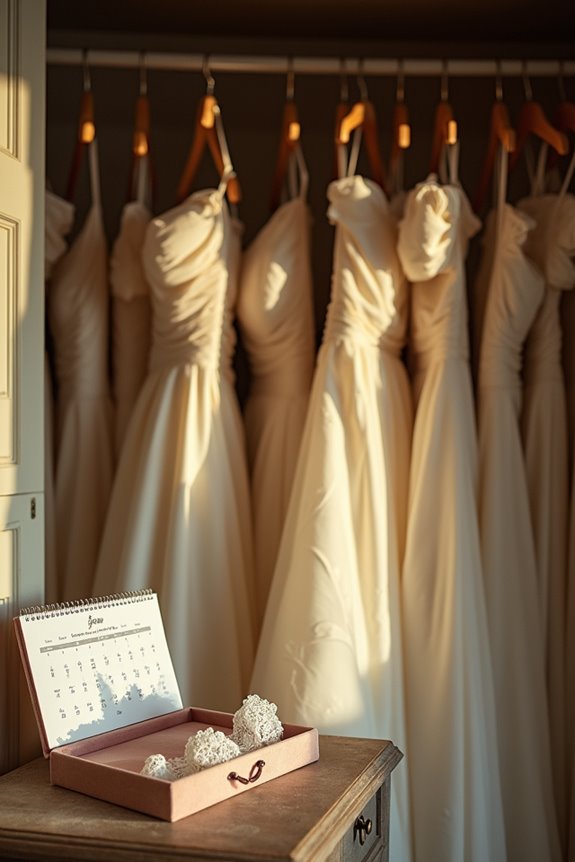
When you’re caught in the whirlwind of final wedding preparations—final dress fittings, seating chart revisions, vendor confirmations stacking up like unopened mail—scheduling your bridal shower just four weeks before the wedding can feel tempting, almost practical. Don’t fall into this trap. A one-month-out bridal shower timing creates unnecessary stress for you and your maid of honor, who’s already juggling countless last-minute tasks. Invitations require 4–6 weeks’ notice, making such tight scheduling impractical for guests planning travel. You’ll compete for venues and vendors already booked solid. The shower risks overlapping with final wedding preparations, reducing your ability to enjoy this celebration fully. Instead, aim for the optimal window: eight to fourteen weeks before your wedding. You’ll feel more relaxed, your guests will commit readily, and you’ll actually savor the moment.
Map Your Timeline: When to Book Venues and Lock in Vendors

How far ahead should you reserve that loft or garden space? Secure your venue at least one month in advance, especially for larger groups—though three months provides more flexibility for available options. Lock in those vendors early, too.
Your bridal shower timeline requires strategic planning:
- Confirm venues 8–12 weeks before the wedding
- Secure caterers and florists at the 10-week mark
- Book photographers 6–8 weeks out
- Deposit payments lock in your date immediately
- Request backup date availability from all vendors
Early confirmations prevent scheduling conflicts and align everyone with your chosen date. You’re building your celebration—one secured vendor at a time. This organized approach makes planning more manageable, allowing your shower to reflect the attention you’ve invested in each detail.
Align With Other Events: Spacing Out Engagement Parties and Bach Celebrations
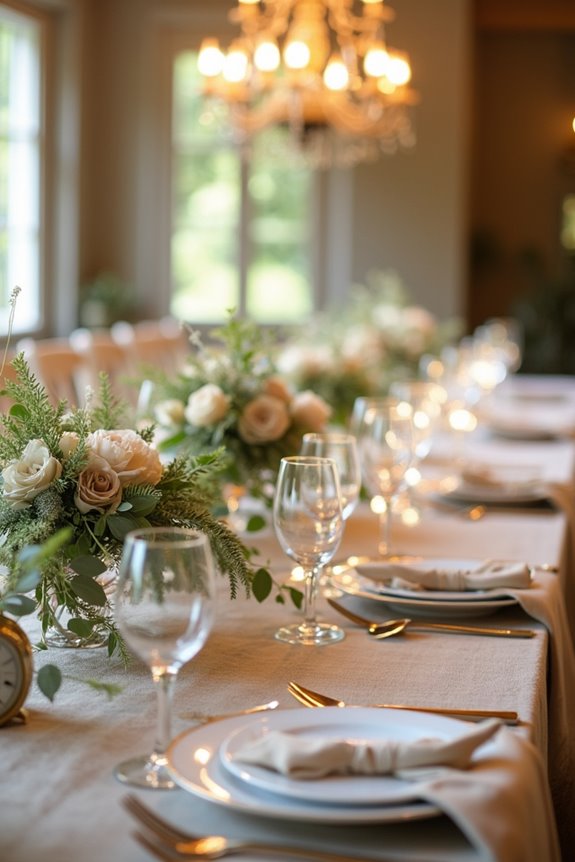
You’ll want to strategically space your bridal shower, engagement party, and bach celebration across your calendar—ideally with two to three weeks between each event—so you and your guests aren’t scrambling between venues or experiencing fatigue from back-to-back celebrations. Consider booking your shower roughly two months before the wedding, your engagement party earlier in the timeline, and your bach party in the final weeks, creating natural breathing room for relaxation and authentic connection at each milestone. This staggered approach also gives guests realistic windows to travel, coordinate schedules, and fully participate in each celebration without the exhaustion that comes from clustered festivities.
Spacing Prewedding Events
Coordinating your bridal shower with engagement parties and bachelor/bachelorette celebrations requires thoughtful calendar management—it’s not simply about picking dates, but orchestrating a sequence that respects your energy, your guests’ schedules, and the practical demands of wedding preparation.
Spacing your prewedding events strategically prevents exhaustion and logistical chaos:
- Schedule your engagement party 6-9 months before the wedding
- Plan the bridal shower 2-8 weeks prior, allowing recovery time
- Stagger bachelor/bachelorette celebrations 4-6 weeks before the wedding
- Build breathing room between each event for guest travel and planning
- Send invitations 4-6 weeks ahead for out-of-town attendees
You’re creating a celebration journey, not cramming festivities into one hectic month. This spacing approach lets you savor each milestone while maintaining your sanity and allowing your loved ones to genuinely participate without feeling overwhelmed by overlapping commitments.
Calendar Coordination Strategy
When you’re orchestrating multiple celebrations—engagement party, bridal shower, bachelor/bachelorette bash—the calendar becomes your most essential planning tool. You’ll want to briefly plan each event at least two weeks apart to prevent guest fatigue and preserve your sanity. Your calendar coordination strategy should account for wedding outfit fittings, vendor meetings, and travel logistics. Position your bridal shower two to eight weeks before the wedding, then space your bach party roughly fourteen days later. This rhythm prevents clustering while maintaining momentum toward your wedding. Communicate these dates four to six weeks ahead, giving out-of-town guests adequate time for travel arrangements. When you strategically stagger celebrations, you’re managing logistics—and creating breathing room that allows you and your guests to fully experience each milestone together.
Buffer Time Between Celebrations
How do you prevent your calendar from becoming a chaotic collision of parties, fittings, and vendor meetings? You build intentional buffer time between celebrations—spacing your bridal shower, engagement party, and bach celebration strategically across weeks or months. This breathing room protects your sanity and honors your guests’ commitment.
Consider these spacing strategies:
- Schedule engagement parties 8–12 weeks before the wedding
- Place your bridal shower 2–8 weeks pre-wedding
- Time bach celebrations 3–6 weeks out
- Avoid clustering multiple events within one month
- Leave minimum two-week gaps between each celebration
This thoughtful choreography prevents guest fatigue while allowing you to savor each milestone. You’re not just planning parties—you’re creating a sustainable rhythm that lets everyone celebrate with presence and attention without exhaustion or decision fatigue stealing your joy.
Send Invitations Early: The 4–6 Week Rule for Out-of-Town Guests
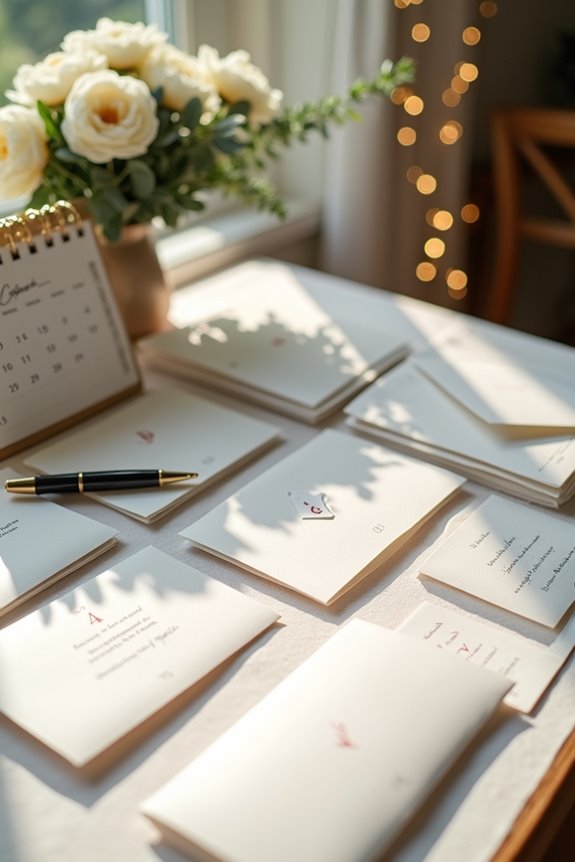
Your favorite cousin in Seattle opens her mailbox to find your bridal shower invitation. She mentally blocks off the date, books her flight, and reserves a hotel—all because you’ve given her adequate time to plan.
Sending invitations 4–6 weeks before your bridal shower is practical. Out-of-town guests need time to coordinate travel, secure accommodations, and arrange time off work without rushing.
| Timeline | Action | Benefit |
|---|---|---|
| 6 weeks out | Mail invitations | Provides extended travel planning window |
| 5 weeks | Out-of-town RSVPs arrive | Confirms headcount early |
| 4 weeks | Final venue coordination | Solidifies catering decisions |
| 2 weeks | Guest confirmations | Allows last-minute adjustments |
This lead time removes logistical stress from your celebration, allowing your loved ones to arrive rested and fully present—not preoccupied with last-minute bookings.
Account for Seasonality: How Weather and Holidays Shape Your Date
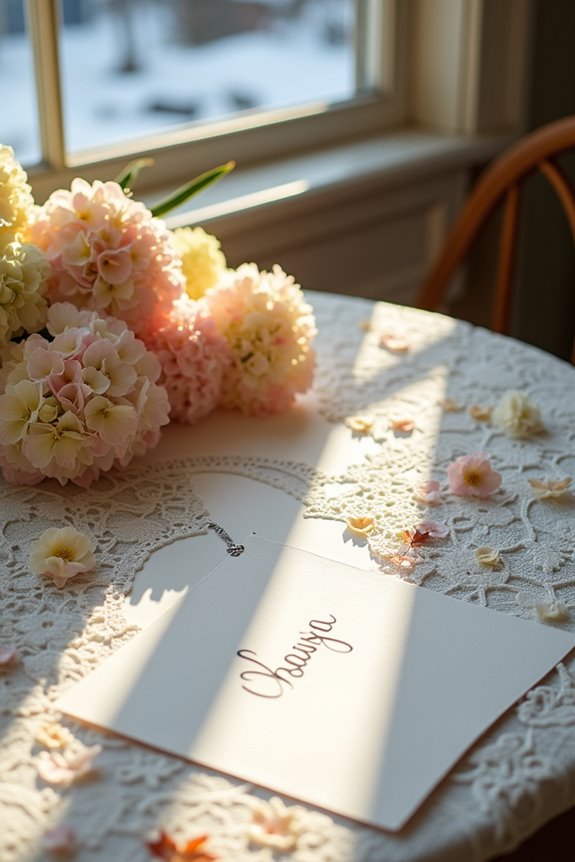
Your bridal shower’s timing should align with the calendar, not conflict with it—selecting a date that honors both the season’s natural beauty and your guests’ ability to actually attend. Seasonality shapes everything from décor possibilities to attendance rates, so choose wisely.
Align your bridal shower date with seasonal beauty and guest availability—timing shapes everything from décor to attendance rates.
Consider these seasonal factors:
- Spring/summer enables garden themes with fresh peonies and outdoor venues
- Fall (September-October) sidesteps holiday crowds while offering burnt-orange palettes and crisp weather
- December holidays strain guest travel budgets and calendars dramatically
- January-February post-holiday windows provide breathing room and lower venue costs
- Winter weather risks transportation complications and reduces outdoor options
Align your shower’s aesthetic with nature’s offerings—think harvest centerpieces for autumn, pastel florals for spring. Simultaneously, protect your bride from scheduling conflicts with major wedding tasks happening in that same season, keeping her energized rather than overwhelmed.
Plan for Multiple Showers: Timing Across Different Locations

When your bride’s loved ones span multiple cities—her college friends in Portland, her cousins in Charleston, her work crew back home—you’ll want to orchestrate showers strategically rather than stack them chaotically. Space each celebration 2–3 months apart, anchoring distant events 3–4 months before the wedding and scheduling closer-in showers 4–6 weeks prior. This timeline approach prevents exhaustion and eliminates scheduling conflicts that derail planning.
Coordinate with the bride’s calendar alongside engagement parties, bachelor festivities, and dress fittings—overlap creates stress. Send invitations 4–6 weeks ahead for each distinct shower, giving guests adequate notice. Use the 2-month-to-2-week window as your backbone, then tailor each location’s timing around venue availability and local constraints. Deliberate planning keeps every celebration intentional and unhurried.
Build Breaks Between Events: Why the Bride Needs Recovery Time

Because bridal showers rarely exist in isolation—they’re one event among engagement parties, dress fittings, bachelor festivities, and a dozen other pre-wedding obligations—the bride’s calendar can quickly become a relentless sprint toward the altar.
You’ll want to strategically space these moments to protect your energy and mental clarity. Recovery time isn’t a luxury—it’s a necessity. Schedule your bridal shower with intentional breathing room:
- Space major events at least 2-3 weeks apart to prevent overwhelm
- Build 48 hours post-shower for rest before resuming planning tasks
- Avoid clustering showers, fittings, and parties within the same month
- Create buffer dates for unexpected scheduling conflicts
- Preserve the final two weeks before your wedding for calm preparation
When you honor these intervals, you’ll arrive at your wedding day well-rested rather than depleted—ready to celebrate fully rather than simply survive the moment.