
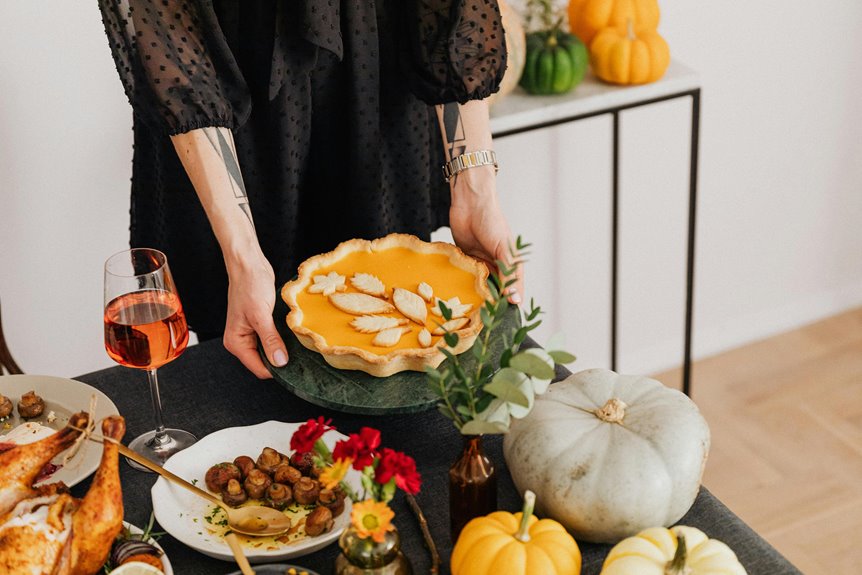
You shouldn’t eat most decorative pumpkins—they’re bred for appearance, not flavor, delivering bland, stringy flesh that disappoints. Worse, many carry shellac, wax, or fungicide coatings designed for display longevity, not digestion. Even uncoated ornamentals risk contamination from cultivation treatments. Carved jack-o’-lanterns become particularly hazardous, absorbing candle soot and bacteria.
Instead, seek cooking varieties like Kabocha or Fairytale at farmers markets—they’ll give you velvety purees and genuine caramelized depth. Understanding which pumpkins truly merit your kitchen reveals worthwhile culinary options.
The Truth About Decorative Pumpkins: Edible but Not Flavorful
Why do decorative pumpkins disappoint us on the plate? You’re drawn to their vibrant orange hues and perfect symmetry at the farmers market, imagining homemade soup or roasted wedges. Yet decorative pumpkins, bred primarily for appearance rather than culinary suitability, often deliver bland, stringy flesh that frustrates even eager cooks.
The flavor quality suffers because growers prioritize visual appeal over taste. Those Halloween varieties sitting on your porch for weeks? They’re becoming increasingly fibrous and watery. Even fresh decorative specimens lack the dense, sweet flesh you’d find in heirloom sugar pumpkins or butternut squashes specifically cultivated for eating.
Choose cooking-grade varieties instead. They’re your ticket to velvety purees and caramelized roasted pieces that actually taste worthwhile.
How to Spot Ornamental vs. Decorative Pumpkins You Shouldn’t Cook
You can spot ornamental pumpkins that shouldn’t make it to your kitchen by examining their unusual skin textures, bright unconventional patterns, and non-traditional ribbing—visual markers that signal they’ve been bred for aesthetics rather than flavor. Check the label or ask your grower directly, since many decorative varieties wear protective coatings or lack packaging information entirely, leaving you guessing about safety and edibility. When you’re uncertain, the smart move is simple: admire them as autumn décor instead, preserving your cooking pumpkins for varieties actually bred to taste like something worth eating.
Visual Identification Markers
How do you distinguish that deep-burgundy gourd destined for your mantle from the pale, squat sugar pumpkin meant for your kitchen? You’re looking at ornamental pumpkins bred for visual drama—unusual shapes, vibrant hues, and bumpy textures that catch light well but signal reduced edibility. These decorative varieties prioritize appearance over culinary potential. Food-safety concerns emerge immediately: ornamental pumpkins often wear shellac coatings or adhesive treatments making them dangerous if cooked. Check labels carefully. Edible pumpkins typically feature consistent coloring, smooth skin, and standard shapes—think classic pie pumpkins. When shopping, ask sellers directly about food-safety certifications. That warty specimen? Probably not dinner material. Stick with varieties explicitly labeled for cooking unless you’re confident about origin and treatment.
Labeling And Coating Warnings
When you’re standing in the produce section surrounded by pumpkins of every conceivable shade—burnt orange, deep forest green, creamy white—the label tells the whole story of what’s safe on your plate versus what belongs on your porch. You’ll find “edible” or “cooking” printed clearly on varieties meant for lots of recipes, while “ornamental” or “decorative” signals a strict no-eat zone. Ornamental gourds and pumpkins often carry protective coatings—shellac, glue, or wax—designed for display longevity, not digestion. These coatings, combined with potentially bitter cucurbitacins lurking within the flesh, make them unsafe for consumption. Don’t let their appealing appearance fool you. That label difference isn’t marketing theater; it’s your safeguard. When doubt creeps in, skip cooking entirely.
Painted, Waxed, and Treated Decorative Pumpkins: Why They’re Unsafe
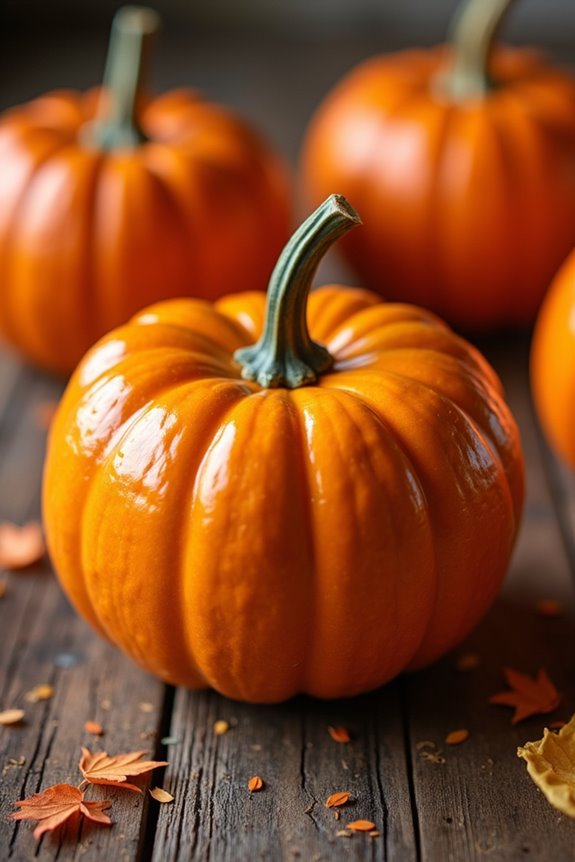
You’ll want to understand why that glossy pumpkin sitting on your porch—coated in acrylic paint, polyurethane sealant, or food-grade wax—shouldn’t end up in your kitchen or your soup pot. These chemical coatings, designed to preserve appearance rather than protect your health, can leach toxins into your food during cooking, potentially causing nausea, digestive upset, or worse, particularly for children and sensitive individuals. Learning to spot treated pumpkins—by checking for suspiciously uniform shine, artificial color saturation, or that plasticky texture beneath your fingertips—allows you to confidently separate the keepers from the display-only gourds before you’re tempted to carve or cook.
Chemical Coatings And Toxins
Why’d decorative pumpkins get all dressed up if you can’t eat them? The answer lies in those glossy, vibrant coatings—shellac, polyurethane wax, and synthetic paints—designed to preserve beauty, not nourishment.
When you handle these treated pumpkins, you’re actually touching:
- Toxic sealants that leach harmful chemicals into flesh when heated
- Fungicide residues applied during cultivation to prevent mold and decay
- Bacterial traps where coatings seal in pathogens beneath their shiny surface
These aren’t subtle risks. That gorgeous burnt-orange finish? It’s your signal to admire, not consume. Shellac alone—commonly used in commercial decoration—creates a non-food-safe barrier that transforms your pumpkin from harvest treasure into decorative-only art piece.
When in doubt, compost it. Your body deserves edible gourds, not chemical experiments masquerading as culinary possibilities.
Health Risks From Ingestion
Perhaps you’ve spotted them at the farmer’s market—those decorative pumpkins with their glossy shine, coated in shellac and polyurethane that catch the light like varnished furniture. Here’s the truth: consuming these items invites genuine danger into your kitchen.
When you ingest shellac, glue, or polyurethane coatings, you’re introducing non-food-grade substances directly into your digestive system. Your body can’t process these chemicals safely—they accumulate, potentially triggering nausea, cramping, and liver stress. Ornamental varieties also harbor bitter cucurbitacins, compounds that cause stomach upset and poisoning symptoms.
Choose pumpkin varieties safely. Skip decorative specimens entirely. Instead, seek certified edible varieties labeled explicitly for consumption—your health depends on this distinction.
Identifying Treated Pumpkins Safely
The real danger lurks not in the pumpkin itself, but in what’s been applied to its surface—and spotting these treated specimens before they land in your kitchen requires a bit of detective work.
You’ll want to examine pumpkins carefully for telltale signs of treatment:
- Glossy, artificially uniform finishes suggesting shellac or polyurethane coatings
- Paint residue or metallic accents in gold, silver, or jewel tones—beautiful but toxic
- Waxy coating creating an unnaturally slick feel that doesn’t wash off
Look for pumpkins with natural stems and organic blemishes. Ask farmers directly about their growing and finishing methods. When you’re uncertain, skip questionable specimens entirely—choosing certified edible varieties instead.
How Cooking Pumpkins Differ From Decorative Halloween Varieties
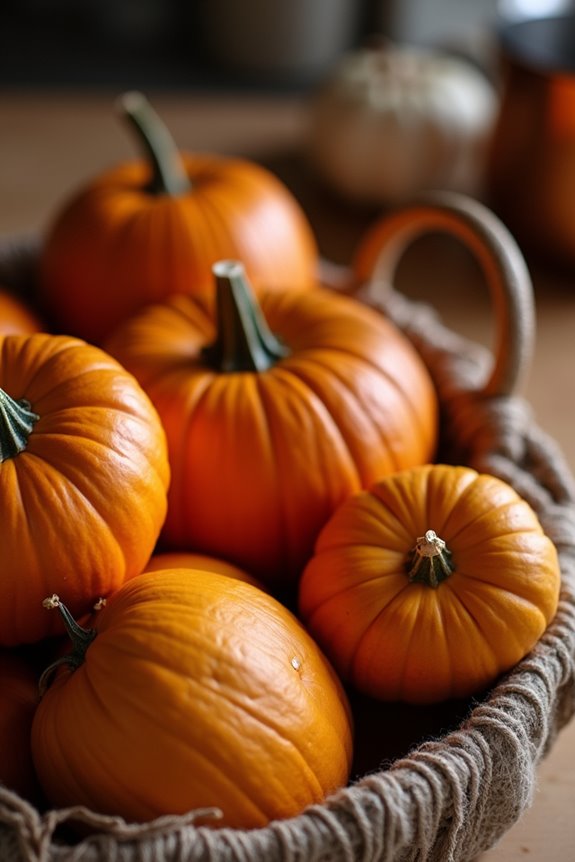
What separates a culinary triumph from a watery disappointment often comes down to one simple choice: the variety you’ve selected.
Cooking pumpkins—think smaller Sugar or Pie varieties—deliver the dense, golden flesh you need for velvety soups and silky purées. Their flesh is naturally sweeter and smoother, designed by nature for the kitchen rather than the mantelpiece.
Decorative varieties, bred primarily for striking appearance and shelf longevity, sacrifice flavor and texture. You’ll encounter watery, stringy flesh that demands significant reduction before it’ll work in recipes. Even edible ornamental types—those charming white, blue, or ribbed specimens—often disappoint with mealy textures or bland notes.
The difference? Culinary pumpkins prioritize what matters: taste, consistency, and performance. When you choose wisely, you’re cooking with intention, selecting the right tool for the job rather than settling for what looks good on display.
Can You Eat Jack-o’-Lantern Pumpkins After Carving?
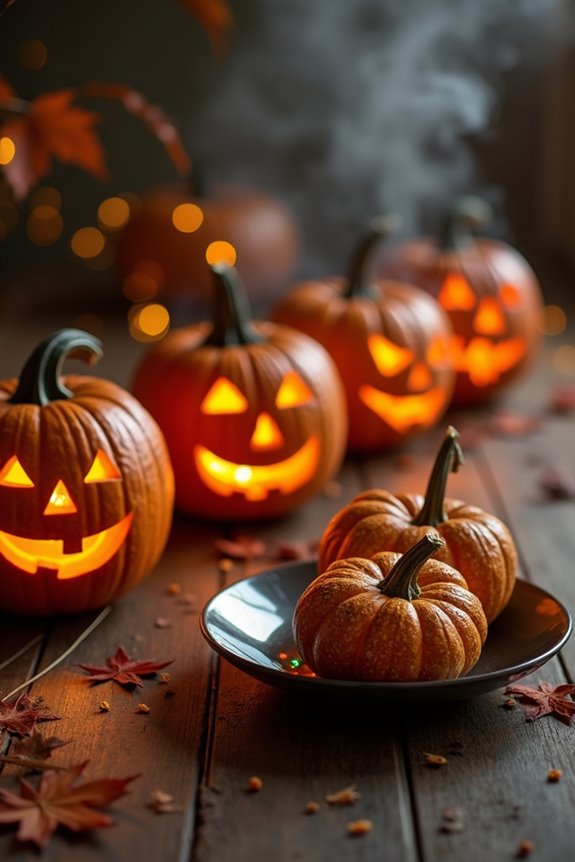
Once you’ve carved that jack-o’-lantern and set it on your porch with a flickering candle inside, you’ve created a contamination zone—one that’s decidedly off-limits for your kitchen.
The carving process itself introduces serious food safety concerns:
- Bacteria and mold colonize the exposed flesh within hours, thriving in the pumpkin’s moist interior
- Candle soot deposits onto surfaces, making the pumpkin toxic for consumption
- Cross-contamination from your cutting tools and hands transfers pathogens throughout the flesh
You wouldn’t serve your guests food that’s been sitting exposed to elements and smoke, right? That same principle applies here. Once carved, your jack-o’-lantern belongs in the compost bin come November, not your dinner table. If you’re craving authentic pumpkin flavor, choose culinary varieties instead—they’ll reward your efforts with creamy, rich results that carved decorations simply can’t deliver.
Which Decorative Pumpkins Are Actually Worth Eating
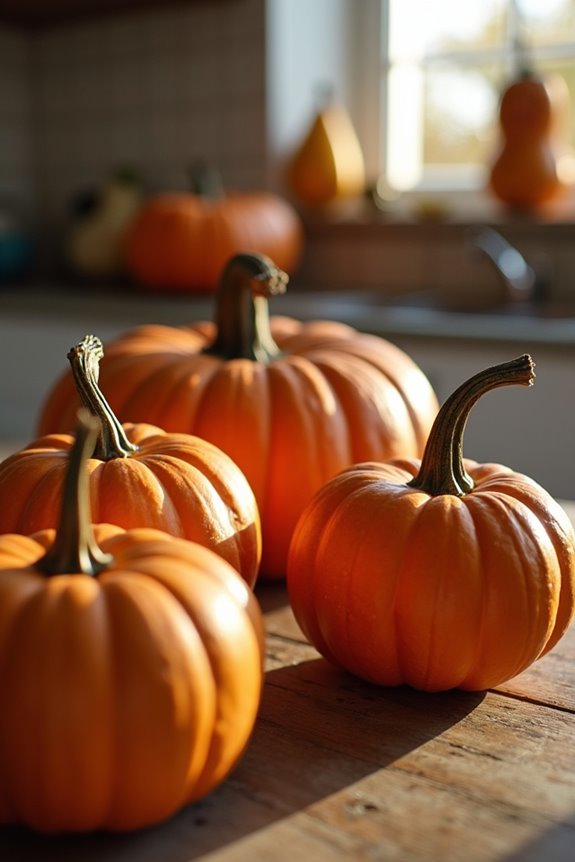
If you’re considering cooking with decorative pumpkins, you’ll want to seek out varieties like Fairytale, Kabocha, or Blue Hubbard—these dual-purpose specimens deliver superior flavor and silkier flesh compared to standard jack-o’-lantern types, which tend toward watery, stringy disappointment. White pumpkins and ribbed heirloom varieties also merit kitchen consideration, though confirming edibility with your grower matters since “decorative” remains a marketing term rather than a guarantee of taste. Your best bet: skip ornamental-only pumpkins entirely and instead hunt for those explicitly labeled cooking varieties or ask sellers which specific specimens they’d actually roast, purée, or soup themselves—because quality and flavor, not just edibility, separate the worthwhile from the forgettable.
Edible Varieties Worth Cooking
Some decorative pumpkins aren’t just pretty—they’re edible, though you’ll want to know which ones before you commit your oven time.
White, blue, and ribbed varieties often called dual-purpose pumpkins offer real cooking potential. Before purchasing, ask growers directly which decorative types work in your kitchen—look specifically for “edible” labeling rather than vague “ornamental” tags. You’re joining a community of home cooks discovering hidden culinary options beyond traditional pie pumpkins.
When you’ve sourced edible varieties:
- Microwave whole pumpkins for 2–3 minutes to soften skin, then cut and roast
- Purée roasted flesh for soups, breads, and seasonal dishes
- Expect flavors that differ from butternut varieties—sometimes earthier, occasionally milder
Prepare these like standard pumpkins. Your effort yields dishes worth sharing.
Flavor and Quality Comparison
Not every decorative pumpkin you’ve admired on a porch will deliver the creamy, nuanced flavor you’re after in your kitchen—and that’s the honest truth you’ll want to know before roasting. Orange carving varieties often taste bland or stringy, bred for shelf life rather than culinary excellence. White, blue-hued, and ribbed decorative pumpkins, however, frequently offer genuine eating potential. The real difference lies in intent: culinary pumpkins develop rich, dense flesh through intentional growing practices, while standard jack-o’-lantern types prioritize size and appearance. Before committing decorative specimens to your recipe, test-roast a small section. You’ll quickly discover whether you’re working with genuine cooking material or beautiful but disappointing décor masquerading as food.
Maximize Flavor When Cooking Decorative Pumpkins: Seasoning and Technique Tips
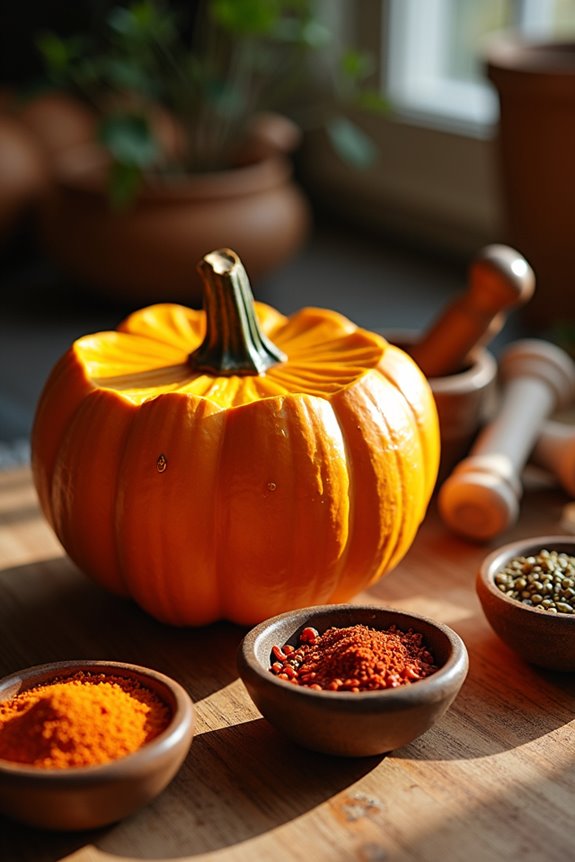
Though decorative pumpkins often arrive at your door looking more like autumn centerpieces than dinner ingredients, you can coax depth from certain varieties—the white Lumina, the dusty-blue Hubbard, the deeply ribbed Kabocha—by treating them with the same intentional care you’d give a culinary pumpkin.
Start by microwaving your whole pumpkin for 2–3 minutes to soften the skin, making it easier to cut. Then roast, purée, or bake using these proven techniques:
- Roast halved pumpkin flesh-side down at 400°F for 45 minutes, then season generously with salt, butter, sage, and minced garlic
- Cook homemade purée down in a heavy-bottomed pot to remove excess moisture—this concentrates flavor and creates pie-friendly consistency
- Drain purée through a fine-mesh sieve overnight for silkier texture
These approaches turn stringy flesh into creamy soups, rich pies, and elegant risottos.
Pumpkin Soups, Breads, and Sauces That Hide Bland Flavor
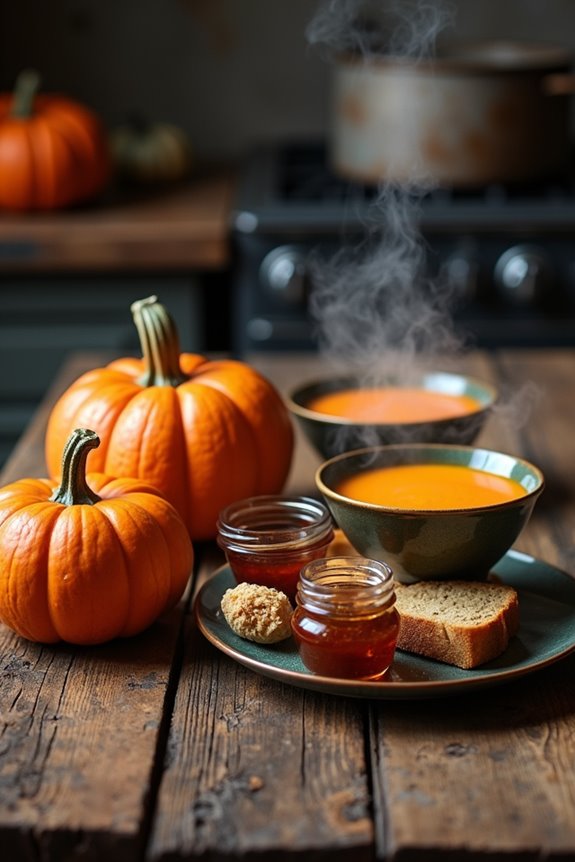
Even with stellar roasting technique and patient puréeing, a bland decorative pumpkin can sabotage your soup pot—that silky butternut bisque you envisioned deflates into something forgettable without intervention.
You’ll want recipes that mask, rather than highlight, delicate pumpkin notes. Deeply spiced soups, rich cream sauces, and boldly seasoned breads become your tools here. Consider this comparison:
| Recipe Type | Decorative Pumpkin Result | Better Alternative |
|---|---|---|
| Cream soup | Muted, watery | Culinary varieties |
| Quick bread | Stringy texture | Heirloom pumpkins |
| Sauce | Bland foundation | Beet/squash blends |
When you’re committed to decorative varieties, layer aggressive flavoring—nutmeg, sage, cardamom—and boost moisture content. You’re not compromising; you’re strategically transforming humble ingredients into something genuinely good that’ll satisfy your kitchen ambitions.
When to Compost Instead of Cook Your Decorative Pumpkins
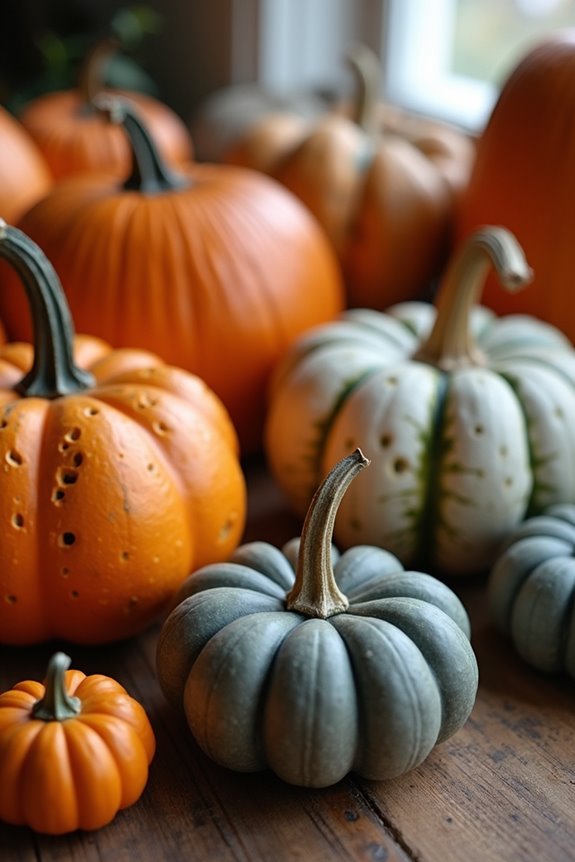
Once Halloween’s jack-o’-lanterns collapse into themselves and November winds scatter the last confetti, you’ve got a choice: continue coaxing flavor from those store-bought gourds or surrender them to your compost pile.
Here’s when composting wins:
- Bacterial contamination: Decorative pumpkins harbor mold, bacteria, and pesticide residues from protective coatings—invisible threats that cooking won’t eliminate
- Flavor disappointment: These varieties lack the dense sweetness of culinary pumpkins, leaving soups and breads disappointingly bland despite your best recipe efforts
- Environmental gain: You’ll transform “waste” into nitrogen-rich compost, accelerating decomposition by cutting or smashing the pumpkins first
Rather than risking your health or wasting kitchen effort, join gardeners who’ve discovered that autumn’s decorative gourds belong underground—nourishing next spring’s tomatoes and herbs instead of your dinner table.
Better Alternatives: Where to Buy Cooking Pumpkins Instead of Decorative
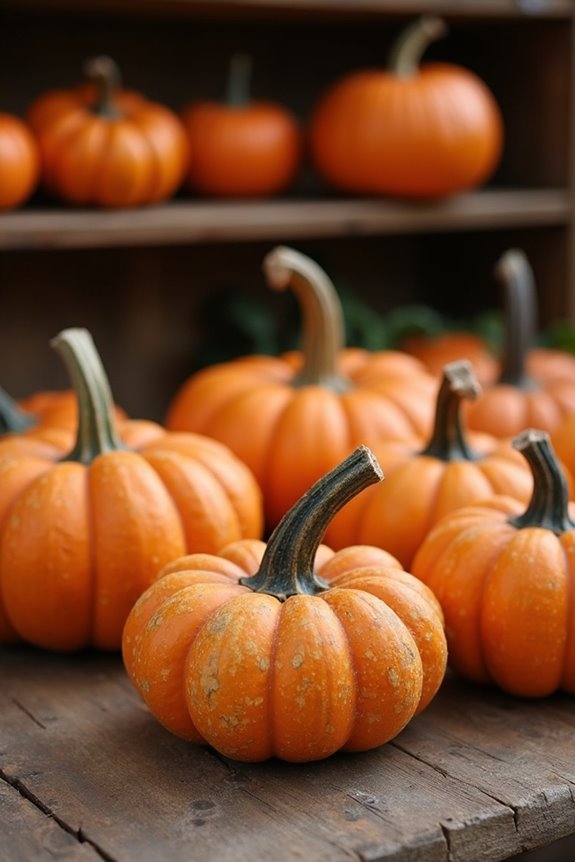
Now that you’ve decided composting’s the smarter play for those ornamental beauties gathering dust on your porch, it’s time to hunt down pumpkins actually bred for your kitchen—and you’ll find them in places most people overlook. Farmers markets burst with sugar pumpkins and pie varieties, their smaller frames and dense flesh offering exceptional flavor. Local farms often sell cooking-grade specimens directly, letting you chat with growers who can guide you toward the sweetest options. Grocery stores frequently stock labeled cooking pumpkins alongside decorative ones—read those tags carefully. Specialty food shops carry heirloom varieties like Cinderella or Queensland Blue, varieties that deliver rich, nuanced sweetness. You’re investing in quality ingredients that’ll improve your autumn cooking.