

You’ll transform your home into a serene sanctuary by embracing contemporary design—stripping away excess, anchoring rooms with clean-lined furniture in natural woods and brushed steel, and letting neutral palettes (crisp whites, warm beiges) amplify natural light through uncluttered spaces.
Layer textures strategically: boucle against woven textiles, glass partitions maintaining flow, sculptural lighting casting intentional shadows.
Every piece earns its place through function or form.
Discover how modular furniture and sustainable materials adapt smoothly as your life evolves.
What Defines Contemporary Home Decor Style
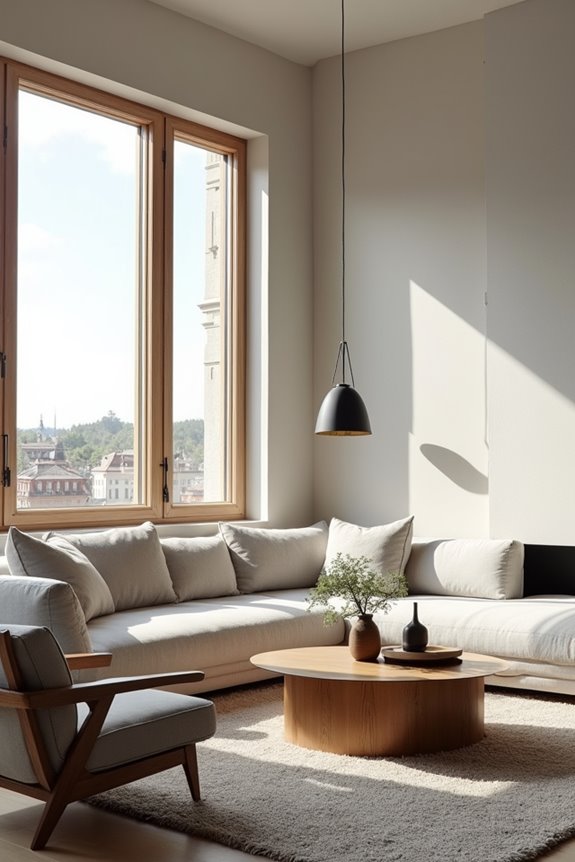
How’s your living room speaking to you right now?
Contemporary design invites you to create spaces that breathe—where neutral palettes of warm grays, soft whites, and taupe backgrounds become your canvas. You’ll embrace clean lines and open-plan layouts that dissolve walls between rooms, fostering connection and flow. This style celebrates functional design; every piece earns its place, eliminating clutter while maintaining visual calm.
You’re drawn to natural materials—reclaimed oak, slate, leather—layered with contemporary edge through mixed metals and glass accents. Lighting becomes sculptural; geometric pendants and linear fixtures don’t merely illuminate but anchor your room’s personality. Together, these elements—rooted in modernism yet fluid enough to evolve—craft spaces that feel like your own: sophisticated, uncluttered, and welcoming.
Contemporary Design Foundations: Clean Lines and Form
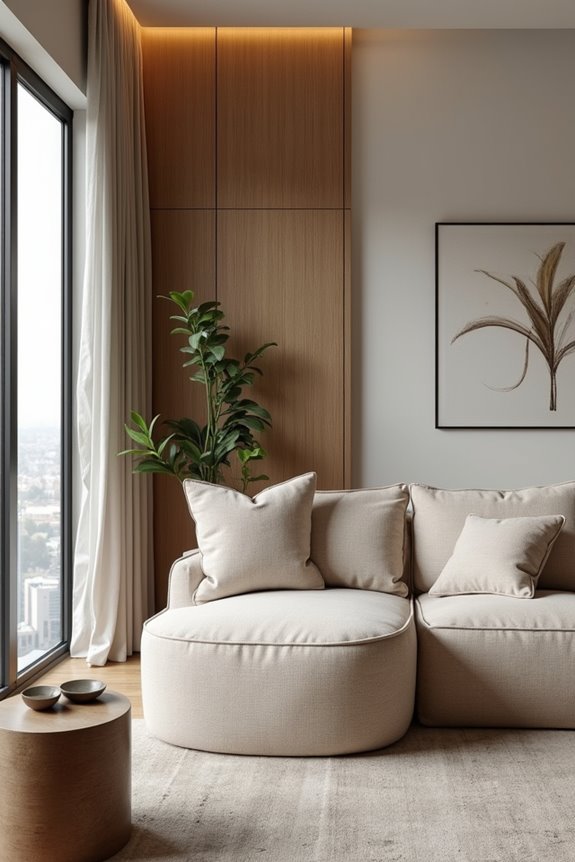
Because contemporary design strips away excess—those unnecessary flourishes that clutter rather than comfort—you’re left with something refined: spaces defined by what’s *there*, not what’s absent. You’ll discover that clean lines form the backbone of this aesthetic, creating visual calm through uninterrupted surfaces and geometric precision. When you embrace minimalism within a neutral palette of whites, grays, and soft beiges, you’re focusing on what matters: architecture, natural light, and breathing room.
Open-plan layouts become your canvas. Mixed materials—think polished concrete floors paired with warm wood shelving—add subtle sophistication without overwhelming the eye. Your functional decor selections serve dual purposes: sculptural lighting fixtures become art installations, modern furniture becomes a conversation focal point. This foundation isn’t about sterility; it’s about deliberate choice, allowing every selected element to contribute meaningfully to your home’s narrative.
Material Foundations: Mixing Glass, Wood, and Metal
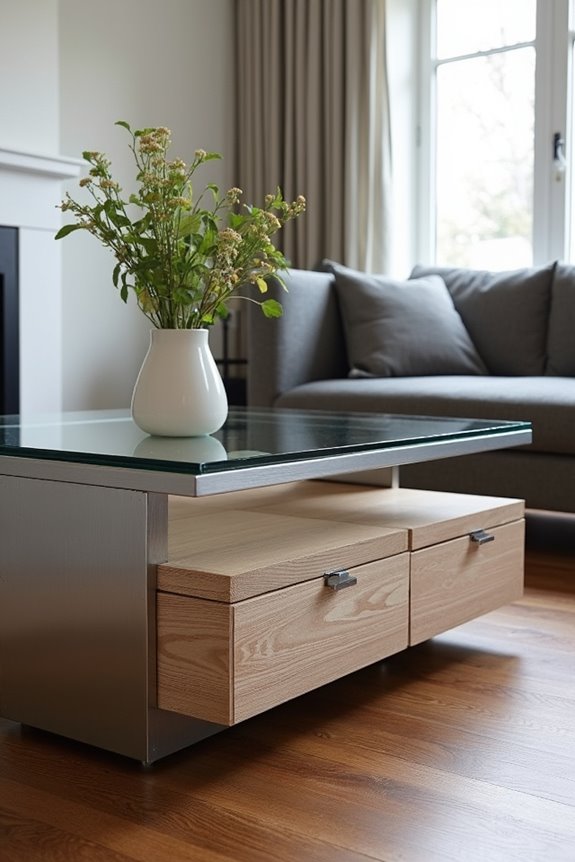
Where clean lines meet tangible warmth, you’ll find contemporary design’s strength: the strategic pairing of glass, wood, and metal creates spaces that feel both refined and inviting.
You’re crafting an environment that breathes—literally. Natural light streams through clear or frosted glazing panels, expanding your rooms while maintaining sophisticated boundaries. Meanwhile, light-toned wood grain grounds everything, offering contrast against brushed steel and brass accents that add crisp, industrial edge without overwhelming softer materials.
What works in your space:
- Glass elements maximize openness and luminosity throughout contemporary interior design
- Natural wood textures provide warmth, repeating grain patterns across furniture and architectural details
- Metal hardware and lighting frames anchor the palette with refined, industrial sophistication
This material foundation—where textures echo across surfaces—creates a harmonious contemporary interior design that feels composed and welcoming.
Contemporary Color Palettes: Neutrals With Bold Accents
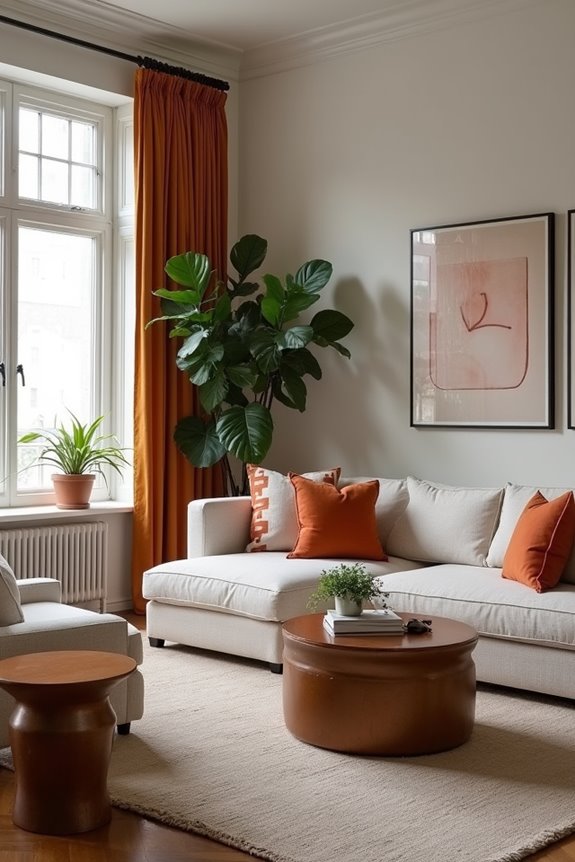
With your material foundation in place—those gleaming glass panels and warm wood surfaces anchored by brushed steel—you’re ready to introduce color, and contemporary design demands restraint here. Your neutrals—crisp whites, sophisticated grays, warm beiges—become the canvas that lets everything else shine. You’ll anchor these with strategic bold accents: a cobalt blue accent wall, a burnt-orange sectional, or gallery art that stands against pale backgrounds. This minimalism isn’t boring; it’s deliberate. Lighting shifts your palette considerably—cool overhead fixtures sharpen neutrals while warm pendant lights soften them, amplifying how your bold accents resonate throughout modern interiors. Layer textures and materials across this restrained foundation, and you’ve created a sophisticated space that feels both considered and lived-in, distinctly you.
Maximizing Natural Light and Open Layouts
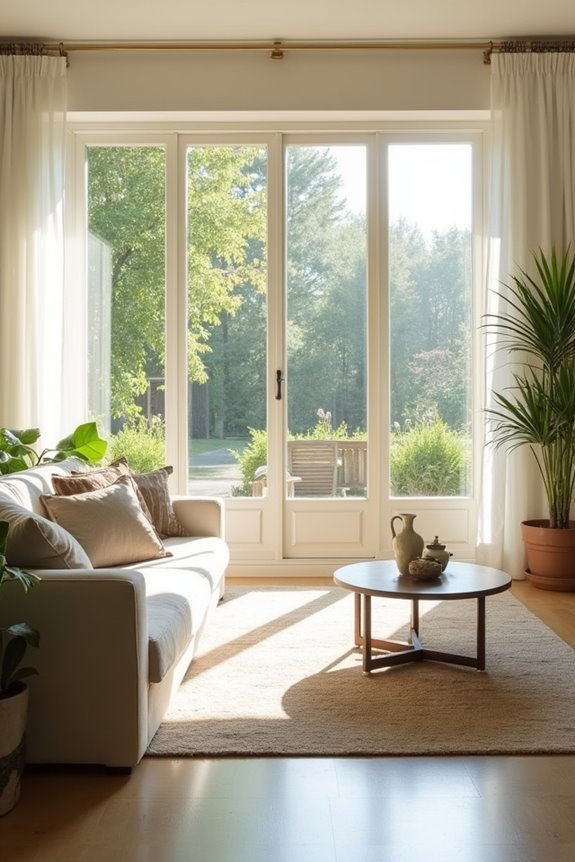
How do you transform a room from cramped and shadowy into luminous and breathable?
You’ll discover that strategic design choices reshape your space. Consider these elements:
- Install large windows and glass partitions that flood rooms with natural light while maintaining visual flow between areas
- Choose a neutral palette of whites, grays, and soft beiges—these colors reflect light and create an airy foundation for everything you add
- Embrace uncluttered spaces with minimal furnishings, allowing light to travel unobstructed across surfaces
Your open layouts become galleries for natural illumination. Wood flooring, stone accents, and light-reflecting materials amplify daylight. When evening arrives, sculptural pendant fixtures and soft ambient illumination extend that brightness. This is thoughtful design that invites you into spaces where light dances across clean lines, warmth radiates from natural materials, and you notice the difference breathing becomes easier.
Building Texture and Depth
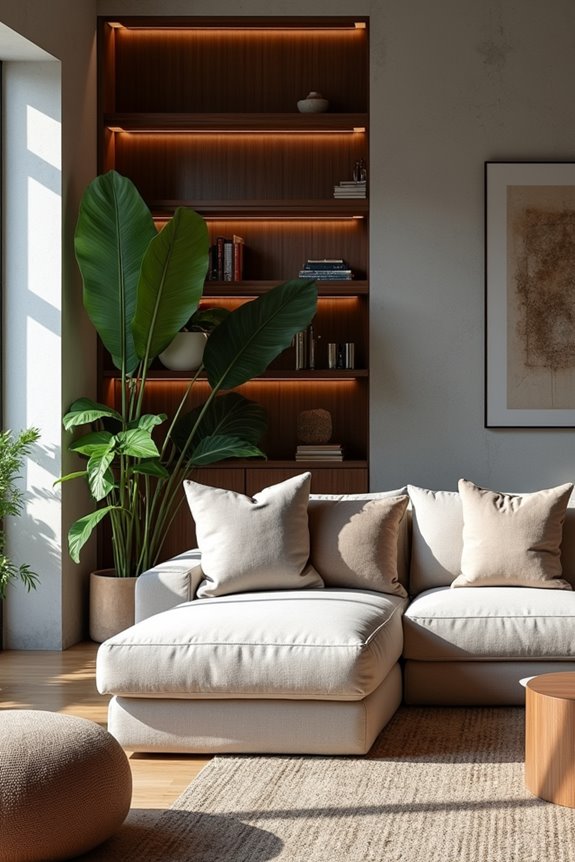
Contrast—that’s what transforms a minimalist room from merely clean into visually engaging. You’ll build texture and depth by layering natural materials like wood and stone alongside sleek glass and matte finishes, creating visual interest that keeps your eye moving. Mix boucle upholstery with woven textiles and lacquered surfaces—this tactile combination anchors your neutral palette without overwhelming it.
Lighting matters considerably here. Sculptural fixtures and linear pendants cast varied shadows across your textures, emphasizing depth and material contrasts throughout the space. Architectural elements—clean lines, large windows, glass partitions—frame views and guide flow between interior planes, strengthening that dimensional quality you’re pursuing.
Restraint becomes your tool. Subtle tonal shifts and varied textures suggest depth far more effectively than busy patterns, letting your selected materials stand out on their own.
Choosing Functional, Sustainable Furniture
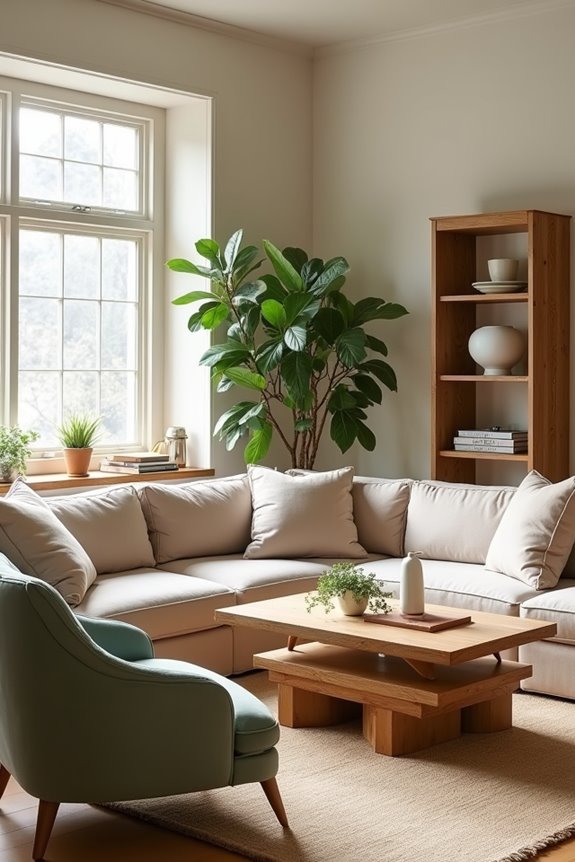
You’ll discover that sustainable material selection—responsibly sourced walnut, recycled polyester upholstery, low-VOC finishes—isn’t just environmentally conscious; it’s the foundation of furniture that lasts. Multi-purpose pieces like a mid-century storage bench that doubles as seating or a modular sectional you’ll reconfigure as your life evolves won’t crowd your space; instead, they’ll adapt to your changing needs. When you choose durable, adaptable furniture crafted from materials that age well rather than deteriorate, you’re investing in both your home’s contemporary aesthetic and the planet’s future.
Sustainable Material Selection
When you’re furnishing a contemporary home, what matters most—that sleek silhouette or the story behind it? You’ll discover that sustainable material selection reflects your values.
Consider these eco-conscious choices:
- Reclaimed wood and FSC-certified wood bring authentic warmth while supporting responsible forestry
- Low VOC finishes and recycled metals reduce air pollution and waste
- Plant-based textiles and durable natural textures—linen, wool, jute—add depth with environmental responsibility
You’re not just decorating; you’re building a circular economy within your home. Modular furniture pieces you can repair or repurpose eliminate throwaway culture. Mix sustainable synthetics with organic materials, creating interiors that age gracefully. These choices represent permanence, belonging to a community that values both beauty and stewardship—spaces that matter.
Multi-Purpose Furniture Solutions
How do you fill a contemporary space without sacrificing either function or the clean, breathing quality that defines the style? You choose multi-purpose furniture with integrated storage and modular design—pieces that work harder than they look.
| Feature | Benefit |
|---|---|
| Lift-top surfaces | Hidden storage meets dining |
| Modular sectionals | Reconfigures for guests |
| Low-VOC upholstery | Healthier indoor air |
Adaptable silhouettes like sofa beds and reconfigurable coffee tables reshape your open-plan layout with ease. You’re investing in durable finishes—matte metals, glass, neutral tones—that transcend fleeting trends while reclaimed materials and recycled metals anchor your space with authenticity. This approach creates rooms that breathe, function well, and belong to who you are becoming.
Applying Contemporary Style Room by Room
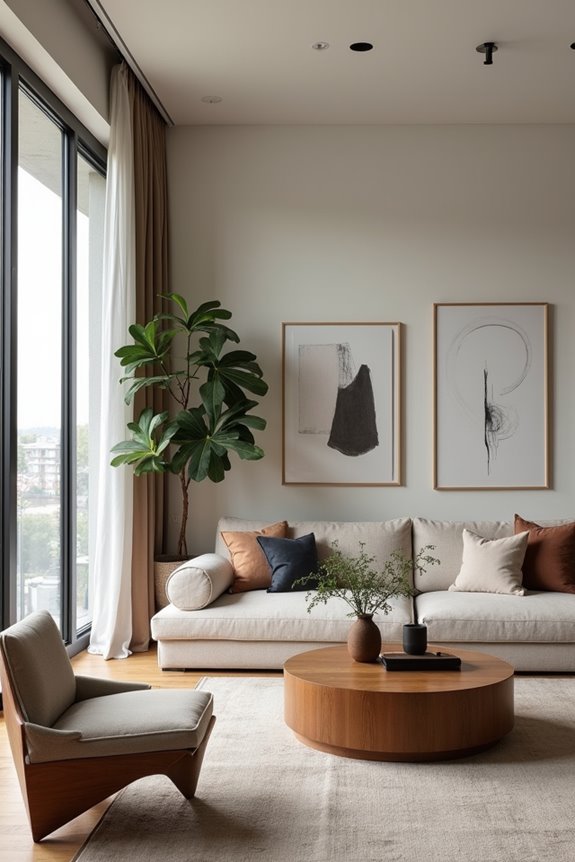
When you’re ready to translate contemporary principles into your actual living spaces, you’ll discover that open floor plans—those flowing, unobstructed zones you’ve likely envisioned—thrive on deliberate furniture placement that respects sightlines and allows room to breathe. Your functional pieces become architectural statements themselves; a walnut credenza positioned perpendicular to the sofa, a sculptural chrome floor lamp anchoring the conversation area—each element earning its place through both purpose and visual rhythm. By strategizing room-by-room how your furnishings interact with natural light, traffic patterns, and those neutral backdrops, you’re not simply decorating but organizing spaces that demonstrate thoughtful consideration yet remain comfortable to inhabit.
Open Floor Plan Layouts
Why do the most inviting contemporary homes feel simultaneously open and intimate? The answer lies in thoughtful open floor plan layouts that blend spacious designs with purposeful zoning.
Contemporary design embraces this balance through:
- Glass partitions and minimal barriers that maintain visual flow while defining living, dining, and kitchen zones without sacrificing natural light
- Neutral backdrops—whites, grays, and beiges—allowing architectural features to serve as focal points while your carefully selected furnishings anchor each area
- Flow enabled by minimalist furniture with clean lines positioned strategically to create breathing room rather than visual clutter
Your open floor plan becomes a sanctuary where natural light floods through expansive windows, connecting indoor and outdoor spaces. This zoned living approach lets you host gatherings in your kitchen while someone reads undisturbed nearby—genuine connection without compromise, exactly as contemporary living delivers.
Functional Furniture Placement
Where you position each piece determines whether your contemporary space has room to breathe or feels awkwardly sparse. Functional furniture placement organizes your home into zones—living, dining, work—each purposefully anchored by lighting as focal point. Float your sofa away from walls, creating intimate conversation areas within open spaces. Choose flexible furniture with clean lines: a walnut credenza that doubles as storage and display, a sectional you’ll reconfigure for movie nights or dinner parties. Your neutral color palette acts as canvas, letting natural materials—leather, stone, travertine—establish warmth without visual noise. Repeat materials throughout for consistent design; if walnut anchors your dining table, echo it in shelving. Position multipurpose pieces strategically—ottomans that store, tables that extend—so your room adapts to how you actually live, not how magazines suggest you should.
Seasonal Updates and Style Shifts
How do you keep a space that feels current without abandoning the calm, grounded aesthetic you’ve worked to establish? Seasonal updates in contemporary design aren’t about overhauls—they’re about subtle recalibrations that honor your neutral backdrops while renewing your environment.
Consider these adaptable strategies:
- Lighting design shifts: Adjust color temperatures from 2700K in winter to 4000K in summer, creating seasonal warmth or brightness
- Textile layering: Swap linen throws and lightweight textures for heavier wool pieces, maintaining visual coherence across seasons
- Eco-friendly accents: Rotate potted plants and natural materials—stone, glass elements—that respond to changing natural light patterns
Smart integrations make these transitions smooth. You’re not abandoning contemporary principles; you’re deepening them through deliberate, responsive choices that keep your space genuinely yours.
Refreshing Your Space as Life Changes
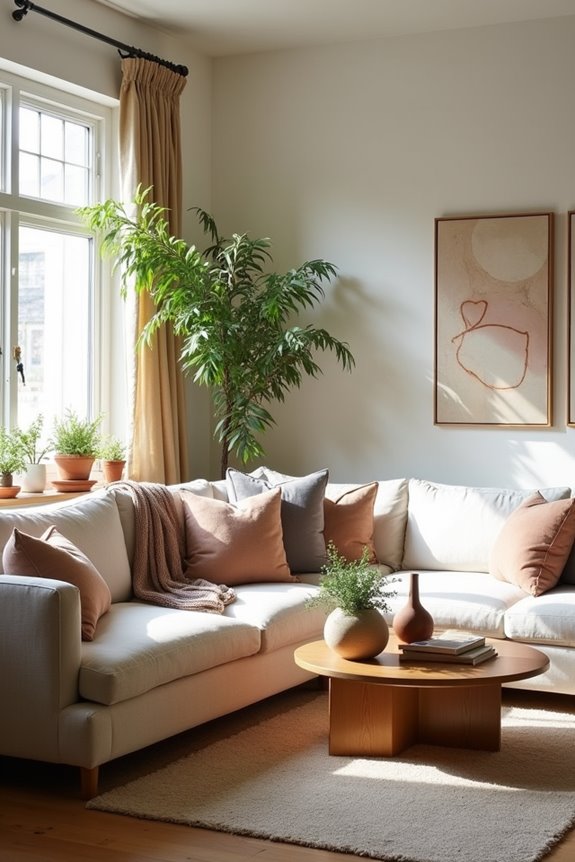
Your contemporary space should evolve with you—whether you’re shifting from a bustling young professional’s apartment to a quieter family home, your design foundation remains constant through neutral whites, grays, and warm beiges that won’t fight against life’s natural transition. Rather than overhauling everything when seasons change or new chapters begin, you’ll swap in modular furniture pieces, refresh your lighting intensity with scalable LED solutions, and rotate bold art accents that reflect where you are now—keeping the clean lines and minimal aesthetic intact while honoring who you’ve become. This approach means your home grows with you, never feeling dated or static, because contemporary design’s strength lies in its quiet flexibility.
Evolving With Your Lifestyle
When you’ve finally settled into a space that feels like home, life has a way of shifting beneath your feet—a new job, a growing family, a partner moving in, or simply the realization that what captivated you two years ago doesn’t anymore.
Contemporary design thrives on this evolution. Your home adapts rather than resists:
- Modular furniture and open-plan layouts pivot with your needs—a desk becomes dining space, shelving reconfigures for growing collections
- Neutral backdrops with layered textures let you refresh through personalization without demolition; swap throws, art, and accent pieces seasonally
- Integrated LED lighting with adjustable color temperatures (2700K–4000K) shifts your mood and functionality, supporting morning focus or evening wind-downs
Natural materials ground these changes, creating continuity amid transformation. You’re not chasing trends; you’re building flexibility into your foundation, allowing your space to belong to who you’re becoming.
Adapting Design To Seasons
Why wait for a full redesign when seasons themselves offer the perfect excuse to transform your space? You’ll discover that adapting your contemporary home requires subtle shifts—not overhauls. Swap lightweight linen drapes for velvet throws as temperatures drop, introducing layered lighting through sculptural pendants and floor lamps that warm autumn and winter evenings. Your neutral backdrop becomes the canvas for seasonal colors: cool spring blues, sandy summer tones, then rich terracotta and charcoal hues. Introduce breezy woven textures during warm months, then embrace plush bouclé and faux fur when chill arrives. Maximize natural light in spring and summer; reconfigure modular furniture and movable ottomans for gathering spaces or personal retreats. This adaptable decor keeps your contemporary style fresh and connected to rhythms beyond your walls.